
0325020.MXP vs 04853.15DR
| Part Number |
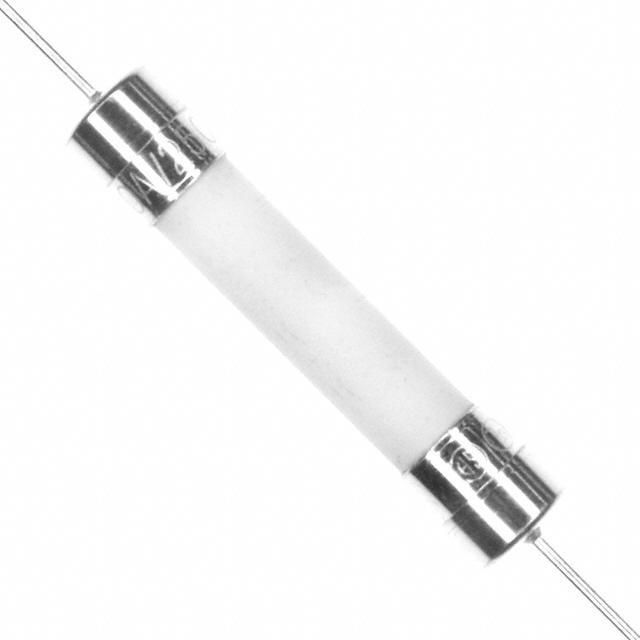
|
|
| Category | Fuses | Fuses |
| Manufacturer | Littelfuse Inc. | Littelfuse Inc. |
| Description | FUSE CERM 20A 250VAC 60VDC 3AB | FUSE BOARD MNT 3.15A 600VDC 2SMD |
| Package | 3AB, 3AG, 1/4" x 1-1/4" (Axial) | 2-SMD, Square End Block |
| Series | 325 | 485 |
| Operating Temperature | -55°C ~ 125°C | -55°C ~ 125°C |
| Mounting Type | Through Hole | Surface Mount |
| Package / Case | 3AB, 3AG, 1/4" x 1-1/4" (Axial) | 2-SMD, Square End Block |
| Size / Dimension | 0.275" Dia x 1.288" L (6.99mm x 32.72mm) | 0.476" L x 0.177" W x 0.177" H (12.10mm x 4.50mm x 4.50mm) |
| Current Rating | 20A | 3.15A |
| Fuse Type | Cartridge, Ceramic | Board Mount (Cartridge Style Excluded) |
| Voltage Rating - AC | 250V | 250V |
| Breaking Capacity @ Rated Voltage | 400A AC, 500A DC | 100A |
| Voltage Rating - DC | 60V | 600V |
| Response Time | Slow | Fast |
| Approvals | CE, CSA, K-MARK, PSE, UL | CSA, UR |
| Melting I²t | 575 | 3.304 |
-
1. What are fuses used for?
The main uses of fuses include the following aspects:
Overload protection: Fuses play an overload protection role in circuits. When the current in the circuit exceeds the rated current of the fuse, the fuse will automatically melt and cut off the circuit, thereby preventing the circuit from being damaged due to overload. This protection mechanism is very important for preventing equipment damage and fire accidents.
Short circuit protection: When an abnormal situation such as a short circuit occurs in the circuit, the current will increase sharply, and the fuse will quickly melt and cut off the power supply, thereby preventing the circuit and equipment from being damaged by excessive current. This protection measure can effectively prevent the precision components inside the equipment from being irreversibly damaged.
Adjusting current: The rated current value of the fuse can be adjusted and set according to the power size of the equipment. When the current in the circuit is too high, the fuse will automatically melt, thereby reducing the current and protecting the equipment from overload. This feature makes the fuse a convenient current controller.
Preventing fire and safety accidents: When the current is too high, the circuit may generate high temperature and even cause a fire. Fuses cut off the current by melting, effectively preventing fires or other safety accidents caused by excessive current.
Ensure user safety: In the case of unstable external power supply or improper operation, the fuse can quickly cut off the circuit to avoid electric shock or other personal safety accidents caused by abnormal current. -
2. What are the three types of fuses?
There are three main types of fuses: current fuse, temperature fuse and self-recovery fuse.
Current fuse
The main function of the current fuse is to provide overcurrent protection in the circuit. When the current in the circuit exceeds the predetermined value, the current fuse will quickly melt and cut off the circuit to protect the electrical appliances and circuits from damage. Common current fuses include chip fuses, miniature fuses, plug-in fuses and tubular fuses. Chip fuses are often used in space-constrained applications such as handheld electronic devices and instrumentation due to their small size. Miniature fuses are suitable for smaller spaces, plug-in fuses are more commonly used in automobiles, and tubular fuses are widely used in the power supply field, especially switching power supplies.
Temperature fuse
The temperature fuse is an irreversible one-time thermal protection device, which is mainly used to automatically disconnect the circuit after reaching the set temperature to provide protection. The temperature fuse is divided into RH square, RP resistor type and RY metal shell series. RH square temperature fuse is usually made of low melting point alloy material, with plastic square shell design, suitable for various electrical appliances. RP resistor type temperature fuse is also made of low melting point alloy material, with unique temperature insurance function. RY metal shell temperature fuse combines metal shell and organic chemical heat sensor, with high induction sensitivity and action accuracy, widely used in rice cookers, hair dryers and other equipment.
Resettable fuse
The resettable fuse can automatically recover when the current is too large and the circuit is open. It is a multiple-use fuse, especially suitable for overload protection circuit. The resettable fuse will automatically deform and cut off the current when the temperature exceeds the preset safety threshold, and will automatically restore power when the temperature drops to a safe range without manual intervention. This fuse can be reused and is suitable for various occasions requiring overload protection. -
3. Is the fuse AC or DC?
Alternating current
Fuses can be used for both AC and DC. The design and application of fuses depend on their specific type and purpose.
Application of fuses in AC and DC
AC fuses: suitable for AC circuits, using the current zero-crossing characteristics to extinguish arcs, commonly found in household appliances and industrial equipment. The frequency of AC (such as 60Hz or 50Hz) makes it easier to extinguish arcs, so the size of AC fuses is relatively small.
DC fuse: Designed for DC circuits. Since DC has no zero point, it is more difficult to break the arc. Usually, special structures (such as filling with quartz sand) are required to force the arc to extinguish. DC fuses are usually larger in size to reduce arcing. -
4. What is the main function of a fuse?
Overload protection
The main function of a fuse is overload protection. After the fuse is properly placed in the circuit, when the current abnormally rises to a certain height and temperature, the fuse will melt itself to cut off the current, thereby protecting the safe operation of the circuit. The working principle of the fuse is based on the fact that heat is generated when current flows through a conductor. When the heat generated exceeds the speed at which the conductor dissipates heat, the fuse will melt.
