
0760405010 vs 2102314-1
| Part Number |
|
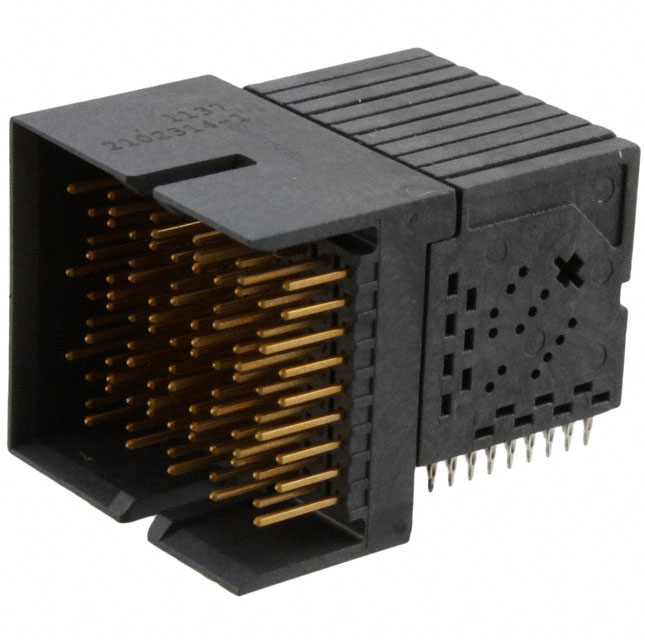
|
| Category | Backplane Connectors - Specialized | Backplane Connectors - Specialized |
| Manufacturer | Molex | TE Connectivity Aerospace, Defense and Marine |
| Description | CONN RCPT 300POS 10COL RT ANG | CONN HEADER 90POS EDGE MNT |
| Package | - | - |
| Series | GbX I-Trac? 76040 | Fortis Zd |
| Mounting Type | Through Hole | Board Edge, Through Hole, Right Angle |
| Termination | Press-Fit | Press-Fit |
| Contact Finish | Gold | Gold |
| Color | Black | Black |
| Number of Positions | 300 | 90 |
| Connector Type | Receptacle, Female Sockets | Header, Male Pins |
| Contact Finish Thickness | 30µin (0.76µm) | 50µin (1.27µm) |
| Number of Positions Loaded | All | All |
| Number of Rows | 15 | 9 |
| Connector Style | I-Trac | - |
| Number of Columns | 10 | 10 |
| Features | - | Shielded |
| Contact Layout, Typical | - | 30 Differential Pairs, 30 Ground |
| Connector Usage | - | Daughtercard |
-
1. What are the main functions of backplane connectors?
The main function of backplane connectors is to connect multiple printed circuit boards (PCBs) through reliable electrical interfaces and provide high-speed data transmission capabilities, while ensuring signal integrity and power distribution.
-
2. What are the typical applications of backplane connectors?
They are widely used in data centers, communication infrastructure, servers, storage devices, industrial automation systems, aerospace equipment, and military electronic systems, especially performing well in high-density, high-speed data transmission scenarios.
-
3. What is the maximum data transmission rate supported by the backplane connector?
Modern backplane connectors typically support high-speed data transmission up to tens of Gbps, depending on the design of the connector and the technology used, especially in high-speed network and server applications.
-
4. How do backplane connectors ensure signal integrity?
Backplane connectors ensure signal integrity in high-speed data transmission and reduce the impact of noise and interference through optimized designs such as shielding technology, differential signal transmission, and low crosstalk design.
