
1SV233-TB-E vs BAP70AM,115
| Part Number |
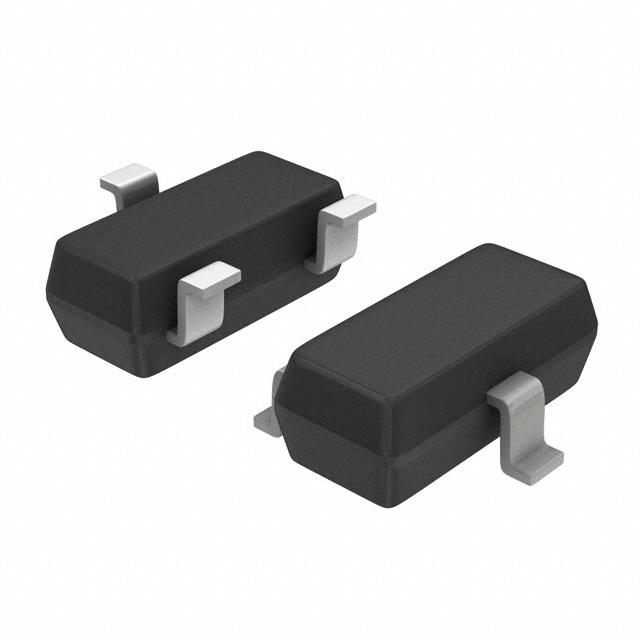
|

|
| Category | Diodes - RF | Diodes - RF |
| Manufacturer | ON Semiconductor | NXP USA Inc. |
| Description | RF DIODE PIN 50V 150MW 3CP | RF DIODE PIN 50V 300MW 6TSSOP |
| Package | Tape & Reel (TR) | Tape & Reel (TR) |
| Series | - | - |
| Operating Temperature | 125°C (TJ) | -65°C ~ 150°C (TJ) |
| Package / Case | TO-236-3, SC-59, SOT-23-3 | 6-TSSOP, SC-88, SOT-363 |
| Supplier Device Package | 3-CP | 6-TSSOP |
| Diode Type | PIN - Single | PIN - 2 Pair Series |
| Voltage - Peak Reverse (Max) | 50V | 50V |
| Capacitance @ Vr, F | 0.23pF @ 50V, 1MHz | 0.25pF @ 20V, 1MHz |
| Current - Max | 50 mA | 100 mA |
| Power Dissipation (Max) | 150 mW | 300 mW |
| Resistance @ If, F | 5Ohm @ 10mA, 100MHz | 1.9Ohm @ 100mA, 100MHz |
-
1. What is RF in diodes?
RF in diodes refers to the abbreviation of Radio Frequency, which means the electromagnetic frequency that can be radiated into space, ranging from 300kHz to 300GHz.
Application and characteristics of RF diodes
RF diodes are diodes specially used in radio frequency (RF) and microwave frequency ranges. They are widely used in radio communications, radar, satellite navigation and other fields. The main functions of RF diodes include rectification and detection, which can realize the unidirectional flow of current in high-frequency circuits, thereby protecting the circuit from reverse voltage damage. -
2. What role does a diode play in a radio?
Diodes play three main roles in a radio: rectification, detection and amplification.
Specifically:
Rectification: The diode can convert AC signals into DC signals, making the signals more stable and reliable.
Detection: The diode can convert the modulated signal into the original audio signal, thereby realizing the sound output of the radio.
Amplification: The diode can amplify the signal by controlling the size and direction of the current, thereby improving the reception ability of the radio.
How diodes work in radios
In radios, diodes usually use half-wave rectifier circuits or full-wave rectifier circuits. Half-wave rectifier circuits can only rectify signals in the positive half cycle, while full-wave rectifier circuits can rectify both positive and negative half-cycle signals, which is more stable and reliable. When the radio receives a modulated signal, the signal is input into the radio's tuning circuit through the antenna. After being amplified by the amplifier, the modulated signal is converted into an audio signal through the detection action of the diode, and then amplified by the amplifier and output to the speaker.
-
3. What is the best RF detection diode?
The best RF detection diode can be selected from multiple models, and the specific choice depends on the application scenario and requirements. The following are some common RF detection diode models and their characteristics:
1N4148: This is a commonly used point-contact silicon diode. Because of its small size, low cost and good high-frequency performance, it has been widely used in small signal circuits of radio receivers and other communication equipment. It is suitable for small signal detection and rectification.
1N5711: It has the characteristics of low leakage current and low slope resistance, suitable for higher frequency range (10MHz to 4GHz), and performs well in high-frequency limiting, detection and other circuits.
HSMS-2820: This is a high-speed limiting diode with fast response and high sensitivity. It has a very wide frequency range (1MHz to 20GHz) and is suitable for high-speed applications, low-noise amplifiers, high-speed switches and control circuits.
2AP9: It is suitable for detection, rectification and limiting circuits in radio electronic equipment with a frequency below 150MHz. It is widely used in communication equipment, broadcast receivers and TV receivers due to its reliability and stability.
Schottky diode: It has the characteristics of low forward voltage drop and fast switching, suitable for high-frequency rectification, switching power supply, solar cells and other occasions, and performs well in RF applications. -
4. What kind of diode is used for high frequency?
The diodes suitable for use in high-frequency circuits are mainly Schottky diodes and varactor diodes.
Schottky diode (SBD) is a low-power, ultra-high-speed semiconductor device with extremely short reverse recovery time and low forward conduction voltage drop. These characteristics make it very suitable for high-frequency, low-voltage, high-current rectification circuits, freewheeling circuits and protection circuits, etc.. In addition, Schottky diodes are also commonly used in microwave communications and communication power supplies.
Varactor diodes use the characteristics of the junction capacitance changing with the applied voltage when the PN junction is reverse biased, and are mainly used for automatic tuning, frequency modulation, phase modulation and other functions in high-frequency circuits. For example, in the tuning circuit of a TV receiver, a varactor diode can be used as a variable capacitor.
