
416F271X2IST vs KC7050K50.0000C1GE00
| Part Number |
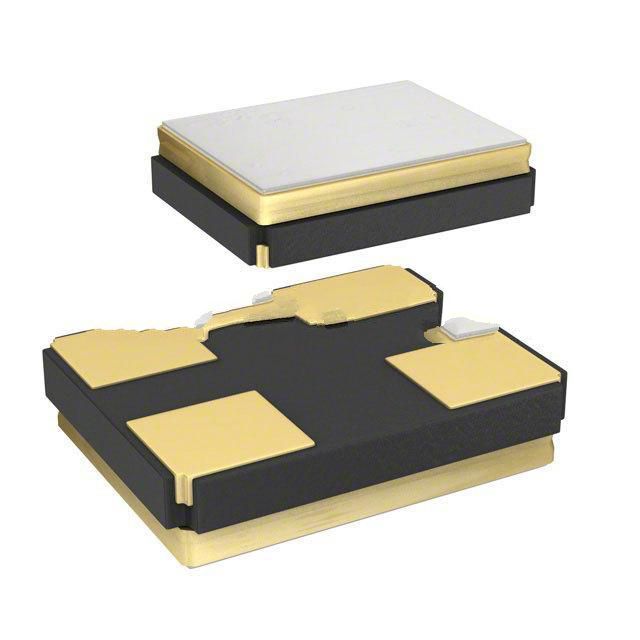
|
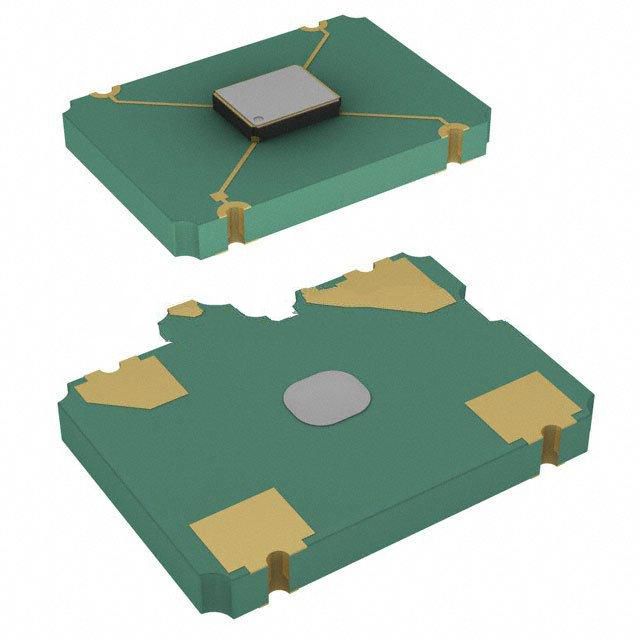
|
| Category | Crystals | Oscillators |
| Manufacturer | CTS-Frequency Controls | Kyocera International Inc. Electronic Components |
| Description | CRYSTAL 27.120 MHZ SERIES SMT | OSCILLATOR 50.0000MHZ CMOS SMD |
| Package | 4-SMD, No Lead | 4-SMD, No Lead |
| Series | 416 | KC7050K, Kyocera |
| Type | MHz Crystal | XO (Standard) |
| Operating Temperature | -40°C ~ 85°C | -40°C ~ 85°C |
| Mounting Type | Surface Mount | Surface Mount |
| Package / Case | 4-SMD, No Lead | 4-SMD, No Lead |
| Size / Dimension | 0.063" L x 0.047" W (1.60mm x 1.20mm) | 0.276" L x 0.197" W (7.00mm x 5.00mm) |
| Frequency | 27.12MHz | 50MHz |
| Height - Seated (Max) | 0.018" (0.45mm) | 0.047" (1.20mm) |
| ESR (Equivalent Series Resistance) | 200 Ohms | - |
| Frequency Stability | ±20ppm | ±50ppm |
| Frequency Tolerance | ±15ppm | - |
| Load Capacitance | Series | - |
| Operating Mode | Fundamental | - |
| Voltage - Supply | - | 1.6 V ~ 3.63 V |
| Output | - | CMOS |
| Function | - | Standby (Power Down) |
| Current - Supply (Max) | - | 6mA |


-
1. What are crystals used for in circuits?
The main functions of crystals in circuits include oscillation, filtering, frequency stabilization, and frequency selection. Crystal oscillators use the piezoelectric effect of crystals to generate stable frequencies through resonance, and are often used in various electronic devices to provide stable clock signals. In addition, crystals can also be used as filters to purify signals by selectively allowing certain frequencies to pass through and blocking other frequencies. In radio communications, crystal oscillators are also used to generate stable frequencies to ensure the accuracy and reliability of communications.
-
2. Why is quartz used in microchips?
The main reasons for using quartz in microchips include its multiple key roles in chip manufacturing and its unique physical and chemical properties.
Quartz has two main roles in chip manufacturing:
As a crystal oscillator: The crystal in quartz has certain mechanical elasticity and electrical properties, and can produce a specific form of mechanical oscillation under the action of an electric field. The frequency and stability of this oscillation are very high, making it very suitable as a time base for circuits such as electronic clocks, timers, and frequency synthesizers.
As a photolithography mask: In photolithography technology, quartz can be made into a high-precision, high-transparency mask, which is used to project the pattern on the chip onto the photoresist layer, and then transfer the pattern to the chip surface through etching.
-
3. What is the crystal oscillator used for?
Crystal oscillators are mainly used to generate stable and accurate clock signals, and are widely used in various occasions that require high-precision and high-stability frequency sources. Crystal oscillators use the piezoelectric effect of quartz crystals to convert the resonant frequency of quartz crystals into electrical signal output through an oscillation circuit, thereby providing a high-precision and high-stability frequency source.
Working principle of crystal oscillators
The working principle of crystal oscillators is based on the piezoelectric effect of quartz crystals. When an electric field is applied, the quartz crystal will undergo mechanical deformation, which will generate an electric field and form mechanical vibration. The crystal oscillator converts this mechanical vibration into an electrical signal output through an oscillation circuit, thereby generating a stable frequency signal. -
4. What role does the crystal play in the circuit?
The role of the crystal in the circuit mainly includes the following aspects:
Role in the oscillator: In a series crystal oscillator, the main role of the crystal is to generate a stable oscillation frequency. As a resonant element, the crystal controls the oscillation frequency of the circuit through its natural frequency, ensuring the stability and accuracy of the oscillator.
Role in filters: Crystals can also be used to build filters, filtering out unwanted frequency components through their frequency selection characteristics, allowing only signals of specific frequencies to pass. This characteristic makes crystals very important in communications and signal processing.
Role in clock generators: Crystals play a key role in clock generators, generating accurate clock signals through their stable oscillation frequency. This signal is widely used in various electronic devices to ensure the synchronization and accuracy of the system.
Role in voltage-controlled oscillators (VCOs): In voltage-controlled oscillators, crystals work with varactor diodes to adjust the oscillation frequency by changing the voltage. This characteristic makes crystals very useful in devices such as communications and modems.
