
6116353-2 vs RJ45-8Z3
| Part Number |
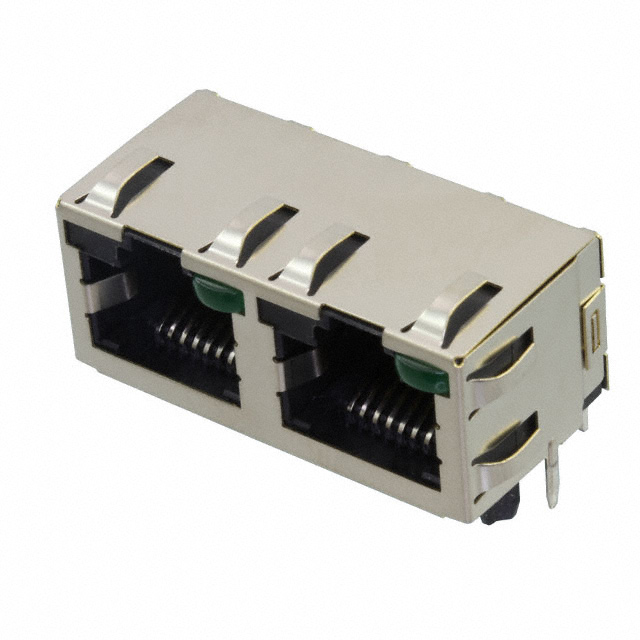
|
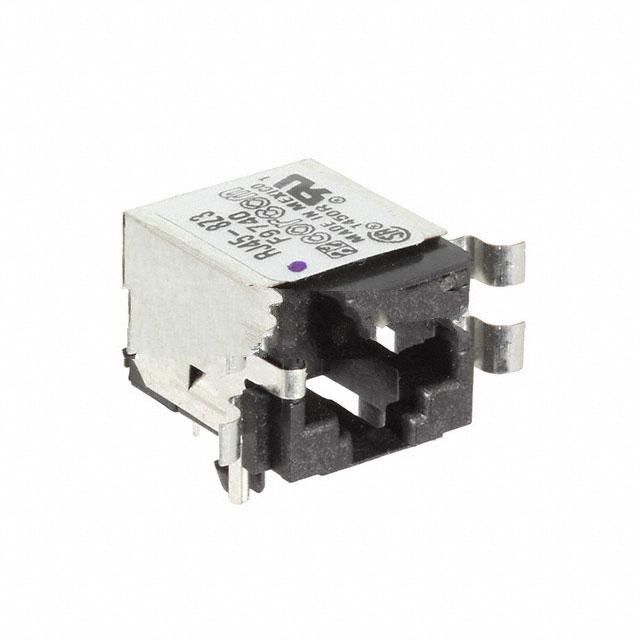
|
| Category | Modular Connectors - Jacks | Modular Connectors - Jacks |
| Manufacturer | TE Connectivity AMP Connectors | TE Connectivity Corcom Filters |
| Description | CONN MOD JACK 8P8C R/A SHIELDED | CONN MOD JACK 8P8C R/A SHIELDED |
| Package | - | - |
| Series | - | Z |
| Features | Board Guide | Board Lock, Panel Stops |
| Mounting Type | Through Hole | Through Hole |
| Termination | Solder | Solder |
| Contact Material | Phosphor Bronze | Phosphor Bronze |
| Contact Finish | Gold | Gold |
| Orientation | 90° Angle (Right) | 90° Angle (Right) |
| Ratings | Cat5 | - |
| Connector Type | Jack | Jack |
| Shielding | Shielded, EMI Finger | Shielded |
| Number of Rows | 1 | 1 |
| Number of Positions/Contacts | 8p8c (RJ45, Ethernet) | 8p8c (RJ45, Ethernet) |
| Number of Ports | 2 | 1 |
| LED Color | Green | Does Not Contain LED |
| Tab Direction | Up | Down |
-
1. What is the purpose of modular jacks?
The purpose of modular jacks is to connect devices to the network. Modular jacks are designed to provide a flexible and scalable solution to adapt to changing and diverse network needs. They usually have multiple free slots, allowing users to choose modules of different numbers, speeds and interface types to install according to specific needs, thus achieving a high degree of customizability and scalability.
-
2. What is a modular connector?
A modular connector is a device used to connect different electronic modules. It can connect electronic modules of different powers, different types and different manufacturers together to form a fully functional electronic device. Modular connectors usually consist of multiple connecting sub-components, conductive sheets, contact agents, etc.
-
3. What are the different types of RJ45 modular jacks?
There are two main types of RJ45 modular jacks, namely DTE (data terminal equipment) type and DCE (digital communication equipment) type.
The difference between these two types lies in the way they are connected to different devices.
The DTE type is mainly used in Ethernet network cards, routers and other devices. When two DTE type devices use RJ45 interface connection for communication, they must be connected using a crossover cable. This is because the data sending and receiving pins of the DTE type interface cannot perform normal data communication if they are not cross-connected.
The DCE type is usually used in devices such as switches. When connected to a DTE type device, the DCE type device can automatically negotiate with the other party. At this time, a straight-through line or a parallel line can be used for connection, depending on the automatic negotiation capability of the device. -
4. What is the difference between RJ50 and RJ45 connectors?
The main differences between RJ50 and RJ45 connectors are transmission rate, application scenarios, number of pins, line sequence, transmission distance, and anti-interference ability.
Transmission rate and application scenarios:
The transmission rate of the RJ50 interface is low, and it can usually only transmit voice and low-speed data signals. It is mainly used for telephone lines and low-speed network devices such as modems and routers.
The transmission rate of the RJ45 interface is high, and it can transmit high-speed data signals. It is mainly used for Ethernet and high-speed network devices such as computers, switches and routers.
Number of pins and line sequence:
The RJ50 interface has 4 pins, and the line sequence is 1-2-3-4.
The RJ45 interface has 8 pins, and the line sequence is 1-2-3-4-5-6-7-8.
Transmission distance and anti-interference ability:
The transmission distance of the RJ50 interface is short, and it can usually only be used within a few dozen meters. It h
