
615008145121 vs RJSSE-5080-02
| Part Number |

|
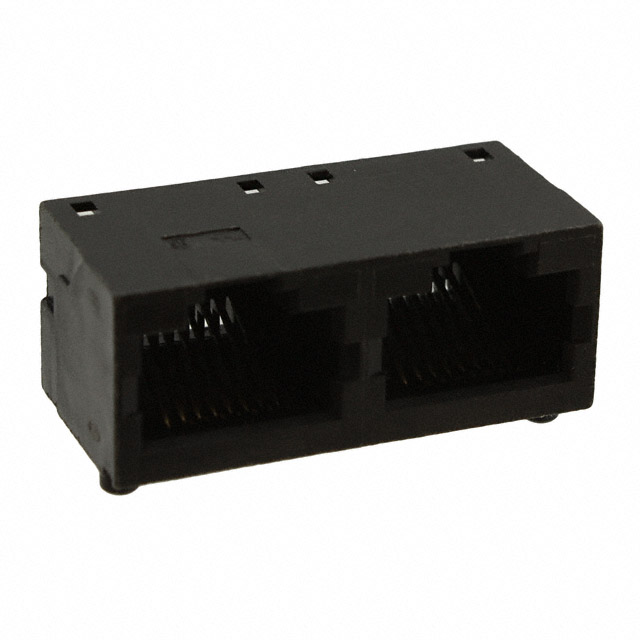
|
| Category | Modular Connectors - Jacks | Modular Connectors - Jacks |
| Manufacturer | Würth Elektronik | Amphenol ICC (Commercial Products) |
| Description | CONN MOD JACK 8P8C ANGLED SHLD | CONN MOD JACK 8P8C R/A UNSHLD |
| Package | - | - |
| Series | WR-MJ | RJSSE |
| Features | Board Lock | Board Guide, Solder Retention |
| Mounting Type | Through Hole | Surface Mount |
| Termination | Solder | Solder |
| Contact Material | Copper Alloy | Phosphor Bronze |
| Contact Finish | Gold | Gold |
| Orientation | 45° Angle | 90° Angle (Right) |
| Connector Type | Jack | Jack |
| Shielding | Shielded | Unshielded |
| Number of Rows | 1 | 1 |
| Number of Positions/Contacts | 8p8c (RJ45, Ethernet) | 8p8c (RJ45, Ethernet) |
| Number of Ports | 1 | 2 |
| LED Color | Does Not Contain LED | Does Not Contain LED |
| Tab Direction | Up | Up |
-
1. What is the purpose of modular jacks?
The purpose of modular jacks is to connect devices to the network. Modular jacks are designed to provide a flexible and scalable solution to adapt to changing and diverse network needs. They usually have multiple free slots, allowing users to choose modules of different numbers, speeds and interface types to install according to specific needs, thus achieving a high degree of customizability and scalability.
-
2. What is a modular wall jack?
A modular wall jack is a wall jack with a modular design that allows users to freely combine and splice different modules as needed, thereby providing a more flexible and integrated power solution. This design concept improves the flexibility of the product and makes production and maintenance more convenient.
-
3. What are the different types of RJ45 modular jacks?
There are two main types of RJ45 modular jacks, namely DTE (data terminal equipment) type and DCE (digital communication equipment) type.
The difference between these two types lies in the way they are connected to different devices.
The DTE type is mainly used in Ethernet network cards, routers and other devices. When two DTE type devices use RJ45 interface connection for communication, they must be connected using a crossover cable. This is because the data sending and receiving pins of the DTE type interface cannot perform normal data communication if they are not cross-connected.
The DCE type is usually used in devices such as switches. When connected to a DTE type device, the DCE type device can automatically negotiate with the other party. At this time, a straight-through line or a parallel line can be used for connection, depending on the automatic negotiation capability of the device. -
4. What is the difference between modular cable and non-modular cable?
The main difference between modular cable and non-modular cable is the detachability of the cable and the design structure of the power supply.
Modular cable, also known as modular power supply, allows the cable to be disassembled and reconfigured according to needs, providing greater flexibility and convenience. This design allows the cable to be matched according to personal needs, reducing the storage space of the cable and making the inside of the computer case neater. In addition, the cable of the modular power supply can be upgraded and replaced, further increasing the flexibility of use. However, the number of cables of the modular power supply is large and the quality is unstable, so it is necessary to purchase a good quality power supply, which increases the cost consideration.
Non-modular cables, that is, non-modular power supplies, all of whose wires and cables are fixed and cannot be removed, which may cause cross-wiring of cables, making the entire computer look messy. T
