
74LVT244WMX vs SN74ABT2244AN
| Part Number |
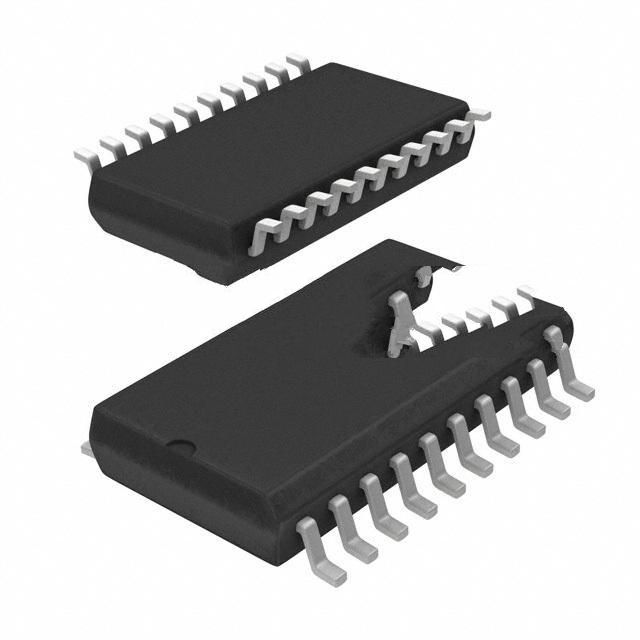
|
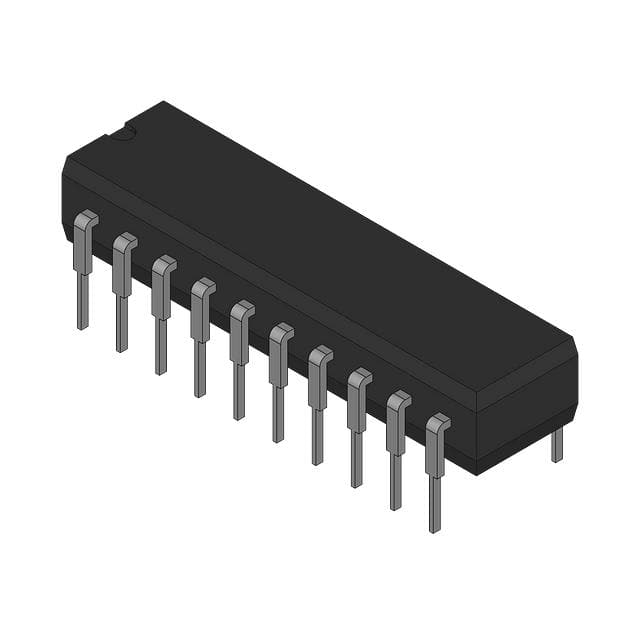
|
| Category | Logic - Buffers, Drivers, Receivers, Transceivers | Logic - Buffers, Drivers, Receivers, Transceivers |
| Manufacturer | Fairchild Semiconductor | National Semiconductor |
| Description | IC BUFF/DVR TRI-ST DUAL 20SOIC | IC BUFFER NON-INVERT 5.5V 20DIP |
| Package | 20-SOIC (0.295", 7.50mm Width) | Bulk |
| Series | 74LVT | 74ABT |
| Voltage - Supply | 2.7 V ~ 3.6 V | 4.5V ~ 5.5V |
| Operating Temperature | -40°C ~ 85°C (TA) | -40°C ~ 85°C (TA) |
| Mounting Type | Surface Mount | Through Hole |
| Package / Case | 20-SOIC (0.295", 7.50mm Width) | 20-DIP (0.300\", 7.62mm) |
| Supplier Device Package | 20-SOIC | 20-PDIP |
| Output Type | Push-Pull | 3-State |
| Number of Elements | 2 | 2 |
| Current - Output High, Low | 32mA, 64mA | 32mA, 12mA |
| Logic Type | Buffer, Non-Inverting | Buffer, Non-Inverting |
| Number of Bits per Element | 4 | 4 |
| Input Type | - | - |
-
1. What are the most common logic ICs?
The most common logic IC is CMOS logic IC. CMOS logic IC is widely used in various electronic systems due to its low power consumption and low cost.
CMOS logic IC (complementary metal oxide semiconductor logic integrated circuit) combines p-channel and n-channel MOSFETs to achieve lower power consumption than traditional TTL (transistor-transistor logic). Although CMOS logic IC was slow at first, with the advancement of wafer manufacturing process, CMOS logic IC now provides higher operating speed and relatively low cost due to its improved manufacturing process.
In addition to CMOS logic IC, other common logic ICs include TTL, BiCMOS, etc. TTL logic IC was originally widely used because it provides higher current driving capability and operating speed, but with higher power consumption. BiCMOS logic IC combines the low power consumption of CMOS and the high current driving capability of bipolar transistors, but the manufacturing process is complex and the cost is high. -
2. What is a driver buffer?
A driver buffer is an electronic component that is mainly used for signal amplification and transmission to ensure signal integrity and stability. It is often used to convert weak input signals into strong output signals to meet the needs of different application scenarios.
The working principle of the driver buffer is based on its internal structure and control mechanism. Take 74HC244 as an example. It contains two four-bit three-state buffers, and the three-state output is controlled by the output enable terminal (OE). When OE is high, the output terminal is in a high-impedance state and is disconnected from the connected circuit; when OE is low, the output terminal follows the input terminal state. This design enables the driver buffer to flexibly control the transmission and amplification of the signal. -
3. Why does the display interface need a transistor buffer or driver?
The main reason why the display interface needs a transistor buffer or driver is to enhance the driving ability of the signal, ensure that the signal can be effectively transmitted to the output end, and reduce signal loss and interference.
First, the display interface usually connects the high-speed CPU with the slow-speed peripherals (such as the display), and there is a difference in data processing speed between the two. In order to coordinate this difference and ensure the synchronization and stability of data transmission, a buffer or driver is needed to temporarily store the data, so as to achieve smooth data transmission.
Secondly, the transistor buffer or driver can amplify the signal and provide stronger driving ability to ensure that the signal is not affected by the load during transmission. This is especially important in high-voltage applications, because direct use of microcontroller drive may cause excessive power consumption and even damage the device. By using a buffer or driver, the driving signal can be effectively amplified, the switching loss can be reduced, and the power efficiency can be improved. -
4. What is the difference between a receiver and a transceiver?
The main difference between a receiver and a transceiver lies in their functions and composition. The receiver is mainly responsible for receiving signals and converting them into usable electrical signals, while the transceiver has both sending and receiving functions, including the transmitter converting electrical signals into optical signals or wireless signals, and the receiver converting received optical signals or wireless signals into electrical signals.
A receiver is a signal receiving device whose main function is to receive signals from the channel and transform them into information in the same physical form as when they were sent, and then pass them to the destination. The basic requirement of the receiver is to be able to extract the information output by the source from the interfered signal to the maximum extent and reproduce the output of the source as much as possible.
A transceiver (TRX for short) is a device that integrates sending and receiving functions. It can convert electronic signals into optical signals or wireless signals for transmission, and can convert received optical signals or wireless signals back into electronic signals. Transceivers are widely used in communication systems such as Ethernet, LAN, WAN, Bluetooth, Wi-Fi, etc., supporting long-distance, high-speed communication.
