
74LVT244WMX vs SN74AC245NSR
| Part Number |
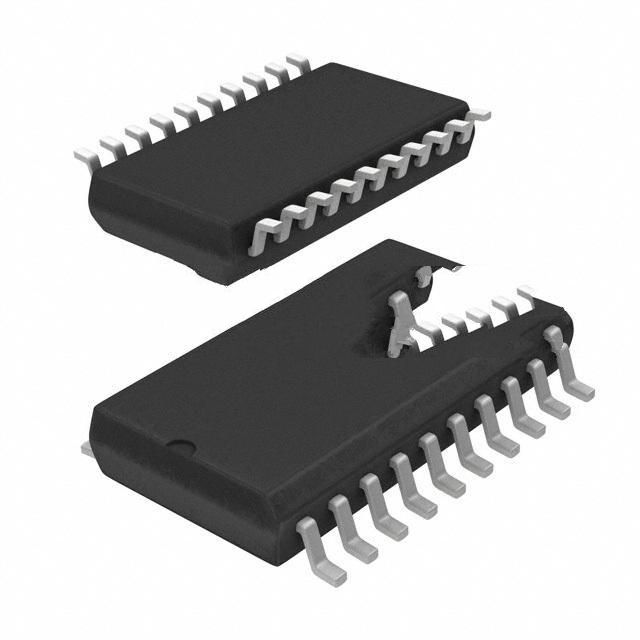
|
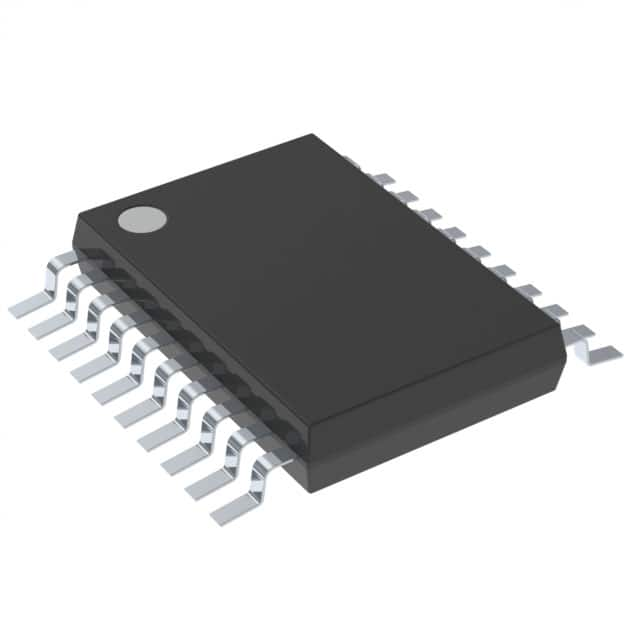
|
| Category | Logic - Buffers, Drivers, Receivers, Transceivers | Logic - Buffers, Drivers, Receivers, Transceivers |
| Manufacturer | Fairchild Semiconductor | Texas Instruments |
| Description | IC BUFF/DVR TRI-ST DUAL 20SOIC | IC TXRX NON-INVERT 6V 20SO |
| Package | 20-SOIC (0.295", 7.50mm Width) | Cut Tape (CT) |
| Series | 74LVT | 74AC |
| Voltage - Supply | 2.7 V ~ 3.6 V | 2V ~ 6V |
| Operating Temperature | -40°C ~ 85°C (TA) | -40°C ~ 85°C (TA) |
| Mounting Type | Surface Mount | Surface Mount |
| Package / Case | 20-SOIC (0.295", 7.50mm Width) | 20-SOIC (0.209\", 5.30mm Width) |
| Supplier Device Package | 20-SOIC | 20-SO |
| Output Type | Push-Pull | 3-State |
| Number of Elements | 2 | 1 |
| Current - Output High, Low | 32mA, 64mA | 24mA, 24mA |
| Logic Type | Buffer, Non-Inverting | Transceiver, Non-Inverting |
| Number of Bits per Element | 4 | 8 |
| Input Type | - | - |
-
1. What is the logic function of IC7400?
IC7400 is an integrated circuit containing 4 independent 2-input NAND gates. Its logic function is: when all inputs are "1", the output is "0"; as long as there is "0" at the input, the output is "1". The logical expression is: y=—AB.
IC7400 is the first logic chip launched by Texas Instruments in 1964 and belongs to the TTL (transistor-transistor logic) series. This series of chips quickly occupied more than 50% of the logic chip market and has undergone multiple pin-compatible generational updates, supporting low-power supply voltage and surface mount packaging.
IC7400 is not only widely used in industrial and commercial applications, but also commonly used in education and prototyping. It provides a traditional DIP pin layout and an abstract logic circuit view, which is suitable for helping students understand the working principle of basic logic units, and is also suitable for engineers to perform rapid prototyping and logic verification. -
2. What is the difference between a buffer and a transceiver?
The main difference between a buffer and a transceiver is that they have different functions and application scenarios. The buffer is mainly used for signal buffering and transmission, while the transceiver has a bidirectional data transmission function and contains a direction control circuit.
A buffer is an electronic component that is mainly used for signal buffering and transmission. It has high input impedance and low output impedance, which can ensure the integrity and stability of the signal. Buffers are often used in digital circuits to temporarily store data for processor processing or to coordinate between high-speed and low-speed devices.
A transceiver is a bidirectional device that allows data to flow in both directions. It not only has buffering and driving functions, but also contains direction control circuits so that data can be transmitted in either direction as needed. Transceivers are often used in applications that require bidirectional communication, such as backplanes and ribbon cables, where the signal is weak or needs to be transmitted over long distances.
-
3. What is a driver buffer?
A driver buffer is an electronic component that is mainly used for signal amplification and transmission to ensure signal integrity and stability. It is often used to convert weak input signals into strong output signals to meet the needs of different application scenarios.
The working principle of the driver buffer is based on its internal structure and control mechanism. Take 74HC244 as an example. It contains two four-bit three-state buffers, and the three-state output is controlled by the output enable terminal (OE). When OE is high, the output terminal is in a high-impedance state and is disconnected from the connected circuit; when OE is low, the output terminal follows the input terminal state. This design enables the driver buffer to flexibly control the transmission and amplification of the signal. -
4. Why does the display interface need a transistor buffer or driver?
The main reason why the display interface needs a transistor buffer or driver is to enhance the driving ability of the signal, ensure that the signal can be effectively transmitted to the output end, and reduce signal loss and interference.
First, the display interface usually connects the high-speed CPU with the slow-speed peripherals (such as the display), and there is a difference in data processing speed between the two. In order to coordinate this difference and ensure the synchronization and stability of data transmission, a buffer or driver is needed to temporarily store the data, so as to achieve smooth data transmission.
Secondly, the transistor buffer or driver can amplify the signal and provide stronger driving ability to ensure that the signal is not affected by the load during transmission. This is especially important in high-voltage applications, because direct use of microcontroller drive may cause excessive power consumption and even damage the device. By using a buffer or driver, the driving signal can be effectively amplified, the switching loss can be reduced, and the power efficiency can be improved.
