
841602AGILFT vs 840001AK-34LF
| Part Number |
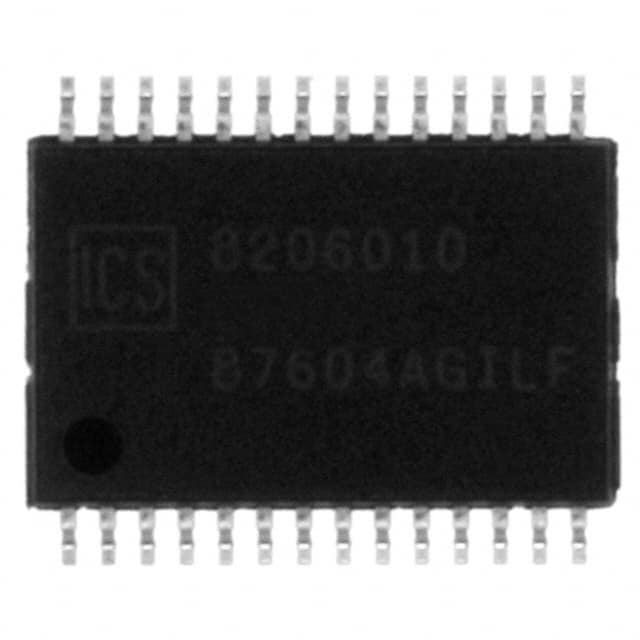
|
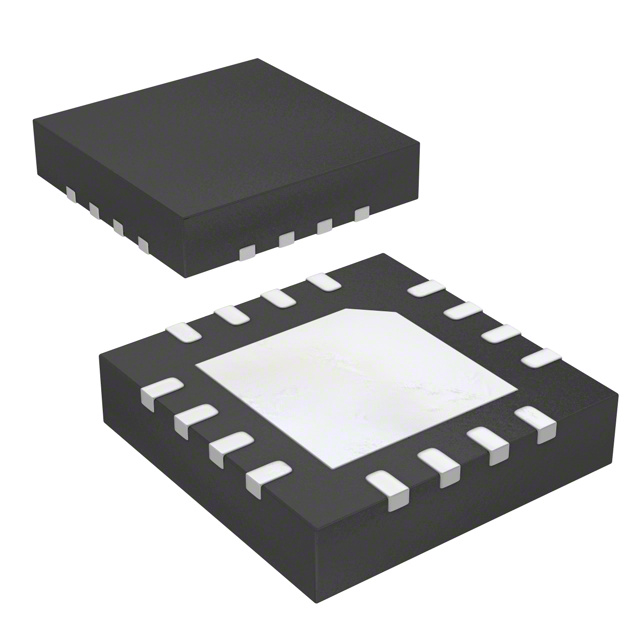
|
| Category | Clock/Timing - Clock Generators, PLLs, Frequency Synthesizers | Clock/Timing - Clock Generators, PLLs, Frequency Synthesizers |
| Manufacturer | Renesas Electronics America Inc | Renesas Electronics America Inc |
| Description | IC CLOCK GENERATOR 28-TSSOP | IC FREQ SYNTHESIZER 16-VFQFPN |
| Package | Tube | Tray |
| Series | FemtoClock® | FemtoClock® |
| Type | Clock Generator, Multiplexer | Frequency Synthesizer |
| Voltage - Supply | 3.135V ~ 3.465V | 2.375V ~ 3.465V |
| Operating Temperature | -40°C ~ 85°C | 0°C ~ 70°C |
| Mounting Type | Surface Mount | Surface Mount |
| Package / Case | 28-TSSOP (0.240\", 6.10mm Width) | 16-VFQFN Exposed Pad |
| Supplier Device Package | 28-TSSOP | 16-VFQFPN (3x3) |
| Output | HCSL | LVCMOS, LVTTL |
| Frequency - Max | 125MHz | 213.33MHz |
| Number of Circuits | 1 | 1 |
| Input | LVCMOS, LVTTL, Crystal | Crystal |
| PLL | Yes with Bypass | Yes |
| Ratio - Input:Output | 2:2 | 1:2 |
| Differential - Input:Output | No/Yes | No/No |
| Divider/Multiplier | Yes/No | Yes/No |
-
1. What is a PLL frequency synthesizer?
A PLL frequency synthesizer is a device that generates multiple output frequencies using phase-locked loop technology. Its core function is to generate different multiples of frequencies from a single reference frequency. This method is widely used in radio frequency (RF) communication systems, especially in generating local oscillator (LO) signals for up-conversion and down-conversion of RF signals.
The working principle of a PLL frequency synthesizer is based on phase-locked loop technology, which includes key components such as phase/frequency detector (PFD), loop filter, and voltage-controlled oscillator (VCO). -
2. What is the difference between a PLL and a synthesizer?
The main difference between a PLL (phase-locked loop) and a synthesizer lies in their functions and application scenarios. PLL is mainly used to achieve phase locking of the output signal with the input signal, while a synthesizer is used to generate output signals of multiple frequencies.
PLL (Phase Locked Loop) is a circuit used to lock the phase. It consists of three main parts: a phase detector (PD), a low-pass filter (LPF), and a voltage-controlled crystal oscillator (VCO).
A synthesizer is a device used to generate output signals of multiple frequencies. It realizes the frequency synthesis function by adding a frequency divider on the basis of PLL. Synthesizers can be divided into integer frequency synthesizers and fractional frequency synthesizers. -
3. How does the output frequency of the PLL frequency synthesizer change?
The core of the PLL frequency synthesizer is to change the output frequency by adjusting the various components in the loop. The basic working principle of the PLL frequency synthesizer is to generate a stable frequency signal through the interaction of the phase detector, loop filter and voltage-controlled oscillator. When the output frequency needs to be changed, the control voltage of the voltage-controlled oscillator can be changed by adjusting the input signal or by an external control signal to adjust its output frequency.
-
4. What is a PLL clock generator?
A PLL clock generator (Phase-Locked Loop Clock Generator) is an electronic circuit used to generate and adjust a clock signal. It automatically adjusts the frequency of the internal oscillator by comparing the phase difference between the input signal and the output signal of the internal oscillator so that the phase of the output signal is synchronized with the input signal. PLL clock generator is mainly used to generate high-speed and stable clock signal to provide timing reference for communication system.
The key components of PLL clock generator include:
Phase detector: compare the phase difference between input signal and feedback signal.
Charge pump: adjust the voltage to control the frequency of VCO according to the output of phase detector.
Loop filter: smooth the output of charge pump and reduce noise.
Voltage controlled oscillator (VCO): change the oscillation frequency according to the control voltage to generate output clock signal.
