
ADM238LJNZ vs MAX232AEWE+T
| Part Number |
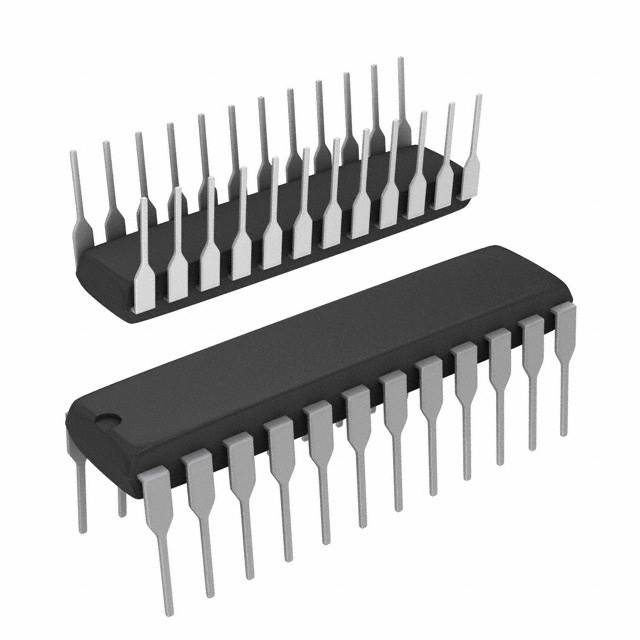
|
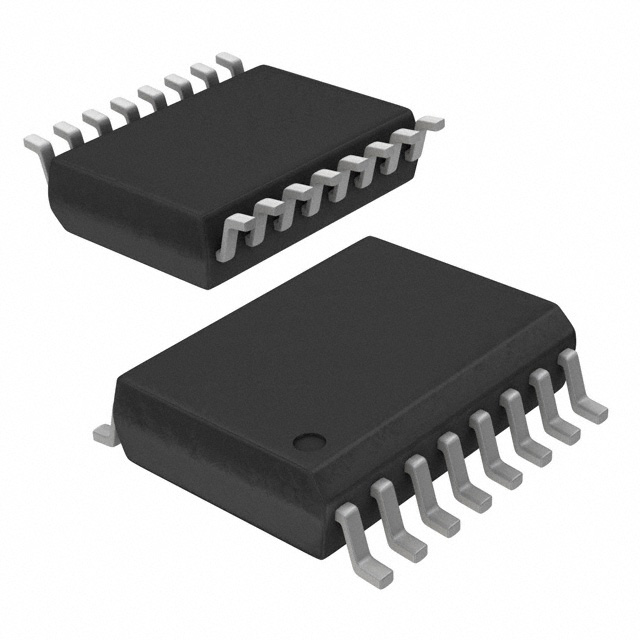
|
| Category | Interface - Drivers, Receivers, Transceivers | Interface - Drivers, Receivers, Transceivers |
| Manufacturer | Analog Devices Inc. | Maxim Integrated |
| Description | IC TRANSCEIVER FULL 4/4 24DIP | IC TRANSCEIVER FULL 2/2 16SO |
| Package | Tube | -Reel® |
| Series | - | - |
| Type | Transceiver | Transceiver |
| Voltage - Supply | 4.75V ~ 5.25V | 4.5V ~ 5.5V |
| Operating Temperature | 0°C ~ 70°C | -40°C ~ 85°C |
| Mounting Type | Through Hole | Surface Mount |
| Package / Case | 24-DIP (0.300\", 7.62mm) | 16-SOIC (0.295\", 7.50mm Width) |
| Supplier Device Package | 24-PDIP | 16-SOIC |
| Protocol | RS232 | RS232 |
| Data Rate | 120Kbps | 200kbps |
| Number of Drivers/Receivers | 4/4 | 2/2 |
| Receiver Hysteresis | 650 mV | 500 mV |
| Duplex | Full | Full |
-
1. What is an interface driver?
An interface driver is a special program that allows the operating system to control hardware devices through a specific interface. The interface driver is equivalent to a bridge between the hardware and the system, enabling the operating system to identify and control various hardware devices.
The main function of the interface driver is to handle tasks such as data transmission, device identification and resource allocation, ensuring that the hardware devices can be correctly connected and recognized and used by the system. -
2. What is a sensor interface IC?
A sensor interface IC is an integrated circuit used to connect sensors and system processors to realize data conversion and transmission. It is mainly responsible for converting analog signals collected by sensors into digital signals, or performing signal conditioning, amplification, filtering and other processing so that the system can recognize and process them.
The main functions of the sensor interface IC include signal conversion, signal conditioning and data transmission. It can amplify and filter the weak signal output by the sensor to improve the quality and stability of the signal, and then convert the processed signal into a digital signal for the system to process. In addition, the interface IC can also realize multiplexing to improve the efficiency and flexibility of the system. -
3. What is a transceiver IC?
A transceiver IC is an integrated circuit that is mainly used to realize the sending and receiving functions of signals. It can be used in different communication systems. According to the specific application scenario, the transceiver IC can realize the conversion between electrical signals and optical signals and radio frequency signals.
The specific types of transceiver ICs include optical transceiver chips and radio frequency transceiver chips. Optical transceiver chips are mainly used in optical fiber communication systems to realize the conversion between optical signals and electrical signals. They are the basic chips of the physical layer of optical fiber broadband networks. Radio frequency transceiver chips are used in radio communications. As a "translator" between radio waves and digital signals, they realize the conversion between baseband signals and radio frequency signals. They are widely used in 5G base stations, industrial Internet, Internet of Vehicles and other fields. -
4. What are transceivers used for?
Transceivers are mainly used to convert digital signals into optical signals or electrical signals for data transmission in computer networks. The transceiver consists of two parts: a transmitter and a receiver. The transmitter converts the digital signal into an optical signal or an electrical signal and sends it to the network, while the receiver converts the received optical signal or electrical signal back into a digital signal for computer processing.
The working principle of the transceiver is based on photoelectric conversion and electro-optical conversion technology. At the transmitting end, the transceiver converts the digital signal into an optical signal or an electrical signal and transmits it to the remote device through modulation technology; at the receiving end, the transceiver converts the received optical signal or electrical signal back into a digital signal through demodulation technology for local device processing.
The application scenarios of transceivers are very wide, including local area networks, wide area networks, wireless networks, satellite communications, optical fiber communications, robots and IoT devices. They are widely used in computer networks, communication equipment, industrial automation and other fields to realize data transmission and communication between different devices.
