
ADS7890IPFBT vs ADC12DL040CIVS/NOPB
| Part Number |
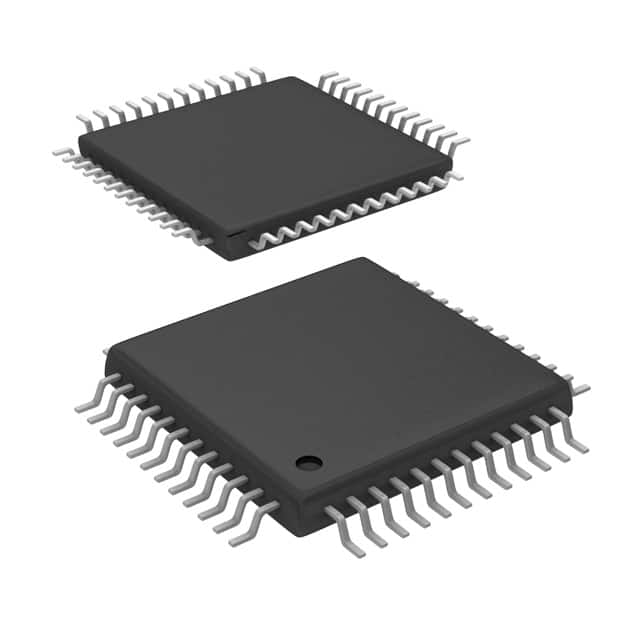
|
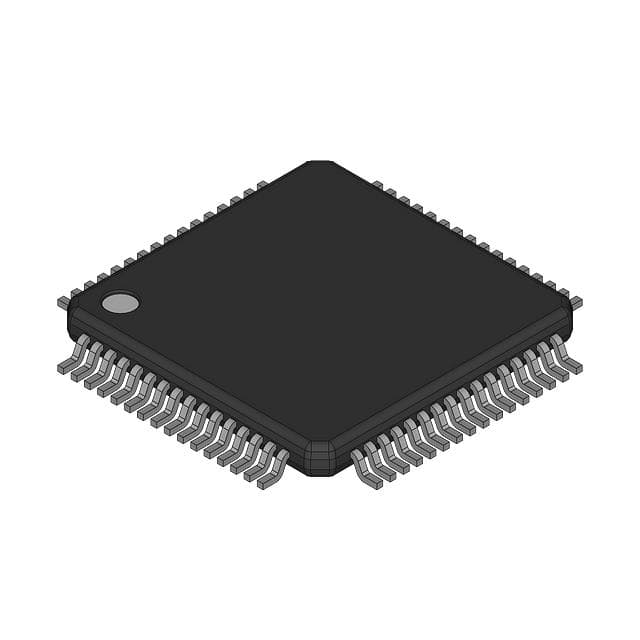
|
| Category | Data Acquisition - Analog to Digital Converters (ADC) | Data Acquisition - Analog to Digital Converters (ADC) |
| Manufacturer | Texas Instruments | National Semiconductor |
| Description | IC ADC 14BIT SAR 48TQFP | IC ADC 12BIT PIPELINED 64TQFP |
| Package | Bulk | Bulk |
| Series | - | - |
| Features | - | Simultaneous Sampling |
| Operating Temperature | -40°C ~ 85°C | -40°C ~ 85°C |
| Mounting Type | Surface Mount | Surface Mount |
| Package / Case | 48-TQFP | 64-TQFP |
| Supplier Device Package | 48-TQFP (7x7) | 64-TQFP (10x10) |
| Reference Type | External, Internal | External, Internal |
| Sampling Rate (Per Second) | 1.25M | 40M |
| Data Interface | SPI | Parallel |
| Number of Bits | 14 | 12 |
| Voltage - Supply, Analog | 5V | 2.7V ~ 3.6V |
| Voltage - Supply, Digital | 2.7V ~ 5.25V | 2.4V ~ 3.6V |
| Number of Inputs | 1 | 2 |
| Input Type | Pseudo-Differential | Differential |
| Configuration | S/H-ADC | S/H-ADC |
| Ratio - S/H:ADC | 1:1 | 1:1 |
| Number of A/D Converters | 1 | 2 |
| Architecture | SAR | Pipelined |
-
1. How does ADC convert analog to digital?
The technology that converts analog sound signals into digital signals is called analog-to-digital conversion technology (Analog to Digital Converter, referred to as ADC). The function of ADC is to convert continuously changing analog signals into discrete digital signals. The process of analog-to-digital conversion can be completed by steps such as sampling, holding, quantization, and encoding.
-
2. What is the main purpose of ADC?
The main purpose of ADC is to convert the input analog signal into a digital signal.
ADC, or analog-to-digital converter, is mainly used to convert continuously changing analog signals into discrete digital signals. The implementation process of ADC usually includes four steps: sampling, holding, quantization, and encoding.
-
3. How many types of ADC are there?
The types of ADC (Analog-to-Digital Converter) mainly include:
1. Integral ADC: Its working principle is to convert the input voltage into time (pulse width signal) or frequency (pulse frequency), and then obtain the digital value by the timer/counter. The advantage of the integral ADC is that it can obtain high resolution with a simple circuit and has strong anti-interference ability, but the disadvantage is that the conversion rate is extremely low because the conversion accuracy depends on the integration time.
2. Successive approximation type (SAR ADC): The successive approximation ADC is one of the most common architectures. Its basic principle is to convert by gradually approximating the value of the analog input signal. The advantages of the successive approximation ADC are high speed and low power consumption. It is cheap at low resolution, but expensive at high precision.
3. Parallel comparison type/serial-parallel comparison type ADC: The parallel comparison type AD uses m -
4. Why do we need analog-to-digital converters?
The reasons why we need analog-to-digital converters mainly include the following:
Digital system processing: Many computers and electronic devices are digital systems, which are more suitable for processing digital signals. Analog signals are difficult to process in digital systems, and after analog-to-digital conversion, the signals can be represented, stored and processed in digital form.
Noise immunity: Digital signals are more noise-resistant than analog signals. Digital signals can be protected and restored by means such as error correction codes, while analog signals are easily interfered by noise.
Accuracy: Digital signals are more accurate because they can be represented with higher resolution. Analog signals have accuracy limitations, and analog-to-digital conversion can improve the resolution of the signal.
Application scenarios: Analog-to-digital converters are widely used in many fields, including automatic control systems, audio and video processing, sensor interfaces
