
BMD040-3MP vs DC030NDR5
| Part Number |
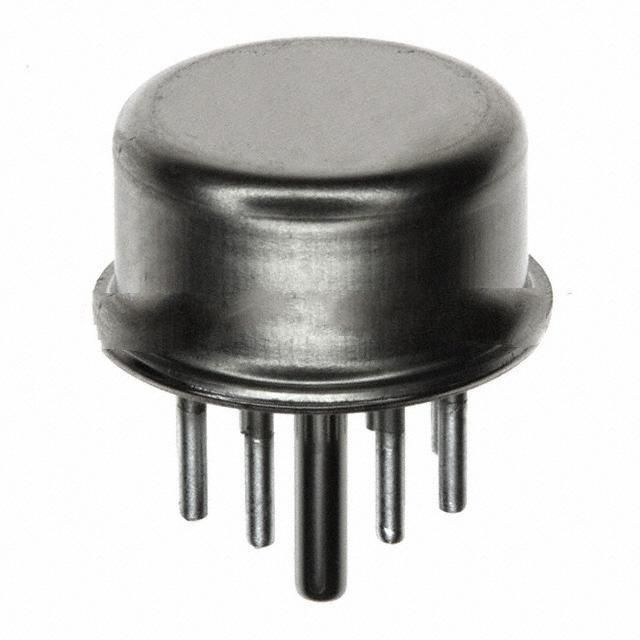
|

|
| Category | Pressure Sensors, Transducers | Pressure Sensors, Transducers |
| Manufacturer | Bosch Sensortec | Honeywell Sensing and Productivity Solutions |
| Description | ABS. PRESSURE SENSOR ANLG INDUST | SENSOR PRESS DIFF 30" H2O 4SIP |
| Package | TO-233AA, TO-8-3 Metal Can | 4-SIP Module |
| Series | - | DC |
| Features | Amplified Output, Temperature Compensated | Temperature Compensated |
| Voltage - Supply | 4.75 V ~ 5.25 V | 7 V ~ 30 V |
| Operating Temperature | -30°C ~ 100°C | -25°C ~ 85°C |
| Package / Case | TO-233AA, TO-8-3 Metal Can | 4-SIP Module |
| Supplier Device Package | TO-8 | - |
| Output | -1 mA ~ 0.5 mA | 1 V ~ 6 V |
| Accuracy | ±2% | ±0.25% |
| Output Type | Analog Current | Analog Voltage |
| Termination Style | Surface Mount | PCB |
| Pressure Type | Absolute | Differential |
| Operating Pressure | 7.25 PSI ~ 435.11 PSI (50 kPa ~ 3000 kPa) | 1.08 PSI (7.48 kPa) |
| Port Style | Barbless | Barbed |
| Maximum Pressure | 652.67 PSI (4500 kPa) | 16.26 PSI (112.13 kPa) |
| Port Size | Male - 0.59" (1.5mm) Tube | Male - 0.19" (4.83mm) Tube, Dual |
-
1. What is a pressure sensor?
A pressure sensor is a device that can convert a pressure signal into an electrical signal and is widely used in various industrial automatic control environments. It usually consists of a pressure sensitive element and a signal processing unit, which can sense the pressure signal and convert it into a usable output electrical signal according to a certain rule.
Definition and function
The basic concept of a pressure sensor is to convert a pressure signal into an electrical signal for subsequent signal processing and control. The working principle of a pressure sensor is mainly based on physical phenomena such as piezoelectric effect, strain effect and capacitance effect. The piezoelectric effect refers to the fact that certain materials generate electric charge when subjected to pressure; the strain effect refers to the deformation of the material when subjected to pressure, thereby changing the resistance value; the capacitance effect refers to the change in capacitance value caused by pressure change.
Classification
According to the working principle and structural characteristics, pressure sensors can be divided into the following categories:
Piezoresistive pressure sensor: based on the strain effect, usually made of semiconductor materials.
Piezoelectric pressure sensor: based on the piezoelectric effect, usually made of crystal or ceramic materials.
Capacitive pressure sensor: based on the capacitance effect, composed of two conductors and an insulating medium.
Fiber optic pressure sensor: uses the light transmission characteristics of optical fiber to convert pressure signals into optical signals. -
2. Is a transducer a sensor?
A transducer is not a sensor. Although both sensors and transducers are devices for measuring physical quantities, they have obvious differences in definition and application.
Definition and function
Sensor: A sensor is a device that converts non-electrical signals into electrical signals. It is usually used to convert physical quantities (such as temperature, pressure, humidity, light intensity, etc.) into electrical signals. Sensors are widely used in industry, medical care, environmental monitoring and other fields.
Transducer: A transducer is a device that converts one form of energy into another form. It can convert any form of physical quantity (such as pressure, force, torque, displacement, sound, light, heat, etc.) into electrical signals or other forms of energy output. Transducers are widely used in the control, measurement and detection of various industrial processes.
-
3. Application field
Sensor: Mainly used for industrial process control and monitoring, equipment control and monitoring in the fields of automobiles, machinery, electronics, medical equipment, aerospace, etc., as well as environmental monitoring and weather forecasting.
Transducers: Mainly used in exploration and production processes in the fields of ocean, petroleum, aviation, energy, etc., engineering measurement and control fields (such as monitoring and control of structures such as buildings, bridges and tunnels), scientific research fields (such as physics, chemistry, biology, etc.), and music and art fields (such as electronic musical instruments and sound amplifiers). -
4. What is the difference between sensors and actuators?
The main difference between sensors and actuators lies in their functions, design principles and application scenarios.
Function and design principle
Sensor: A sensor is a device that converts various physical quantities (such as temperature, pressure, light intensity, etc.) into easy-to-process electrical signals. Its main function is to detect and collect physical quantities in the environment, and convert these physical quantities into electrical signal output for further processing and analysis.
Actuator: An actuator is a device that converts electrical signals, air pressure, hydraulic pressure and other energies into physical motion. Its main function is to perform corresponding action control according to the received electrical signal, such as controlling the movement of the robot, adjusting the cutting of the machine tool, etc.
Application scenarios
Sensors: Sensors are usually used in areas that require monitoring environmental information, controlling automation equipment, adjusting motion control systems, such as smart homes, aircraft, robots, etc.
Actuators: Actuators are used to adjust control systems, convert energy, complete mechanical work, etc., such as hydraulic pumps driven by electric motors, pneumatic control valves, etc.
