
CD4022BPWRG4 vs SN74LV163ARGYRG4
| Part Number |
|
|
| Category | Logic - Counters, Dividers | Logic - Counters, Dividers |
| Manufacturer | Texas Instruments | Texas Instruments |
| Description | IC COUNTR/DIVIDR DECADE 16-TSSOP | IC 4BIT SYNC BINRY COUNTR 16VQFN |
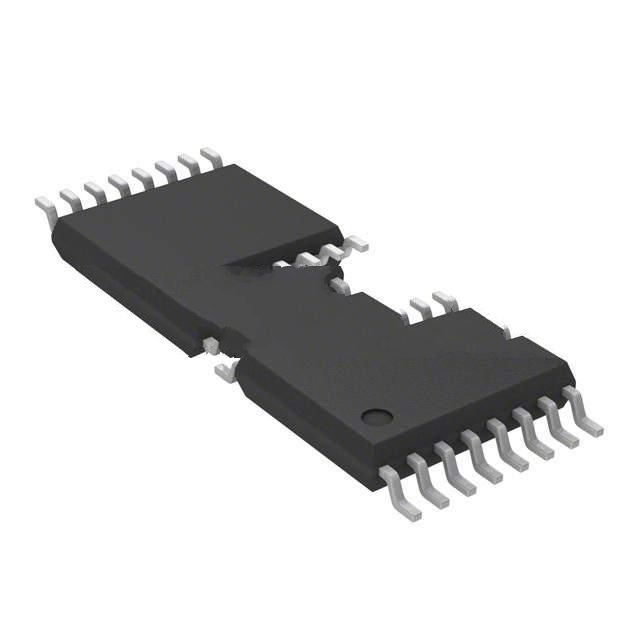
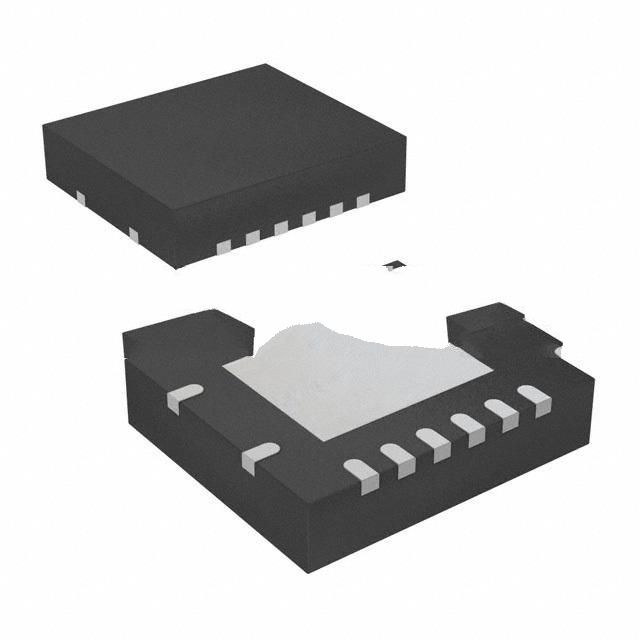
| Package | 16-TSSOP (0.173", 4.40mm Width) | 16-VFQFN Exposed Pad |
| Series | 4000B | 74LV |
| Voltage - Supply | 3V ~ 18V | 2V ~ 5.5V |
| Operating Temperature | -55°C ~ 125°C | -40°C ~ 85°C |
| Mounting Type | Surface Mount | Surface Mount |
| Package / Case | 16-TSSOP (0.173", 4.40mm Width) | 16-VFQFN Exposed Pad |
| Supplier Device Package | 16-TSSOP | 16-VQFN (4x4) |
| Reset | Asynchronous | Synchronous |
| Number of Elements | 1 | 1 |
| Trigger Type | Positive Edge | Positive Edge |
| Logic Type | Binary Counter | Binary Counter |
| Number of Bits per Element | 4 | 4 |
| Direction | Up | Up |
| Count Rate | 6MHz | 90MHz |
| Timing | - | Synchronous |
-
1. What is a counter in digital logic design?
A counter is a commonly used sequential logic circuit in digital logic design, mainly used to count the number of pulses, so as to realize functions such as measurement, counting, frequency division and control. A counter consists of a basic counting unit and some control gates, and these counting units are usually composed of triggers (such as RS triggers, T triggers, D triggers and JK triggers).
Classification of counters
Synchronous counters and asynchronous counters: classified according to whether the triggers flip at the same time.
Adder counters, subtractor counters and reversible counters: classified according to the increase and decrease of numbers during the counting process.
Binary counters and decimal counters: classified according to the counting system.
-
2. What is a counter in a logic circuit?
A counter is a logic circuit that realizes counting operations, mainly used to count the number of pulses to realize the functions of measurement, counting and control, and also has frequency division functions. A counter consists of a basic counting unit and some control gates, and these counting units are composed of a series of triggers with information storage functions, such as RS triggers, T triggers, D triggers and JK triggers.
-
3. What is a counter IC?
A counter IC is an integrated circuit (IC) that can count external input clocks. It usually sends counting data through the I2C-bus interface and is suitable for various measuring devices, infrastructure-related measuring instruments, entertainment equipment, life counters, etc. The basic function of a counter IC is to count the input pulse signal. The state of its output port changes with the number of input pulse signals. When the maximum value is reached, the output state returns to zero.
Working principle of counter IC
The basic working principle of counter IC is to count the external input clock signal. It usually consists of a trigger, an adder, and a clock control circuit. Counter IC has two working modes: synchronous and asynchronous. Synchronous counters work under a unified clock signal and update the output state at the end of each clock cycle; asynchronous counters reset the output state of the counter by receiving a special clear signal. -
4. What kind of IC is used for counters?
Common counter ICs include the following:
74LS163: This is a 4-bit synchronous counter designed with a gate-level trigger, which can be used for counting, frequency division, waveform generation and other circuits. It is characterized by a simple input port, expandable counting bit number, and wide application.
74LS169: This is a 4-bit synchronous reversible counter that can count in both positive and negative directions. It can be used in circuits such as time measurement, electronic clocks, timers, and electronic games. Its feature is that the counting direction is controllable, and it can realize forward and reverse counting and conversion.
74LS190: This is a resettable 4-bit synchronous counter that can realize binary counting and can be used in circuits such as frequency dividers, frequency meters, timers, and position indicators. Its features are resettable counting, zero clearing function, simple and practical.
CD4017: This is a very popular frequency divider and counter chip with a built-in 10-bit counter. A single output pin outputs a high level, which can realize Morse code generators, LED running lights, automatic line patrol cars and other circuits. Its features are stable output level and flexible and diverse applications.
CD4040: This is a 12-bit binary counter that can realize binary counting of 1-4096 and can be used in circuits such as timers, frequency dividers, and pulse generators. Its features are strong scalability, variable counting digits, and wide application fields.
