
DP83640TVVX/NOPB vs M21202G-14
| Part Number |
|
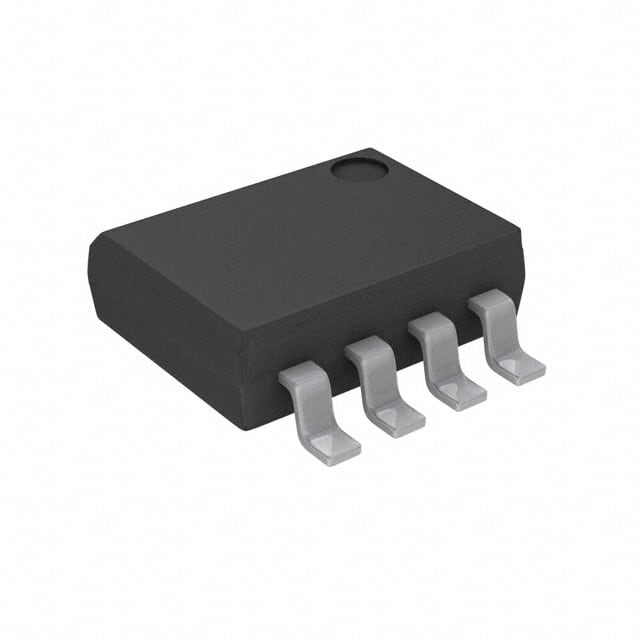
|
| Category | Interface - Drivers, Receivers, Transceivers | Interface - Drivers, Receivers, Transceivers |
| Manufacturer | National Semiconductor | MACOM Technology Solutions |
| Description | DP83640 IEEE 1588 PRECISION-TIME | IC DRIVER 1/0 8SOIC |
| Package | Bulk | Tube |
| Series | - | - |
| Type | - | Driver |
| Voltage - Supply | - | - |
| Operating Temperature | - | -10°C ~ 85°C |
| Mounting Type | - | Surface Mount |
| Package / Case | - | 8-SOIC (0.154\", 3.90mm Width) |
| Supplier Device Package | - | 8-SOIC |
| Protocol | - | SMPTE 344M |
| Data Rate | - | - |
| Number of Drivers/Receivers | - | 1/0 |
| Receiver Hysteresis | - | - |
| Duplex | - | - |
-
1. What is an IC driver?
An IC driver is an integrated circuit that is mainly used to control and drive various devices, such as LCDs, motors, etc. It integrates the circuits that drive and control these devices, making the entire circuit design more concise and reducing the risk of overcurrent and overheating.
The role of the IC driver is to convert the signal from the host or controller into the signal required by the peripheral or sensor so that it can work properly. Depending on the function, the driver chip can be divided into many types, such as motor driver IC, LCD driver IC, etc. -
2. What is an interface IC?
An interface IC is a chip with an internal interface circuit, which is mainly used for connection and data exchange between the CPU and external devices and memory. The interface IC coordinates the differences in speed, type, timing, etc. between the CPU and external devices through internally set registers, buffer logic, information format conversion and other functions to ensure accurate and efficient data transmission.
The main functions of the interface IC include:
Setting data storage and buffering logic: adapting to the speed difference between the CPU and external devices, and performing batch data transmission through registers or RAM chips.
Information format conversion: such as serial and parallel conversion, adapting to different data transmission requirements.
Coordinating timing differences: ensuring the synchronization of the CPU and external devices in timing.
Address decoding and selection: realizing the selection and control of peripherals.
Setting interrupt and DMA control logic: ensuring the correct processing and transmission of interrupt and DMA request signals.
Interface ICs are widely used in various electronic devices, such as smart homes, industrial automation, computer systems, etc. For example, Type-C interface chips are used to implement Type-C interface functions, supporting high-speed data transmission and power transmission; RS-485 interface chips are used in industrial automation and control systems, supporting multi-point differential signal transmission. -
3. What are transceivers used for?
Transceivers are mainly used to convert digital signals into optical signals or electrical signals for data transmission in computer networks. The transceiver consists of two parts: a transmitter and a receiver. The transmitter converts the digital signal into an optical signal or an electrical signal and sends it to the network, while the receiver converts the received optical signal or electrical signal back into a digital signal for computer processing.
The working principle of the transceiver is based on photoelectric conversion and electro-optical conversion technology. At the transmitting end, the transceiver converts the digital signal into an optical signal or an electrical signal and transmits it to the remote device through modulation technology; at the receiving end, the transceiver converts the received optical signal or electrical signal back into a digital signal through demodulation technology for local device processing.
The application scenarios of transceivers are very wide, including local area networks, wide area networks, wireless networks, satellite communications, optical fiber communications, robots and IoT devices. They are widely used in computer networks, communication equipment, industrial automation and other fields to realize data transmission and communication between different devices. -
4. What is the difference between a transmitter and a transceiver?
The core difference between a transmitter and a transceiver lies in their functions and uses. The transmitter is mainly responsible for converting electrical signals into optical signals and transmitting them through optical fibers; while the transceiver has both transmitting and receiving functions, which can convert electrical signals into optical signals for transmission and also convert optical signals into electrical signals for reception.
The transmitter is usually composed of an optical transmitting module, whose function is to convert electrical signals into optical signals and transmit them through optical fibers. It is mainly used to connect devices that need to send data, such as computers, servers, etc. 12. The transceiver contains two modules, optical transmitting and optical receiving, which can complete the two-way transmission of signals, and can both send and receive data.
