
DS90LV048ATM/NOPB vs MAX13089EASD+
| Part Number |
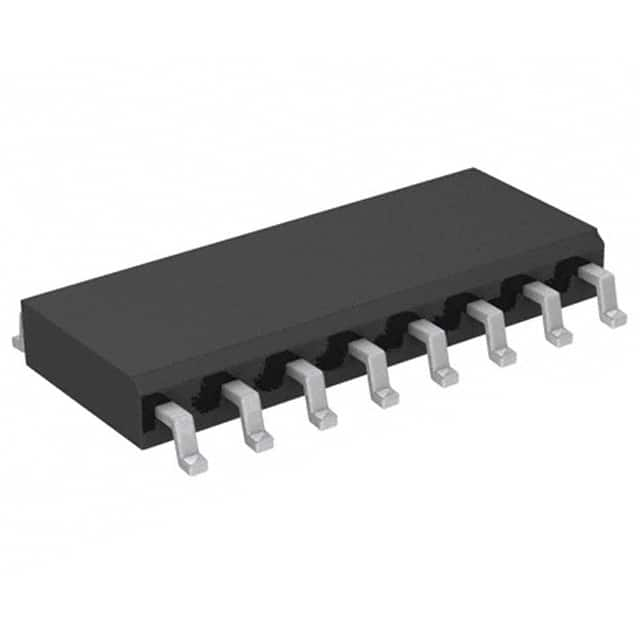
|
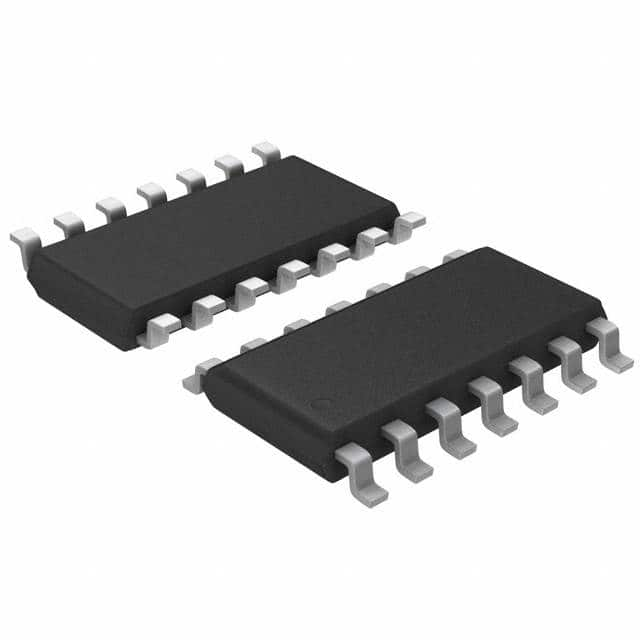
|
| Category | Interface - Drivers, Receivers, Transceivers | Interface - Drivers, Receivers, Transceivers |
| Manufacturer | Texas Instruments | Maxim Integrated |
| Description | IC RECEIVER 0/4 16SOIC | IC TRANSCEIVER FULL 1/1 14SOIC |
| Package | Tube | Tube |
| Series | - | - |
| Type | Receiver | Transceiver |
| Voltage - Supply | 3V ~ 3.6V | 4.5V ~ 5.5V |
| Operating Temperature | -40°C ~ 85°C | -40°C ~ 125°C |
| Mounting Type | Surface Mount | Surface Mount |
| Package / Case | 16-SOIC (0.154\", 3.90mm Width) | 14-SOIC (0.154\", 3.90mm Width) |
| Supplier Device Package | 16-SOIC | 14-SOIC |
| Protocol | LVDS | RS422, RS485 |
| Data Rate | 400Mbps | 16Mbps |
| Number of Drivers/Receivers | 0/4 | 1/1 |
| Receiver Hysteresis | - | 100 mV |
| Duplex | - | Full |
-
1. What is an interface driver?
An interface driver is a special program that allows the operating system to control hardware devices through a specific interface. The interface driver is equivalent to a bridge between the hardware and the system, enabling the operating system to identify and control various hardware devices.
The main function of the interface driver is to handle tasks such as data transmission, device identification and resource allocation, ensuring that the hardware devices can be correctly connected and recognized and used by the system. -
2. What is an IC driver?
An IC driver is an integrated circuit that is mainly used to control and drive various devices, such as LCDs, motors, etc. It integrates the circuits that drive and control these devices, making the entire circuit design more concise and reducing the risk of overcurrent and overheating.
The role of the IC driver is to convert the signal from the host or controller into the signal required by the peripheral or sensor so that it can work properly. Depending on the function, the driver chip can be divided into many types, such as motor driver IC, LCD driver IC, etc. -
3. What are transceivers used for?
Transceivers are mainly used to convert digital signals into optical signals or electrical signals for data transmission in computer networks. The transceiver consists of two parts: a transmitter and a receiver. The transmitter converts the digital signal into an optical signal or an electrical signal and sends it to the network, while the receiver converts the received optical signal or electrical signal back into a digital signal for computer processing.
The working principle of the transceiver is based on photoelectric conversion and electro-optical conversion technology. At the transmitting end, the transceiver converts the digital signal into an optical signal or an electrical signal and transmits it to the remote device through modulation technology; at the receiving end, the transceiver converts the received optical signal or electrical signal back into a digital signal through demodulation technology for local device processing.
The application scenarios of transceivers are very wide, including local area networks, wide area networks, wireless networks, satellite communications, optical fiber communications, robots and IoT devices. They are widely used in computer networks, communication equipment, industrial automation and other fields to realize data transmission and communication between different devices. -
4. What are SFP transceivers used for?
SFP transceivers are mainly used for optical communication applications in telecommunications and data communications, especially for connecting motherboards and optical fibers or UTP cables for network devices such as switches and routers. SFP transceivers achieve high-speed data transmission by converting gigabit electrical signals into optical signals. Their maximum data transmission rate can reach 4.25 Gbps. They are mainly used in communication fields such as Gigabit Ethernet, Gigabit Optical Channel, switch interface, switching backplane, etc.
SFP transceivers have many types, which can be divided into the following categories according to the cable type, transmission range, transmission rate and application scenario:
Cable type: SFP modules can work on optical fiber and copper wire, and are divided into single-mode SFP used with single-mode optical fiber and multi-mode SFP used with multi-mode optical fiber.
Transmission range: Multi-mode SFP is suitable for shorter distance transmission, up to 550 meters, while single-mode SFP is suitable for long-distance transmission, up to 200 kilometers.
Transmission rate: From Fast Ethernet to Gigabit Ethernet, to 10Gb, 25Gb and 100Gb Ethernet, SFP modules are constantly upgraded to meet higher bandwidth requirements.
Application: SFP modules are widely used in scenarios such as high-definition audio/video transmission, passive optical network (PON), multiplexing and simplex networks.
