
DSD1794ADBR vs LTC1293CCN#PBF
| Part Number |

|
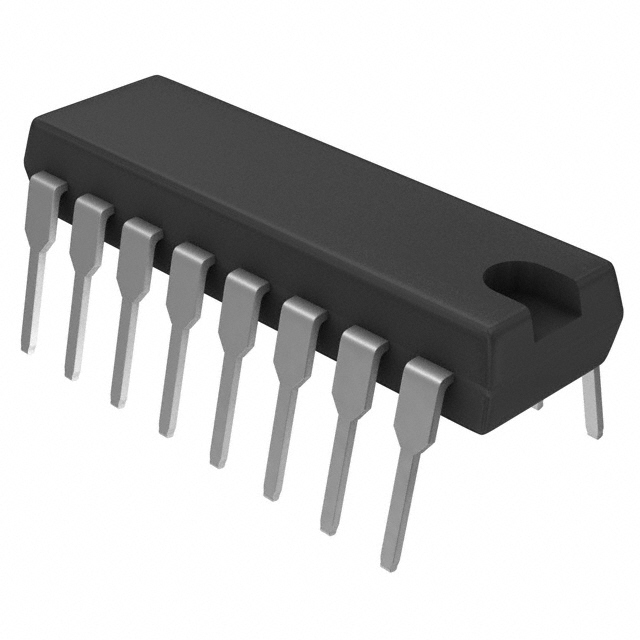
|
| Category | Data Acquisition - ADCs/DACs - Special Purpose | Data Acquisition - ADCs/DACs - Special Purpose |
| Manufacturer | Texas Instruments | Analog Devices Inc. |
| Description | IC DAC/AUDIO 24BIT 200K 28SSOP | IC DAS/ADC 12BIT 46.5K 16DIP |
| Package | Tape & Reel (TR) | Tube |
| Series | - | - |
| Type | DAC, Audio | Data Acquisition System (DAS), ADC |
| Voltage - Supply | 3V ~ 3.6V, 5V | ±5V, 5V |
| Operating Temperature | -25°C ~ 85°C | 0°C ~ 70°C |
| Mounting Type | Surface Mount | Through Hole |
| Package / Case | 28-SSOP (0.209\", 5.30mm Width) | 16-DIP (0.300\", 7.62mm) |
| Supplier Device Package | 28-SSOP | 16-PDIP |
| Number of Channels | 3 | 8 |
| Resolution (Bits) | 24 b | 12 b |
| Sampling Rate (Per Second) | 200k | 46.5k |
| Data Interface | DSD, PCM | Serial, Parallel |
| Voltage Supply Source | Analog and Jinftrytal | Dual ± |
-
1. What are special purpose ADCs and DACs?
Special purpose ADCs (analog-to-digital converters) and DACs (digital to analog converters) are converters designed for specific applications, with optimized performance such as higher resolution, speed, or special features, suitable for specific industries or application needs, such as medical, automotive, or industrial control.
-
2. What is the working principle of ADCs and DACs?
ADC converts analog signals (such as voltage) into digital signals (such as binary numbers), while DAC performs the opposite operation, converting digital signals into analog signals, typically used in devices that require analog output.
-
3. What communication interfaces do special purpose ADCs and DACs support?
Special purpose ADCs/DACs typically support multiple communication interfaces, including SPI, I2C, parallel interfaces, and UART, for data transmission with microcontrollers, DSPs, or other embedded systems.
-
4. How to use special purpose ADCs and DACs in high noise environments?
In high noise environments, it is particularly important to choose ADCs and DACs with high signal-to-noise ratio (SNR) and good anti-interference design. Shielding and filtering techniques can also help reduce noise interference, ensuring accurate signal acquisition and output.
