
DSPB56367AG150 vs TMS320DM6437ZWT6
| Part Number |
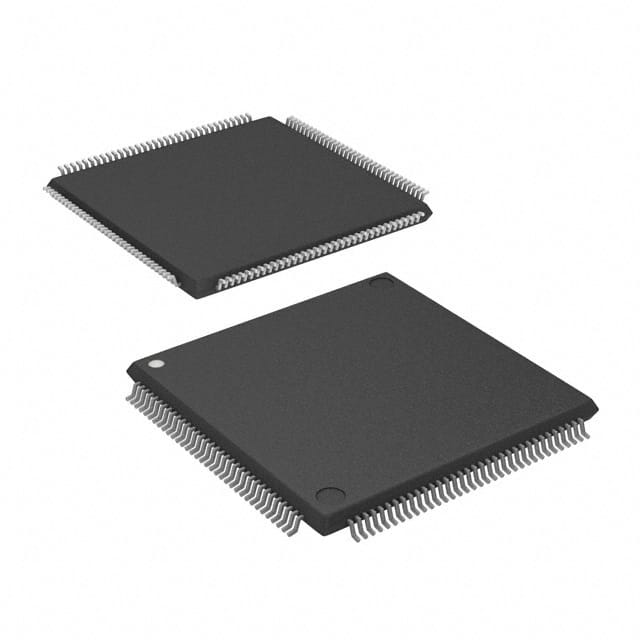
|

|
| Category | Embedded - DSP (Digital Signal Processors) | Embedded - DSP (Digital Signal Processors) |
| Manufacturer | NXP USA Inc. | Texas Instruments |
| Description | IC DSP 24BIT 150MHZ 144-LQFP | IC DGTL MEDIA PROCESSOR 361-BGA |
| Package | Tray | Tray |
| Series | DSP56K/Symphony | TMS320DM643x, DaVinci™ |
| Type | Audio Processor | Fixed Point |
| Interface | Host Interface, I²C, SAI, SPI | HPI, I²C, McASP, McBSP, PCI, UART, 10/100 Ethernet MAC |
| Operating Temperature | 0°C ~ 70°C (TA) | 0°C ~ 90°C (TJ) |
| Mounting Type | Surface Mount | Surface Mount |
| Package / Case | 144-LQFP | 361-LFBGA |
| Supplier Device Package | 144-LQFP (20x20) | 361-NFBGA (16x16) |
| Clock Rate | 150MHz | 600MHz |
| Non-Volatile Memory | ROM (240kB) | ROM (64kB) |
| On-Chip RAM | 69kB | 240kB |
| Voltage - I/O | 3.30V | 1.8V, 3.3V |
| Voltage - Core | 1.80V | 1.05V, 1.20V |
-
1. What is embedded DSP?
Embedded Digital Signal Processor (EDSP) is a processor specially used for signal processing. It has been specially designed in terms of system structure and instruction algorithm, and has high compilation efficiency and instruction execution speed. Embedded DSP processors are good at high-speed implementation of various digital signal processing operations, such as digital filtering, spectrum analysis, etc.
Embedded DSP processors have been specially designed for system structure and instructions, making them suitable for executing digital signal processing algorithms, with high compilation efficiency and high instruction execution speed. This special design includes the optimization of DSP hardware structure and instructions, so that it can efficiently handle complex signal processing tasks. -
2. What is DSP in microcontrollers?
DSP (Digital Signal Processor) is a microprocessor specifically used to process digital signals. It is different from the traditional CPU (Central Processing Unit). DSP is mainly used in occasions that require a large number of floating-point operations, such as communications, audio processing, image processing and other fields.
The working principle of DSP is to convert the received analog signal into a digital signal, and then process and analyze these digital signals. DSP chip adopts Harvard structure, that is, the program and data are stored separately, and has a dedicated hardware multiplier, which can quickly implement various digital signal processing algorithms. -
3. What are the disadvantages of DSP in embedded systems?
The main disadvantages of DSP in embedded systems include sound quality problems, high resource consumption, high development difficulty and high cost.
First of all, the disadvantages of DSP in embedded systems are mainly reflected in the following aspects:
Sound quality problem: DSP is a device that integrates multiple audio processing functions. In order to pursue high reliability, it usually uses a lower version of Bluetooth technology, such as Bluetooth 4.2, which may result in the sound quality not as expected and affect the audio quality.
High resource consumption: DSP requires high computing power and complex algorithms when processing signals, which will lead to a large consumption of system resources and may affect the normal operation of other functions.
High development difficulty: DSP development requires in-depth knowledge of digital signal processing, and different hardware platform tools are not unified, which increases the complexity and difficulty of development.
High cost: Since DSP chips and related development tools are relatively professional, their cost is relatively high and not suitable for all application scenarios.
What is an embedded system signal?
Embedded system signals are a simulation of the interrupt mechanism at the software level and an asynchronous communication method. Signals can directly interact between user space processes and kernel processes, and kernel processes can also use them to notify user space processes of system events. If the process is not currently in execution, the signal is saved by the kernel until the process resumes execution and then passed to it; if a signal is set to block by the process, the transmission of the signal is delayed until its blockage is canceled and it is passed to the process.
What is a DSP processor?
A DSP processor, or digital signal processor, is a computer chip specifically used to process digital signals. This processor has the characteristics of high performance, low power consumption and programmability, and is widely used in audio, video, communication, radar and industrial control.
The working principle of DSP processor mainly includes receiving analog signals from external input, converting them into digital signals, then performing calculations on the digital signals, and finally interpreting the digital data back to analog data or actual environment formats in other system chips. Its main feature is high-speed real-time processing, which can extract and process information in a high-speed real-time environment. It is widely used in key areas of industry and military, such as radar signal processing and communication base station signal processing.
-
4. What is the difference between DSP and FPGA?
The main difference between DSP and FPGA lies in their design purpose, structure, programming method and applicable scenarios.
First of all, there are fundamental differences between DSP and FPGA in design purpose and structure. DSP (digital signal processor) is designed for digital signal processing, with a dedicated instruction set and hardware accelerator for efficient processing of digital signals. FPGA (field programmable gate array) is a programmable logic device that can be programmed according to user needs to realize various digital logic circuits. FPGA contains a large number of logic gates and triggers inside, usually using a lookup table structure, while DSP uses a Harvard structure, with separate data bus and address bus, allowing programs and data to be stored separately to increase processing speed.
In terms of programming methods, DSP is usually programmed through assembly or high-level languages (such as C/C++) and has a complete C language compiler. FPGA is designed through hardware description language, which has high flexibility but high programming complexity. DSPs are relatively easy to program because they are designed for specific types of computing tasks, while FPGAs offer greater flexibility but are more complex to program.
Finally, DSPs and FPGAs are suitable for different application scenarios. DSPs are suitable for tasks that require high-speed processing of large amounts of digital signals, such as communications, audio processing, image processing, and other fields. FPGAs are suitable for applications that require highly customized hardware acceleration, such as high-performance computing, complex signal processing, and more. The flexibility of FPGAs makes them more advantageous in projects that require frequent changes in functionality, while DSPs perform better in applications that require efficient processing of fixed algorithms.
