
ERJ-2RKF1003X vs PLTT0603Z2500QGT5
| Part Number |
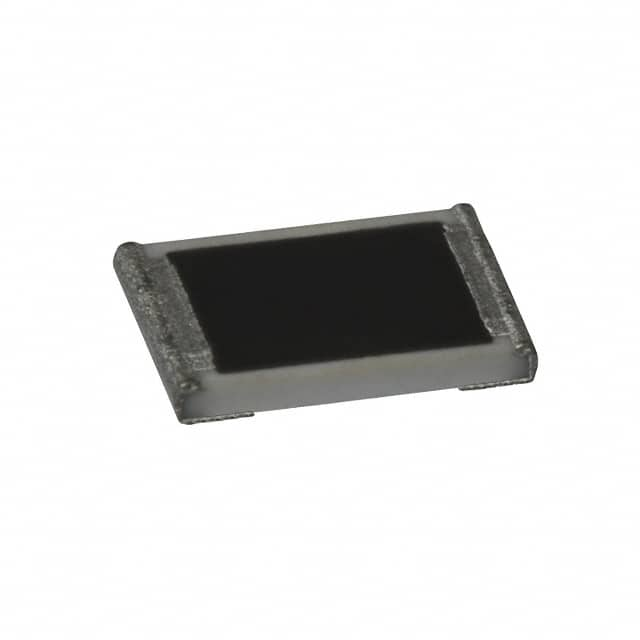
|
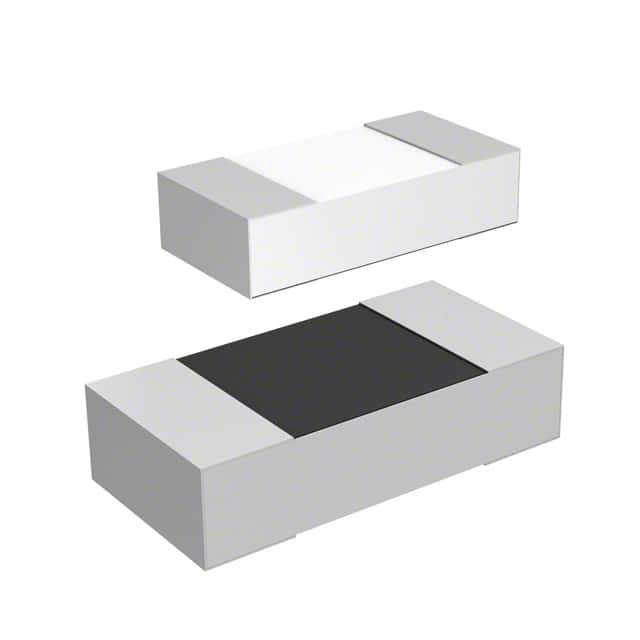
|
| Category | Chip Resistor - Surface Mount | Chip Resistor - Surface Mount |
| Manufacturer | Panasonic Electronic Components | Vishay Dale Thin Film |
| Description | RES SMD 100K OHM 1% 1/10W 0402 | RES SMD 250 OHM 0.02% 0.15W 0603 |
| Package | -Reel® | Tape & Reel (TR) |
| Series | ERJ-2RK | PLTT |
| Features | Automotive AEC-Q200 | Anti-Corrosive, Flame Proof, Moisture Resistant, Safety |
| Operating Temperature | -55°C ~ 155°C | -55°C ~ 215°C |
| Package / Case | 0402 (1005 Metric) | 0603 (1608 Metric) |
| Supplier Device Package | 0402 | 0603 |
| Tolerance | ±1% | ±0.02% |
| Temperature Coefficient | ±100ppm/°C | ±5ppm/°C |
| Size / Dimension | 0.039" L x 0.020" W (1.00mm x 0.50mm) | 0.064" L x 0.032" W (1.63mm x 0.81mm) |
| Power (Watts) | 0.1W, 1/10W | 0.15W |
| Ratings | AEC-Q200 | - |
| Height - Seated (Max) | 0.016\" (0.40mm) | 0.033\" (0.84mm) |
| Failure Rate | - | - |
| Resistance | 100 kOhms | 250 Ohms |
| Composition | Thick Film | Thin Film |
| Number of Terminations | 2 | 2 |

-
1. How to choose Chip Resistor?
The application of surface mount technology (SMT) has been very common, and the proportion of electronic products assembled by SMT has exceeded 90%. my country began to introduce SMT technology in the 1980s. With the development of small SMT production equipment, the application scope of SMT is further expanding. Aviation, aerospace, instrumentation, machine tools and other fields are also using SMT to produce various small-volume electronic products or components.
In recent years, in addition to electronic product developers using SMT devices to develop new products, maintenance personnel have also begun to repair electronic products assembled by SMT technology in large quantities.
The models of SMT resistors are not uniform, and are set by each manufacturer, and the models are particularly long (consisting of more than a dozen English letters and numbers). If you can correctly propose various parameters and specifications of SMT resistors when purchasing, you can easily purchase (or order) the required resistors.
There are 5 parameters for SMT resistors, namely size, resistance, tolerance, temperature coefficient and packaging.
1. Size series SMT resistor series generally have 7 sizes, represented by two size codes. One size code is a 4-digit EIA (Electronics Industry Association) code, the first two digits and the last two digits represent the length and width of the resistor, in inches. The other is a metric code, also represented by 4 digits, in millimeters. Resistors of different sizes have different power ratings. Table 1 lists the codes and power ratings of these seven resistor sizes.
2. Resistance series The nominal resistance is determined by series. Each series is divided by the tolerance of the resistor (the smaller the tolerance, the more resistance divisions), among which the most commonly used is E-24 (the tolerance of the resistance value is ±5%), as shown in Table 2.
The resistance value is indicated by three digits on the surface of the chip resistor, of which the first and second digits are valid numbers, and the third digit indicates the number of zeros. When there is a decimal point, it is indicated by "R" and occupies one valid digit. The nominal resistance code representation method is shown in Table 3.
3. Tolerance The tolerance of chip resistors (carbon film resistors) has 4 levels, namely F level, ±1%; G level, ±2%; J level, ±5%; K level, ±10%.
4. Temperature coefficient The temperature coefficient of chip resistors has 2 levels, namely W level, ±200ppm/℃; X level, ±100ppm/℃. Only resistors with tolerance level F use level x, and resistors with tolerance levels of other levels are generally level w.
5. There are two main types of packaging: bulk and tape and roll.
The operating temperature range of chip resistors is -55--+125℃, and the maximum operating voltage is related to the size: 0201 is the lowest, 0402 and 0603 are 50V, 0805 is 150V, and other sizes are 200V.
6. The numbers on the surface of the chip resistors are arranged horizontally, and are specified to be represented by three digits, of which the first two are valid digits, and the third is the exponent of 10, in units of ohms. For example: 473 means 47×103=47 kΩ. If the second character on the surface of the resistor used to indicate the resistance value is the letter R, it represents a decimal point, for example: 5R1 means the resistance value is 5.1Ω. -
2. What are the functions of chip fixed resistors?
Chip fixed resistors (chip resistors) play a vital role in electronic devices and systems.
Chip fixed resistors, also known as Chip Resistor, are one of the passive electronic components widely used in the modern electronic manufacturing industry.
1. Voltage division and current shunting: When the chip resistor is in series or parallel with other components such as light bulbs in the circuit, it can play the role of voltage division and current shunting. In a series circuit, the chip resistor shares the voltage with another component; in a parallel circuit, the chip resistor shares the current with other components.
2. Impedance matching: During the signal transmission process, the chip resistor helps to achieve the matching of the load impedance and the internal impedance of the excitation source by adjusting the impedance, thereby optimizing the signal transmission efficiency.
3. Filtering: In the RC charging and discharging circuit composed of a resistor and a capacitor in series, the chip resistor plays a filtering role, helping to stabilize the voltage and current in the circuit and reduce fluctuations and interference.
4. Special resistor functions: Special types of chip resistors, such as resistors made of semiconductor materials, have variable resistance values and are used to achieve more complex circuit functions, such as impedance control.
5. Save space and improve reliability: Due to the small size and light weight of chip resistors, circuit space costs can be greatly saved, making the design more refined. At the same time, its ability to adapt to reflow soldering and wave soldering improves the reliability and efficiency of production. -
3. Working principle of chip fixed resistors
The working principle of chip fixed resistors is based on Ohm's law, that is, the relationship between voltage (V), current (I) and resistance (R) is V=I×R. This resistor is a two-terminal passive component used to implement resistance like a circuit element. The current flowing through the resistor is proportional to the voltage across the resistor. Therefore, this relationship can be simply expressed using Ohm's law. For example, if a 100-ohm resistor is connected across a potential difference of 10 volts, a current of 0.1 amperes flows through the resistor.
Chip fixed resistors, commonly known as chip resistors, are one type of metal glass uranium resistors. It is a resistor made by mixing metal powder and glass uranium powder and printing it on a substrate using screen printing. This resistor is resistant to moisture and high temperature and has a small temperature coefficient. Its manufacturing process includes mixing metal powder and glass uranium powder, and then printing these mixtures on a substrate by screen printing to form the desired resistance value. This design enables chip fixed resistors to work stably in various environments, including humid and high temperature conditions, while maintaining a small temperature coefficient to ensure the stability of the resistance value. -
4. Resistor tolerance accuracy representation method
The tolerance accuracy of chip resistors refers to the allowable deviation range between the actual value of the resistor and the nominal value. In the digital identification, the tolerance accuracy is usually indicated by the last one or two digits. These numbers correspond to different accuracy levels, for example, 1% accuracy is usually indicated by the number "1", while 0.1% accuracy is indicated by the number "01".
