
ESDA6V1U1RL vs MP6KE30CA
| Part Number |
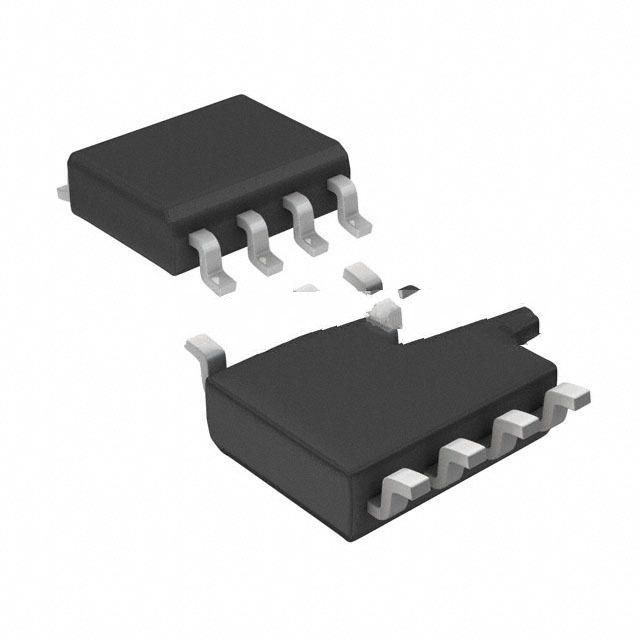
|
|
| Category | TVS - Diodes | TVS - Diodes |
| Manufacturer | STMicroelectronics | Microsemi Corporation |
| Description | TVS DIODE 5VWM 8SOIC | TVS DIODE 25.6VWM 41.4VC T18 |
| Package | 8-SOIC (0.154", 3.90mm Width) | T-18, Axial |
| Series | ESDA, TRANSIL? | Military, MIL-PRF-19500 |
| Type | Zener | Zener |
| Mounting Type | Surface Mount | Through Hole |
| Package / Case | 8-SOIC (0.154", 3.90mm Width) | T-18, Axial |
| Supplier Device Package | 8-SOIC | T-18 |
| Applications | General Purpose | General Purpose |
| Unidirectional Channels | 6 | - |
| Voltage - Reverse Standoff (Typ) | 5V | 25.6V |
| Voltage - Breakdown (Min) | 6.1V | 28.5V |
| Power - Peak Pulse | 200W | 600W |
| Power Line Protection | No | No |
| Operating Temperature | - | -65°C ~ 150°C (TJ) |
| Voltage - Clamping (Max) @ Ipp | - | 41.4V |
| Current - Peak Pulse (10/1000µs) | - | 14.4A |
| Bidirectional Channels | - | 1 |
-
1. What does a TVS diode do?
The main function of TVS diodes (Transient Voltage Suppression Diodes) is to protect electronic equipment from voltage spikes and surge voltages. When the two poles of the TVS diode are impacted by reverse transient high energy, it can change the high impedance between the two poles into low impedance within 10^-12 seconds, while absorbing surge power up to several kilowatts, causing the gap between the two poles to The voltage is clamped to a safe value, thereby effectively protecting precision components in electronic circuits.
The specific working principle of TVS diodes is as follows:
Absorb surge power: TVS diodes can, under reverse application conditions, when subjected to a high-energy large pulse, their working impedance immediately drops to a lower conduction state, allowing large current to pass while clamping the voltage at predetermined level. Its response time is only 10^-12 seconds.
Protection circuit: TVS diodes are used in parallel with the protected circuit. When the circuit is working normally, the TVS diode is in a high impedance state and does not affect the circuit; when there is a surge voltage impact, the TVS diode conducts quickly, absorbs the surge energy, and protects the subsequent circuit.
-
2. What is the difference between TVS and ordinary diodes?
The main difference between TVS diodes and ordinary diodes lies in their working principle, application scenarios and characteristics.
Working principle and application scenarios
TVS diode: TVS diode (Transil Voltage Suppressor) is a high-efficiency protection device that stabilizes and suppresses overvoltage based on the breakdown effect of PN junction. When the voltage exceeds its breakdown voltage, the TVS diode will conduct quickly and release the overvoltage to ground, thus protecting the precision components in the circuit from damage by surge pulses. TVS diodes are widely used in computer systems, communication equipment, automotive electronics, household appliances and other fields to suppress transient overvoltage and electromagnetic interference.
Ordinary Diode: The main function of an ordinary diode is unidirectional conductivity, allowing current to pass in one direction and blocking reverse current. They are widely used in rectification, signal modulation, power management and other scenarios.
Feature comparison
Current size: The Zener breakdown current of TVS diodes is small, usually around 1mA, while the breakdown current of ordinary diodes is larger.
Classification: TVS diodes are divided into unipolar and bipolar according to polarity; ordinary diodes are divided into low-voltage and high-voltage types according to the level of voltage regulation, as well as N-type and P-type materials.
Voltage regulation characteristics: The voltage characteristics of TVS diodes are nonlinear, the resistance before breakdown is high, and the voltage remains constant after breakdown; the voltage of ordinary diodes remains constant at the critical reverse breakdown point, realizing the voltage stabilization function.
-
3. Are TVS diodes and Zener diodes the same?
TVS diodes and Zener diodes have significant differences in functionality and characteristics, so they are not identical.
Definition and purpose
Zener diode: Zener diode is a diode that uses a PN junction for reverse breakdown. It is mainly used to ensure voltage stability. It has a high resistance state before the reverse breakdown voltage and is in a low resistance state after exceeding this critical point. It is widely used in various voltage stabilizing circuits and reference voltage components.
TVS Diode: TVS diode (Transient Suppression Diode) has surge absorption capability and is mainly used to protect circuits from damage caused by transient high voltages such as surges and electrostatic discharge (ESD). It can absorb a large amount of instantaneous current and voltage in a short period of time, protecting the subsequent equipment or circuits from damage.
-
4. What is the difference between TVS diodes and MOVs?
The main differences between TVS diodes and MOV varistors lie in their working principles, application scenarios and performance parameters.
Working principle
TVS diode: TVS diode (Transient Voltage Suppressor) is a semiconductor device with a high-sensitivity N/P junction. When the reverse voltage exceeds its breakdown voltage, the TVS diode will conduct quickly and introduce the surge current into the ground, thereby protecting the subsequent circuit. The response speed of TVS diodes is very fast, usually within nanoseconds.
MOV varistor: MOV varistor (Metal-Oxide Varistor) is a multi-layer varistor made of multi-layer zinc oxide material. When the voltage exceeds its varistor voltage, the MOV will conduct, absorb the surge energy, and clamp the voltage within a safe range. MOV has a long response time, usually completing the response within microseconds.
