
ICL7650SITV-1 vs OP64GS
| Part Number |
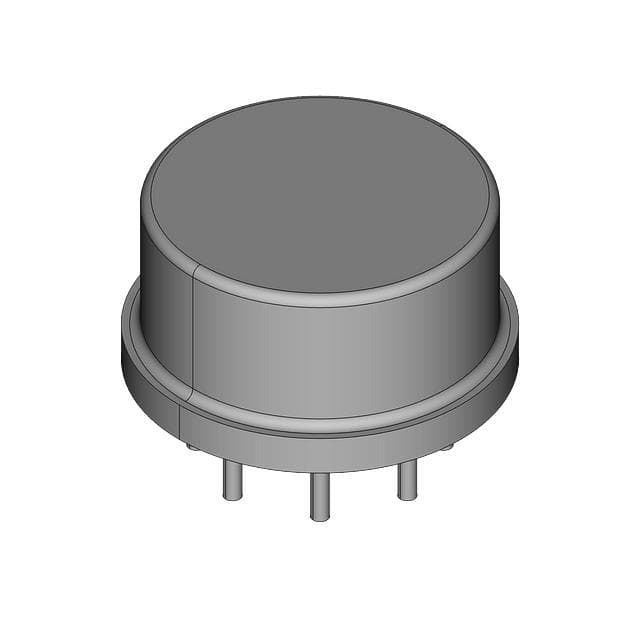
|

|
| Category | Linear - Amplifiers - Instrumentation, OP Amps, Buffer Amps | Linear - Amplifiers - Instrumentation, OP Amps, Buffer Amps |
| Manufacturer | Harris Corporation | Analog Devices Inc. |
| Description | CHOPPER-STABILIZED OP AMP | HIGH-SPEED, WIDE B/W OP AMP |
| Package | Bulk | Bulk |
| Series | - | - |
| Operating Temperature | 0°C ~ 70°C | -40°C ~ 85°C |
| Mounting Type | Through Hole | Through Hole |
| Package / Case | TO-99-8 Metal Can | 8-DIP (0.300\", 7.62mm) |
| Supplier Device Package | TO-99-8 | 8-PDIP |
| Current - Supply | 2mA | 6.2mA |
| Output Type | - | - |
| Number of Circuits | 1 | 1 |
| Voltage - Supply, Single/Dual (±) | 4.5V ~ 16V, ±2.25V ~ 8V | ±5V ~ 18V |
| Current - Output / Channel | 30 mA | 80 mA |
| -3db Bandwidth | - | 2.7 MHz |
| Amplifier Type | Chopper (Zero-Drift) | General Purpose |
| Current - Input Bias | 4 pA | 800 nA |
| Voltage - Input Offset | 0.7 µV | 1.2 mV |
| Slew Rate | 2.5V/µs | 170V/µs |
| Gain Bandwidth Product | 2 MHz | 80 MHz |
-
1. What is the difference between an instrumentation amplifier and an operational amplifier?
Instrumentation amplifiers integrate multi-stage operational amplifiers for precise amplification of differential signals, while operational amplifiers are more versatile and can perform a wide range of analog signal processing tasks. Instrumentation amplifiers have higher input impedance and better common mode rejection.
-
2. How do instrumentation amplifiers handle sensor signals?
Instrumentation amplifiers are used to extract low-level signals from sensors (e.g. thermocouples, pressure sensors) to provide high-precision amplification, and are particularly suited to applications that require accurate reading and amplification of weak signals, such as medical and industrial monitoring.
-
3. Why do buffer amplifiers have high input impedance and low output impedance?
A high input impedance ensures that no load is applied to the preamplifier circuitry, preventing signal degradation, while a low output impedance provides a large driving capacity, ensuring that the signal can be passed on to subsequent circuits without loss.
-
4. How do buffer amplifiers improve the signal integrity of a system?
Buffer amplifiers ensure distortion-free transmission of signals from source to load by providing impedance matching and current driving capability, preventing signal attenuation and noise interference, especially effective when transmitting over long distances or driving large loads.
