
KF25BD-TR vs LD1085DT18R
| Part Number |
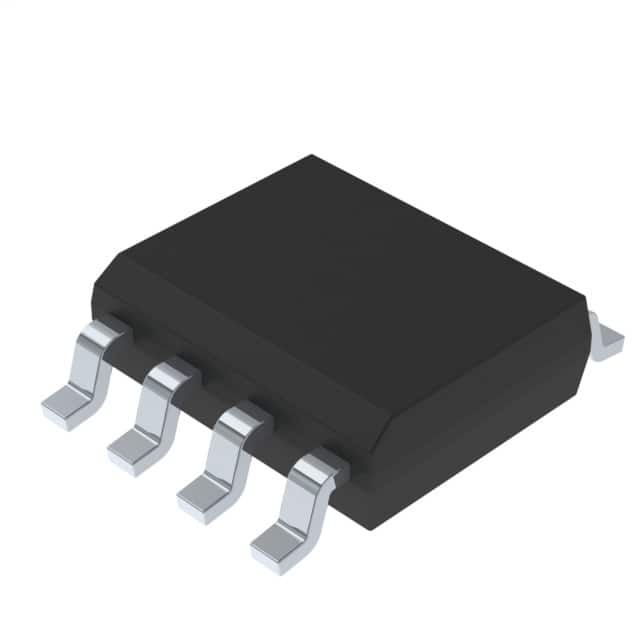
|

|
| Category | PMIC - Voltage Regulators - Linear | PMIC - Voltage Regulators - Linear |
| Manufacturer | STMicroelectronics | STMicroelectronics |
| Description | IC REG LINEAR 2.5V 500MA 8SO | IC REG LINEAR 1.8V 3A DPAK |
| Package | Tube | Cut Tape (CT) |
| Series | - | - |
| Operating Temperature | -40°C ~ 125°C | -40°C ~ 125°C |
| Mounting Type | Surface Mount | Surface Mount |
| Package / Case | 8-SOIC (0.154\", 3.90mm Width) | TO-252-3, DPak (2 Leads + Tab), SC-63 |
| Supplier Device Package | 8-SOIC | DPAK |
| Output Type | Fixed | Fixed |
| Voltage - Output (Min/Fixed) | 2.5V | 1.8V |
| Voltage - Output (Max) | - | - |
| Current - Output | 500mA | 3A |
| Output Configuration | Positive | Positive |
| Control Features | Enable | - |
| Voltage - Input (Max) | 20V | 30V |
| Number of Regulators | 1 | 1 |
| Voltage Dropout (Max) | 0.7V @ 500mA | 1.5V @ 3A |
| Current - Quiescent (Iq) | 1 mA | 10 mA |
| Current - Supply (Max) | 12 mA | - |
| PSRR | 82dB ~ 60dB (120Hz ~ 10kHz) | 72dB (120Hz) |
| Protection Features | Over Current, Over Temperature | Over Current, Over Temperature |
-
1. What is a linear regulator?
A linear regulator is an electronic device that is primarily used to maintain a specified output voltage stable when the input voltage or load conditions change. It is an important component in electronics that acts as a buffer to protect the components of the circuit from damage. A linear regulator works by using an active device (such as a BJT or MOSFET) controlled by a high-gain amplifier, using the variable conductivity of the active pass device to maintain the output voltage. This regulator acts as a voltage divider to produce a regulated output voltage, where a linear element (such as a resistive load) is used to regulate the output voltage. The transistor stays in its active region of operation during voltage regulation. To maintain a constant output voltage, the internal resistance can be varied, providing a variable resistance by using a transistor controlled by the amplifier feedback loop.
A linear regulator is also called a buck converter, where the output voltage is always -
2. What are the characteristics of linear regulators?
Linear regulators have the characteristics of low cost, small package, few peripheral devices and low noise. There are many types of linear regulator packages, which are very suitable for use in LCD color TVs. For fixed voltage output applications, only 2-3 small capacitors are needed to form the entire solution. Ultra-low output voltage noise is the biggest advantage of linear regulators. The output voltage ripple is less than 35V (RMS), and it has an extremely high signal-to-noise control ratio, which is very suitable for powering small signal processing circuits that are sensitive to noise.
-
3. Can a linear regulator be up?
Linear regulators cannot be boost.
The main function of a linear regulator is to stabilize the output voltage, protecting the electrical equipment from high or unstable voltage effects. It realizes a stable output voltage by adjusting the gap between the output voltage and the input voltage, but this process is limited to lowering the voltage, not including the voltage. The working principle of a linear regulator is to regulate the voltage by converting excess voltage into heat loss, thereby realizing the voltage regulation. This feature determines that it does not have the voltage function. -
4. What are the two main categories of linear and switching stabilizers?
The two main categories of linear and switching stabilizers are linear voltage voltage power and switching voltage power supply.
Linear voltage voltage power has achieved the advantages of transformer, rectification, filtering, and voltage voltage. It has the advantages of good stability, fast transient response speed, high reliability, and high output voltage accuracy. However, its transformation efficiency is low, especially when the output voltage difference is large, if the output current is also large, there will be obvious fever and hot phenomenon, and may even burn the regulator. The linear voltage voltage power supply includes two types: fixed output voltage and adjustable output voltage. According to the selection of the output current and the difference in the input output voltage difference, the design of the linear regulator needs to pay attention to the heat dissipation problem and the choice of bypass capacitors.
The switching voltage voltage power supply, also known as