
KF25BD-TR vs LD29150PT50R
| Part Number |
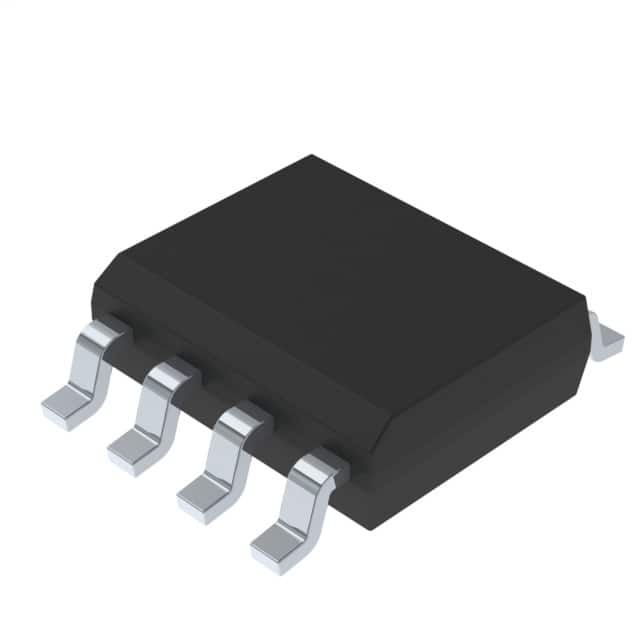
|

|
| Category | PMIC - Voltage Regulators - Linear | PMIC - Voltage Regulators - Linear |
| Manufacturer | STMicroelectronics | STMicroelectronics |
| Description | IC REG LINEAR 2.5V 500MA 8SO | IC REG LINEAR 5V 1.5A PPAK |
| Package | Tube | Bulk |
| Series | - | - |
| Operating Temperature | -40°C ~ 125°C | -40°C ~ 125°C |
| Mounting Type | Surface Mount | Surface Mount |
| Package / Case | 8-SOIC (0.154\", 3.90mm Width) | TO-252-5, DPak (4 Leads + Tab), TO-252AD |
| Supplier Device Package | 8-SOIC | PPAK |
| Output Type | Fixed | Fixed |
| Voltage - Output (Min/Fixed) | 2.5V | 5V |
| Voltage - Output (Max) | - | - |
| Current - Output | 500mA | 1.5A |
| Output Configuration | Positive | Positive |
| Control Features | Enable | Enable |
| Voltage - Input (Max) | 20V | 14V |
| Number of Regulators | 1 | 1 |
| Voltage Dropout (Max) | 0.7V @ 500mA | 0.7V @ 1.5A |
| Current - Quiescent (Iq) | 1 mA | 180 µA |
| Current - Supply (Max) | 12 mA | 80 mA |
| PSRR | 82dB ~ 60dB (120Hz ~ 10kHz) | 64dB (120Hz) |
| Protection Features | Over Current, Over Temperature | Over Current, Over Temperature |
-
1. What are the disadvantages of linear regulators?
The disadvantage of linear regulators is that they are not efficient and can only be used in voltage reduction applications. The efficiency of a linear regulator depends on the ratio of output voltage to input voltage: turbidity = Vo: Vi. For example, for ordinary linear regulators, when the input voltage is 5V and the output voltage is 2.5V, the efficiency is only 50%. For ordinary linear regulators, about 50% of the electrical energy is converted into "heat" and lost, which is also the main reason why ordinary linear regulators are prone to heat when working. For LDO, due to its low voltage difference, the efficiency is much higher. For example, when the input voltage is 3.3V and the output voltage is 2.5V, its efficiency can reach 76%. Therefore, in LCD color TVs, in order to improve the utilization rate of electrical energy, ordinary linear regulators are used less, while LDOs are used more.
-
2. When should a linear regulator be used instead of a switching regulator?
In low-power and low-frequency application scenarios, a linear regulator should be used instead of a switching regulator.
Linear regulator Suitable for low-power and low-frequency applications, with simple circuit structure, low noise and good stability. They control the output voltage of the transistor through a current amplifier to keep the output voltage stable. This working mode makes linear regulators perform well in low-power and low-frequency applications, although they are less efficient and generate more heat, and their application range is limited. In contrast, switching regulators use high-frequency pulse modulation technology to convert input voltage into a stable output voltage. They have the advantages of high efficiency, small size and fast response, and are suitable for high-power and high-frequency applications. Therefore, when the application requirements are not the main considerations for circuit complexity and cost, but have high requirements for the stability and -
3. What is the difference between a linear regulator and a resistor?
Linear regulators and resistors have significant differences in function, working principle and application scenarios.
Function and working principle:
A linear regulator is an electronic device that achieves a stable voltage output by adjusting linear elements (such as resistors, transistors, etc.) in the circuit. It uses the negative feedback principle. When the input voltage changes, the regulator senses this change and adjusts the parameters of the circuit elements (such as the resistance value or the conduction state of the transistor) accordingly to keep the output voltage stable within the required range. Linear regulators can provide lower output noise and fluctuations, and have better responsiveness to load changes.
Resistors are a basic electronic component used to limit current and divide voltage. It works by hindering the flow of current, has a fixed resistance value, and does not have the function of adjusting the output voltage.
Application scenarios:
Linear regulator -
4. What are the two main categories of linear and switching stabilizers?
The two main categories of linear and switching stabilizers are linear voltage voltage power and switching voltage power supply.
Linear voltage voltage power has achieved the advantages of transformer, rectification, filtering, and voltage voltage. It has the advantages of good stability, fast transient response speed, high reliability, and high output voltage accuracy. However, its transformation efficiency is low, especially when the output voltage difference is large, if the output current is also large, there will be obvious fever and hot phenomenon, and may even burn the regulator. The linear voltage voltage power supply includes two types: fixed output voltage and adjustable output voltage. According to the selection of the output current and the difference in the input output voltage difference, the design of the linear regulator needs to pay attention to the heat dissipation problem and the choice of bypass capacitors.
The switching voltage voltage power supply, also known as