
KF25BD-TR vs LP2985IM5-2.9/NOPB
| Part Number |
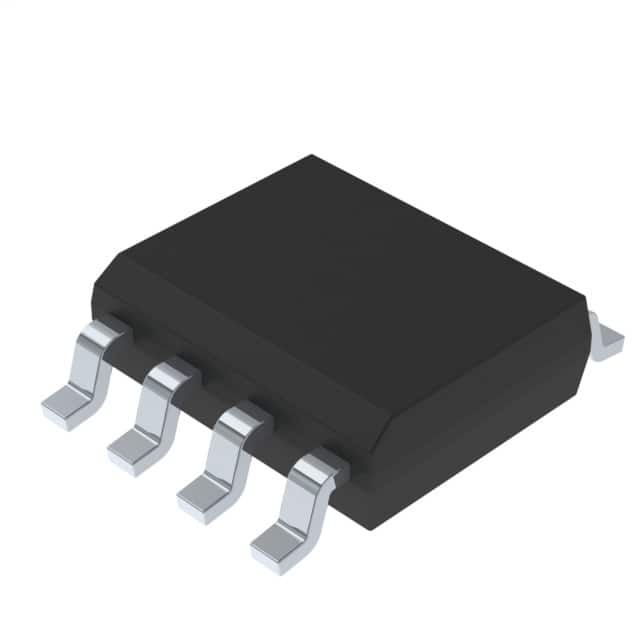
|
|
| Category | PMIC - Voltage Regulators - Linear | PMIC - Voltage Regulators - Linear |
| Manufacturer | STMicroelectronics | Texas Instruments |
| Description | IC REG LINEAR 2.5V 500MA 8SO | IC REG LINEAR 2.9V 150MA SOT23-5 |
| Package | Tube | Cut Tape (CT) |
| Series | - | - |
| Operating Temperature | -40°C ~ 125°C | -40°C ~ 125°C |
| Mounting Type | Surface Mount | Surface Mount |
| Package / Case | 8-SOIC (0.154\", 3.90mm Width) | SC-74A, SOT-753 |
| Supplier Device Package | 8-SOIC | SOT-23-5 |
| Output Type | Fixed | Fixed |
| Voltage - Output (Min/Fixed) | 2.5V | 2.9V |
| Voltage - Output (Max) | - | - |
| Current - Output | 500mA | 150mA |
| Output Configuration | Positive | Positive |
| Control Features | Enable | Enable |
| Voltage - Input (Max) | 20V | 16V |
| Number of Regulators | 1 | 1 |
| Voltage Dropout (Max) | 0.7V @ 500mA | 0.58V @ 150mA |
| Current - Quiescent (Iq) | 1 mA | 95 µA |
| Current - Supply (Max) | 12 mA | 2.5 mA |
| PSRR | 82dB ~ 60dB (120Hz ~ 10kHz) | 45dB (1kHz) |
| Protection Features | Over Current, Over Temperature | Over Current, Over Temperature, Short Circuit |
-
1. How to choose a linear regulator?
1. Switching regulator: A switching regulator uses an output stage that repeatedly switches between "on" and "off" states to generate an output voltage together with an energy storage component. Its adjustment is achieved by adjusting the switching timing based on the feedback sample of the output voltage. In a fixed-frequency regulator, the switching timing is adjusted by adjusting the pulse width of the switching voltage, which is called PWM control.
2. Parameter regulator: LDO is a linear regulator. Linear regulators use transistors or FETs operating in their linear region to subtract excess voltage from the applied input voltage to produce a regulated output voltage. This transistor allows saturation, so the regulator can have a very low dropout voltage, usually around 200mV.
3. Regulators for laser cutting machines: According to the use requirements of high-power laser cutting machines and the current power supply situation in my country, regulators that meet -
2. What are the alternatives to linear regulators?
Alternatives to linear regulators include Semiconductor HT7144S, K7805-2000R3, TPS70933DBVR, CLR6212, XC6220B331MR-G, LR7550-M, SGM2054XTD10G/TR, ME6213C33M5G, RS3236-3.3YF5, KL2036-2.2V, etc. These alternatives cover different package forms (such as SOT-23, SOP8, etc.) and output voltage and current specifications to meet the needs of different applications. For example, the HT7144S is a three-terminal linear regulator, while the TPS70933DBVR is an LDO (low dropout linear regulator) with lower output voltage and current specifications. CLR6212 and XC6220B331MR-G provide higher output current capabilities and are suitable for applications that require larger current outputs. LR7550-M and SGM2054XTD10G/TR provide specific voltage and current specifications to meet the needs of specific fields. ME6213C33M5G and RS3236-3.3YF5 are regulators with specific packaging forms, suitable for space-constrained application scenarios. KL2036-2.2V is a linear regulator with a lower output voltage, su
-
3. Can a linear regulator be up?
Linear regulators cannot be boost.
The main function of a linear regulator is to stabilize the output voltage, protecting the electrical equipment from high or unstable voltage effects. It realizes a stable output voltage by adjusting the gap between the output voltage and the input voltage, but this process is limited to lowering the voltage, not including the voltage. The working principle of a linear regulator is to regulate the voltage by converting excess voltage into heat loss, thereby realizing the voltage regulation. This feature determines that it does not have the voltage function. -
4. What are the two main categories of linear and switching stabilizers?
The two main categories of linear and switching stabilizers are linear voltage voltage power and switching voltage power supply.
Linear voltage voltage power has achieved the advantages of transformer, rectification, filtering, and voltage voltage. It has the advantages of good stability, fast transient response speed, high reliability, and high output voltage accuracy. However, its transformation efficiency is low, especially when the output voltage difference is large, if the output current is also large, there will be obvious fever and hot phenomenon, and may even burn the regulator. The linear voltage voltage power supply includes two types: fixed output voltage and adjustable output voltage. According to the selection of the output current and the difference in the input output voltage difference, the design of the linear regulator needs to pay attention to the heat dissipation problem and the choice of bypass capacitors.
The switching voltage voltage power supply, also known as