
KF25BD-TR vs LP2985IM5-3.1/NOPB
| Part Number |
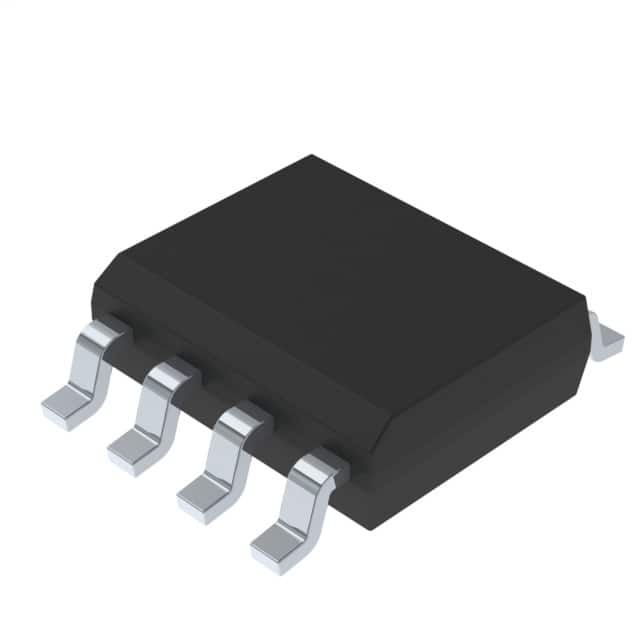
|

|
| Category | PMIC - Voltage Regulators - Linear | PMIC - Voltage Regulators - Linear |
| Manufacturer | STMicroelectronics | National Semiconductor |
| Description | IC REG LINEAR 2.5V 500MA 8SO | LP2985 150MA LOW-NOISE LOW-DROPO |
| Package | Tube | Bulk |
| Series | - | - |
| Operating Temperature | -40°C ~ 125°C | -40°C ~ 125°C |
| Mounting Type | Surface Mount | Surface Mount |
| Package / Case | 8-SOIC (0.154\", 3.90mm Width) | SC-74A, SOT-753 |
| Supplier Device Package | 8-SOIC | SOT-23-5 |
| Output Type | Fixed | Fixed |
| Voltage - Output (Min/Fixed) | 2.5V | 3.1V |
| Voltage - Output (Max) | - | - |
| Current - Output | 500mA | 150mA |
| Output Configuration | Positive | Positive |
| Control Features | Enable | Enable |
| Voltage - Input (Max) | 20V | 16V |
| Number of Regulators | 1 | 1 |
| Voltage Dropout (Max) | 0.7V @ 500mA | 0.58V @ 150mA |
| Current - Quiescent (Iq) | 1 mA | 95 µA |
| Current - Supply (Max) | 12 mA | 2.5 mA |
| PSRR | 82dB ~ 60dB (120Hz ~ 10kHz) | 45dB (1kHz) |
| Protection Features | Over Current, Over Temperature | Over Current, Over Temperature, Short Circuit |
-
1. What is a linear regulator?
A linear regulator is an electronic device that is primarily used to maintain a specified output voltage stable when the input voltage or load conditions change. It is an important component in electronics that acts as a buffer to protect the components of the circuit from damage. A linear regulator works by using an active device (such as a BJT or MOSFET) controlled by a high-gain amplifier, using the variable conductivity of the active pass device to maintain the output voltage. This regulator acts as a voltage divider to produce a regulated output voltage, where a linear element (such as a resistive load) is used to regulate the output voltage. The transistor stays in its active region of operation during voltage regulation. To maintain a constant output voltage, the internal resistance can be varied, providing a variable resistance by using a transistor controlled by the amplifier feedback loop.
A linear regulator is also called a buck converter, where the output voltage is always -
2. What are the disadvantages of linear regulators?
The disadvantage of linear regulators is that they are not efficient and can only be used in voltage reduction applications. The efficiency of a linear regulator depends on the ratio of output voltage to input voltage: turbidity = Vo: Vi. For example, for ordinary linear regulators, when the input voltage is 5V and the output voltage is 2.5V, the efficiency is only 50%. For ordinary linear regulators, about 50% of the electrical energy is converted into "heat" and lost, which is also the main reason why ordinary linear regulators are prone to heat when working. For LDO, due to its low voltage difference, the efficiency is much higher. For example, when the input voltage is 3.3V and the output voltage is 2.5V, its efficiency can reach 76%. Therefore, in LCD color TVs, in order to improve the utilization rate of electrical energy, ordinary linear regulators are used less, while LDOs are used more.
-
3. What are the alternatives to linear regulators?
Alternatives to linear regulators include Semiconductor HT7144S, K7805-2000R3, TPS70933DBVR, CLR6212, XC6220B331MR-G, LR7550-M, SGM2054XTD10G/TR, ME6213C33M5G, RS3236-3.3YF5, KL2036-2.2V, etc. These alternatives cover different package forms (such as SOT-23, SOP8, etc.) and output voltage and current specifications to meet the needs of different applications. For example, the HT7144S is a three-terminal linear regulator, while the TPS70933DBVR is an LDO (low dropout linear regulator) with lower output voltage and current specifications. CLR6212 and XC6220B331MR-G provide higher output current capabilities and are suitable for applications that require larger current outputs. LR7550-M and SGM2054XTD10G/TR provide specific voltage and current specifications to meet the needs of specific fields. ME6213C33M5G and RS3236-3.3YF5 are regulators with specific packaging forms, suitable for space-constrained application scenarios. KL2036-2.2V is a linear regulator with a lower output voltage, su
-
4. Can a linear regulator be up?
Linear regulators cannot be boost.
The main function of a linear regulator is to stabilize the output voltage, protecting the electrical equipment from high or unstable voltage effects. It realizes a stable output voltage by adjusting the gap between the output voltage and the input voltage, but this process is limited to lowering the voltage, not including the voltage. The working principle of a linear regulator is to regulate the voltage by converting excess voltage into heat loss, thereby realizing the voltage regulation. This feature determines that it does not have the voltage function.