
KF25BD-TR vs LP3990TL-2.5/NOPB
| Part Number |
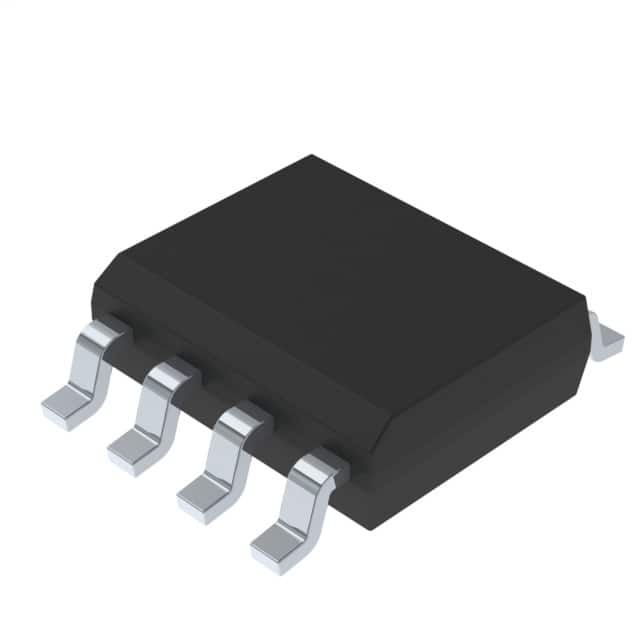
|
|
| Category | PMIC - Voltage Regulators - Linear | PMIC - Voltage Regulators - Linear |
| Manufacturer | STMicroelectronics | National Semiconductor |
| Description | IC REG LINEAR 2.5V 500MA 8SO | LP3990 150MA LINEAR VOLTAGE REGU |
| Package | Tube | Bulk |
| Series | - | - |
| Operating Temperature | -40°C ~ 125°C | -40°C ~ 85°C |
| Mounting Type | Surface Mount | Surface Mount |
| Package / Case | 8-SOIC (0.154\", 3.90mm Width) | 4-WFBGA, DSBGA |
| Supplier Device Package | 8-SOIC | 4-DSBGA (1x1) |
| Output Type | Fixed | Fixed |
| Voltage - Output (Min/Fixed) | 2.5V | 2.5V |
| Voltage - Output (Max) | - | - |
| Current - Output | 500mA | 150mA |
| Output Configuration | Positive | Positive |
| Control Features | Enable | Enable |
| Voltage - Input (Max) | 20V | 6V |
| Number of Regulators | 1 | 1 |
| Voltage Dropout (Max) | 0.7V @ 500mA | 0.2V @ 150mA |
| Current - Quiescent (Iq) | 1 mA | 80 µA |
| Current - Supply (Max) | 12 mA | 120 µA |
| PSRR | 82dB ~ 60dB (120Hz ~ 10kHz) | 55dB ~ 35dB (1kHz ~ 10kHz) |
| Protection Features | Over Current, Over Temperature | Over Temperature, Short Circuit |
-
1. What is the difference between linear regulators and switching regulators?
There are significant differences between linear regulators and switching regulators in terms of working principles, efficiency, stability, cost and application range.
Working principle:
Linear regulators achieve the function of stabilizing the output at a set value by adjusting the voltage difference between the output voltage and the input voltage. It achieves stable output voltage by controlling the conductivity state of the power transistor.
The switching regulator converts the input voltage into a pulse signal transmission and smoothes the output through a filter by quickly switching between the input and output ends to achieve the function of stabilizing the output at the set value. The switching regulator uses PWM (pulse width modulation) control to control the output voltage by adjusting the time duty ratio of the high and low levels within a cycle.
Efficiency:
The efficiency of the linear regulator is relatively low, usually between 60% and 70%. When the voltage differenc -
2. Do linear regulators need capacitors?
Linear regulators usually require capacitors.
The working principle and design requirements of linear regulators determine that they usually require capacitors to ensure stable operation. These capacitors are mainly used to filter and stabilize the output voltage, help reduce output ripple and noise, and thus improve the stability and reliability of the power supply.
Specifically:
1. Input and output capacitors: Linear regulators usually require one or more input capacitors and one output capacitor. These capacitors help smooth the input and output voltages, reduce voltage fluctuations, and thus provide a stable output voltage.
2. Power supply rejection capability: The power supply rejection capability of a linear regulator is an important indicator, which is related to whether it can effectively suppress unwanted signals and avoid interference with the output voltage. If the power supply rejection capability is poor, unnecessary signals may be left behind, affecting the purity of -
3. Can a linear regulator be up?
Linear regulators cannot be boost.
The main function of a linear regulator is to stabilize the output voltage, protecting the electrical equipment from high or unstable voltage effects. It realizes a stable output voltage by adjusting the gap between the output voltage and the input voltage, but this process is limited to lowering the voltage, not including the voltage. The working principle of a linear regulator is to regulate the voltage by converting excess voltage into heat loss, thereby realizing the voltage regulation. This feature determines that it does not have the voltage function. -
4. What is the minimum input voltage of a linear regulator?
The minimum input voltage range of linear regulator varies from model and application.
For certain low -voltage lower -voltage regulators, its minimum input voltage range is usually 2.5V to 2.7V. This type of regulator design is used to power the internal LDO drive circuit and can drive PMOS FET to provide high output current. However, when the output voltage is lower than 1.8V and the output current is greater than 2.5A, the linear regulator with PMOS bypass components may be used for external heat dissipation due to additional air flow requirements and/or the heat generated by the regulator. It becomes inconvenient and the cost will increase.
For universal linear stabilizers, its input voltage range can be very wide. For example, some general -purpose linear regulators have 3V to 40V input voltage range. Even for models suitable for 24V systems, the input maximum voltage can reach 60V Then, then
In summary, the minimum input voltage of the linear regulator does not have a fixed st