
KF25BD-TR vs MCP1825-3002E/ET
| Part Number |
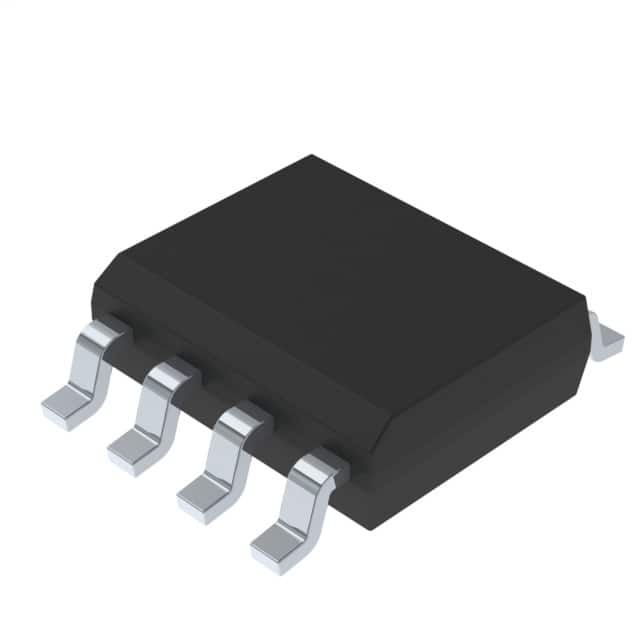
|

|
| Category | PMIC - Voltage Regulators - Linear | PMIC - Voltage Regulators - Linear |
| Manufacturer | STMicroelectronics | Microchip Technology |
| Description | IC REG LINEAR 2.5V 500MA 8SO | IC REG LINEAR 3V 500MA 5DDPAK |
| Package | Tube | Cut Tape (CT) |
| Series | - | - |
| Operating Temperature | -40°C ~ 125°C | -40°C ~ 125°C |
| Mounting Type | Surface Mount | Surface Mount |
| Package / Case | 8-SOIC (0.154\", 3.90mm Width) | TO-263-6, D²Pak (5 Leads + Tab), TO-263BA |
| Supplier Device Package | 8-SOIC | 5-DDPAK |
| Output Type | Fixed | Fixed |
| Voltage - Output (Min/Fixed) | 2.5V | 3V |
| Voltage - Output (Max) | - | - |
| Current - Output | 500mA | 500mA |
| Output Configuration | Positive | Positive |
| Control Features | Enable | Enable, Power Good |
| Voltage - Input (Max) | 20V | 6V |
| Number of Regulators | 1 | 1 |
| Voltage Dropout (Max) | 0.7V @ 500mA | 0.35V @ 500mA |
| Current - Quiescent (Iq) | 1 mA | 220 µA |
| Current - Supply (Max) | 12 mA | - |
| PSRR | 82dB ~ 60dB (120Hz ~ 10kHz) | 60dB (100Hz) |
| Protection Features | Over Current, Over Temperature | Over Temperature, Short Circuit, Under Voltage Lockout (UVLO) |
-
1. What is the difference between linear regulators and switching regulators?
There are significant differences between linear regulators and switching regulators in terms of working principles, efficiency, stability, cost and application range.
Working principle:
Linear regulators achieve the function of stabilizing the output at a set value by adjusting the voltage difference between the output voltage and the input voltage. It achieves stable output voltage by controlling the conductivity state of the power transistor.
The switching regulator converts the input voltage into a pulse signal transmission and smoothes the output through a filter by quickly switching between the input and output ends to achieve the function of stabilizing the output at the set value. The switching regulator uses PWM (pulse width modulation) control to control the output voltage by adjusting the time duty ratio of the high and low levels within a cycle.
Efficiency:
The efficiency of the linear regulator is relatively low, usually between 60% and 70%. When the voltage differenc -
2. Which is better, switching power supply or linear regulator?
Switching power supply and linear regulator each have their advantages and disadvantages, and choosing which one is better depends on the specific application requirements.
The main advantages of switching power supply include:
High efficiency: The conversion efficiency of switching power supply can reach 90%~95%, which is much higher than the 30% or so of linear regulator.
Small size and light weight: Due to the high efficiency and high-efficiency transformer of switching power supply, large heat sink can be omitted, and high-frequency transformer replaces power frequency transformer, greatly reducing volume and weight.
Wide voltage regulation range: The output voltage of switching power supply can compensate for the change of input voltage by adjusting the duty cycle to ensure stable output voltage.
Various circuit forms: Designers can design switching power supplies that meet the needs according to different application scenarios.
However, switching power supplies also have so -
3. How to choose a linear regulator?
1. Switching regulator: A switching regulator uses an output stage that repeatedly switches between "on" and "off" states to generate an output voltage together with an energy storage component. Its adjustment is achieved by adjusting the switching timing based on the feedback sample of the output voltage. In a fixed-frequency regulator, the switching timing is adjusted by adjusting the pulse width of the switching voltage, which is called PWM control.
2. Parameter regulator: LDO is a linear regulator. Linear regulators use transistors or FETs operating in their linear region to subtract excess voltage from the applied input voltage to produce a regulated output voltage. This transistor allows saturation, so the regulator can have a very low dropout voltage, usually around 200mV.
3. Regulators for laser cutting machines: According to the use requirements of high-power laser cutting machines and the current power supply situation in my country, regulators that meet -
4. Can a linear regulator be up?
Linear regulators cannot be boost.
The main function of a linear regulator is to stabilize the output voltage, protecting the electrical equipment from high or unstable voltage effects. It realizes a stable output voltage by adjusting the gap between the output voltage and the input voltage, but this process is limited to lowering the voltage, not including the voltage. The working principle of a linear regulator is to regulate the voltage by converting excess voltage into heat loss, thereby realizing the voltage regulation. This feature determines that it does not have the voltage function.