
KF25BD-TR vs MCP1825S-0802E/AB
| Part Number |
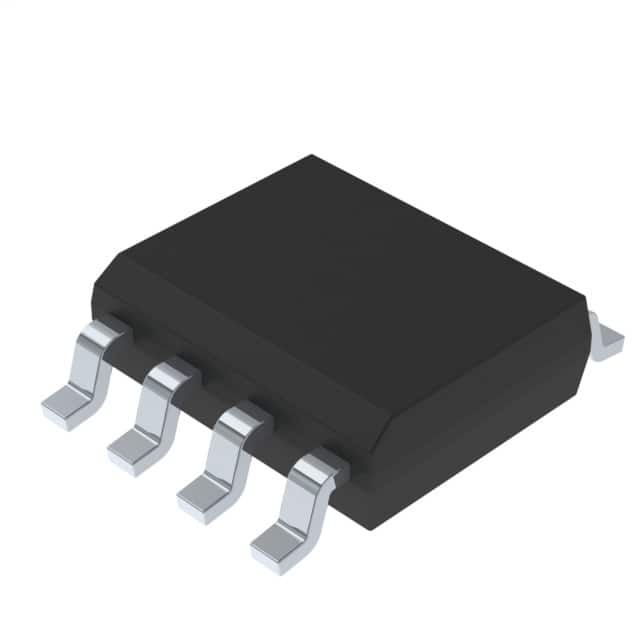
|

|
| Category | PMIC - Voltage Regulators - Linear | PMIC - Voltage Regulators - Linear |
| Manufacturer | STMicroelectronics | Microchip Technology |
| Description | IC REG LINEAR 2.5V 500MA 8SO | IC REG LINEAR 0.8V 500MA TO220-3 |
| Package | Tube | Tube |
| Series | - | - |
| Operating Temperature | -40°C ~ 125°C | -40°C ~ 125°C |
| Mounting Type | Surface Mount | Through Hole |
| Package / Case | 8-SOIC (0.154\", 3.90mm Width) | TO-220-3 |
| Supplier Device Package | 8-SOIC | TO-220-3 |
| Output Type | Fixed | Fixed |
| Voltage - Output (Min/Fixed) | 2.5V | 0.8V |
| Voltage - Output (Max) | - | - |
| Current - Output | 500mA | 500mA |
| Output Configuration | Positive | Positive |
| Control Features | Enable | - |
| Voltage - Input (Max) | 20V | 6V |
| Number of Regulators | 1 | 1 |
| Voltage Dropout (Max) | 0.7V @ 500mA | 0.35V @ 500mA |
| Current - Quiescent (Iq) | 1 mA | 220 µA |
| Current - Supply (Max) | 12 mA | - |
| PSRR | 82dB ~ 60dB (120Hz ~ 10kHz) | 60dB (100Hz) |
| Protection Features | Over Current, Over Temperature | Over Temperature, Short Circuit, Under Voltage Lockout (UVLO) |
-
1. What is a linear regulator?
A linear regulator is an electronic device that is primarily used to maintain a specified output voltage stable when the input voltage or load conditions change. It is an important component in electronics that acts as a buffer to protect the components of the circuit from damage. A linear regulator works by using an active device (such as a BJT or MOSFET) controlled by a high-gain amplifier, using the variable conductivity of the active pass device to maintain the output voltage. This regulator acts as a voltage divider to produce a regulated output voltage, where a linear element (such as a resistive load) is used to regulate the output voltage. The transistor stays in its active region of operation during voltage regulation. To maintain a constant output voltage, the internal resistance can be varied, providing a variable resistance by using a transistor controlled by the amplifier feedback loop.
A linear regulator is also called a buck converter, where the output voltage is always -
2. What are the characteristics of linear regulators?
Linear regulators have the characteristics of low cost, small package, few peripheral devices and low noise. There are many types of linear regulator packages, which are very suitable for use in LCD color TVs. For fixed voltage output applications, only 2-3 small capacitors are needed to form the entire solution. Ultra-low output voltage noise is the biggest advantage of linear regulators. The output voltage ripple is less than 35V (RMS), and it has an extremely high signal-to-noise control ratio, which is very suitable for powering small signal processing circuits that are sensitive to noise.
-
3. What is the difference between linear regulators and switching regulators?
There are significant differences between linear regulators and switching regulators in terms of working principles, efficiency, stability, cost and application range.
Working principle:
Linear regulators achieve the function of stabilizing the output at a set value by adjusting the voltage difference between the output voltage and the input voltage. It achieves stable output voltage by controlling the conductivity state of the power transistor.
The switching regulator converts the input voltage into a pulse signal transmission and smoothes the output through a filter by quickly switching between the input and output ends to achieve the function of stabilizing the output at the set value. The switching regulator uses PWM (pulse width modulation) control to control the output voltage by adjusting the time duty ratio of the high and low levels within a cycle.
Efficiency:
The efficiency of the linear regulator is relatively low, usually between 60% and 70%. When the voltage differenc -
4. What problems will linear regulators bring to the circuit?
The problems that linear regulators bring to the circuit mainly include low efficiency and a lot of heat.
Linear The main working principle of the voltage regulator is to control the output voltage of the transistor through a current amplifier to keep the output voltage stable. This working mode causes the linear regulator to control the regulating tube through a differential voltage when adjusting the output voltage. The control tube needs to absorb part of the input voltage, which makes the efficiency of the linear regulator relatively low. In practical applications, this means that the linear regulator will convert the difference between the input voltage and the output voltage into heat energy, causing serious heating of the device, especially when the input and output voltage difference is large, this power loss will further increase, causing the device to heat up.