
KF25BD-TR vs MCP1825S-2502E/EB
| Part Number |
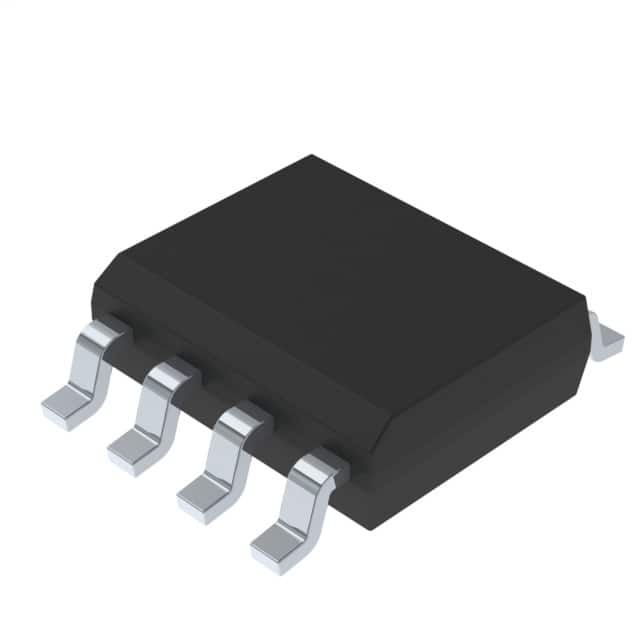
|

|
| Category | PMIC - Voltage Regulators - Linear | PMIC - Voltage Regulators - Linear |
| Manufacturer | STMicroelectronics | Microchip Technology |
| Description | IC REG LINEAR 2.5V 500MA 8SO | IC REG LINEAR 2.5V 500MA 3DDPAK |
| Package | Tube | -Reel® |
| Series | - | - |
| Operating Temperature | -40°C ~ 125°C | -40°C ~ 125°C |
| Mounting Type | Surface Mount | Surface Mount |
| Package / Case | 8-SOIC (0.154\", 3.90mm Width) | TO-263-4, D²Pak (3 Leads + Tab), TO-263AA |
| Supplier Device Package | 8-SOIC | 3-DDPAK |
| Output Type | Fixed | Fixed |
| Voltage - Output (Min/Fixed) | 2.5V | 2.5V |
| Voltage - Output (Max) | - | - |
| Current - Output | 500mA | 500mA |
| Output Configuration | Positive | Positive |
| Control Features | Enable | - |
| Voltage - Input (Max) | 20V | 6V |
| Number of Regulators | 1 | 1 |
| Voltage Dropout (Max) | 0.7V @ 500mA | 0.35V @ 500mA |
| Current - Quiescent (Iq) | 1 mA | 220 µA |
| Current - Supply (Max) | 12 mA | - |
| PSRR | 82dB ~ 60dB (120Hz ~ 10kHz) | 60dB (100Hz) |
| Protection Features | Over Current, Over Temperature | Over Temperature, Short Circuit, Under Voltage Lockout (UVLO) |
-
1. What are the disadvantages of linear regulators?
The disadvantage of linear regulators is that they are not efficient and can only be used in voltage reduction applications. The efficiency of a linear regulator depends on the ratio of output voltage to input voltage: turbidity = Vo: Vi. For example, for ordinary linear regulators, when the input voltage is 5V and the output voltage is 2.5V, the efficiency is only 50%. For ordinary linear regulators, about 50% of the electrical energy is converted into "heat" and lost, which is also the main reason why ordinary linear regulators are prone to heat when working. For LDO, due to its low voltage difference, the efficiency is much higher. For example, when the input voltage is 3.3V and the output voltage is 2.5V, its efficiency can reach 76%. Therefore, in LCD color TVs, in order to improve the utilization rate of electrical energy, ordinary linear regulators are used less, while LDOs are used more.
-
2. When should a linear regulator be used instead of a switching regulator?
In low-power and low-frequency application scenarios, a linear regulator should be used instead of a switching regulator.
Linear regulator Suitable for low-power and low-frequency applications, with simple circuit structure, low noise and good stability. They control the output voltage of the transistor through a current amplifier to keep the output voltage stable. This working mode makes linear regulators perform well in low-power and low-frequency applications, although they are less efficient and generate more heat, and their application range is limited. In contrast, switching regulators use high-frequency pulse modulation technology to convert input voltage into a stable output voltage. They have the advantages of high efficiency, small size and fast response, and are suitable for high-power and high-frequency applications. Therefore, when the application requirements are not the main considerations for circuit complexity and cost, but have high requirements for the stability and -
3. What are the three types of voltage regulator?
The three types of voltage regulators include the contact voltage regulator, the transistor regulator and the integrated circuit regulator.
Contact voltage regulator: This is the type of voltage regulator used earlier. Its working principle is based on the vibration of the contact, but there is mechanical inertia and electromagnetic inertia, resulting in low voltage adjustment accuracy. Large, poor reliability, and short life, so it has been eliminated.
Crystal tube regulator: With the development of semiconductor technology, the transistor regulator becomes the mainstream. It uses a triode for voltage adjustment. Compared with the contact -type voltage regulator, the advantages of the transistor regulator is that the response speed, high efficiency, small volume, light weight, and not easily affected by external magnetic fields are widely used.
Integrated circuit regulator: Integrated circuit regulator is a new type of voltage regulator developed in recent years. It integrates mult -
4. Can a linear regulator be up?
Linear regulators cannot be boost.
The main function of a linear regulator is to stabilize the output voltage, protecting the electrical equipment from high or unstable voltage effects. It realizes a stable output voltage by adjusting the gap between the output voltage and the input voltage, but this process is limited to lowering the voltage, not including the voltage. The working principle of a linear regulator is to regulate the voltage by converting excess voltage into heat loss, thereby realizing the voltage regulation. This feature determines that it does not have the voltage function.