
KF25BD-TR vs TPS71433DRVR
| Part Number |
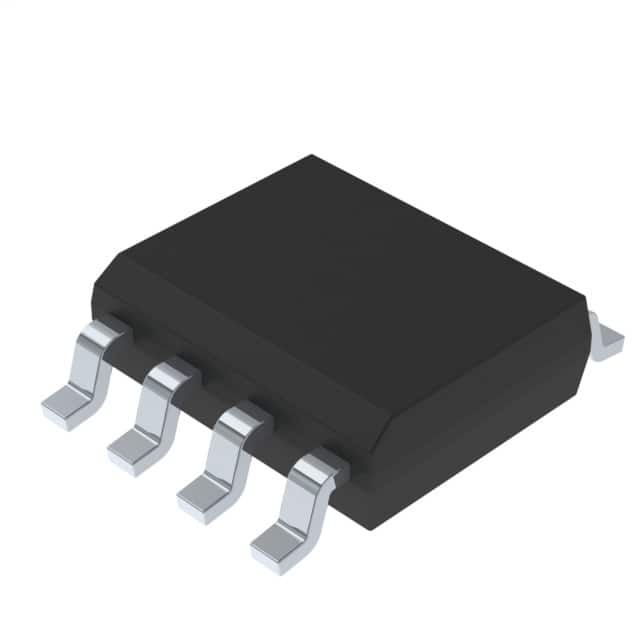
|

|
| Category | PMIC - Voltage Regulators - Linear | PMIC - Voltage Regulators - Linear |
| Manufacturer | STMicroelectronics | Texas Instruments |
| Description | IC REG LINEAR 2.5V 500MA 8SO | IC REG LINEAR 3.3V 80MA 6WSON |
| Package | Tube | Tube |
| Series | - | - |
| Operating Temperature | -40°C ~ 125°C | -40°C ~ 125°C |
| Mounting Type | Surface Mount | Surface Mount |
| Package / Case | 8-SOIC (0.154\", 3.90mm Width) | 6-WDFN Exposed Pad |
| Supplier Device Package | 8-SOIC | 6-WSON (2x2) |
| Output Type | Fixed | Fixed |
| Voltage - Output (Min/Fixed) | 2.5V | 3.3V |
| Voltage - Output (Max) | - | - |
| Current - Output | 500mA | 80mA |
| Output Configuration | Positive | Positive |
| Control Features | Enable | Current Limit |
| Voltage - Input (Max) | 20V | 10V |
| Number of Regulators | 1 | 1 |
| Voltage Dropout (Max) | 0.7V @ 500mA | 1.3V @ 80mA |
| Current - Quiescent (Iq) | 1 mA | 4.2 µA |
| Current - Supply (Max) | 12 mA | 7.4 µA |
| PSRR | 82dB ~ 60dB (120Hz ~ 10kHz) | 59dB ~ 54dB (120Hz) |
| Protection Features | Over Current, Over Temperature | Over Current |
-
1. When should a linear regulator be used instead of a switching regulator?
In low-power and low-frequency application scenarios, a linear regulator should be used instead of a switching regulator.
Linear regulator Suitable for low-power and low-frequency applications, with simple circuit structure, low noise and good stability. They control the output voltage of the transistor through a current amplifier to keep the output voltage stable. This working mode makes linear regulators perform well in low-power and low-frequency applications, although they are less efficient and generate more heat, and their application range is limited. In contrast, switching regulators use high-frequency pulse modulation technology to convert input voltage into a stable output voltage. They have the advantages of high efficiency, small size and fast response, and are suitable for high-power and high-frequency applications. Therefore, when the application requirements are not the main considerations for circuit complexity and cost, but have high requirements for the stability and -
2. What are the alternatives to linear regulators?
Alternatives to linear regulators include Semiconductor HT7144S, K7805-2000R3, TPS70933DBVR, CLR6212, XC6220B331MR-G, LR7550-M, SGM2054XTD10G/TR, ME6213C33M5G, RS3236-3.3YF5, KL2036-2.2V, etc. These alternatives cover different package forms (such as SOT-23, SOP8, etc.) and output voltage and current specifications to meet the needs of different applications. For example, the HT7144S is a three-terminal linear regulator, while the TPS70933DBVR is an LDO (low dropout linear regulator) with lower output voltage and current specifications. CLR6212 and XC6220B331MR-G provide higher output current capabilities and are suitable for applications that require larger current outputs. LR7550-M and SGM2054XTD10G/TR provide specific voltage and current specifications to meet the needs of specific fields. ME6213C33M5G and RS3236-3.3YF5 are regulators with specific packaging forms, suitable for space-constrained application scenarios. KL2036-2.2V is a linear regulator with a lower output voltage, su
-
3. What is the minimum input voltage of a linear regulator?
The minimum input voltage range of linear regulator varies from model and application.
For certain low -voltage lower -voltage regulators, its minimum input voltage range is usually 2.5V to 2.7V. This type of regulator design is used to power the internal LDO drive circuit and can drive PMOS FET to provide high output current. However, when the output voltage is lower than 1.8V and the output current is greater than 2.5A, the linear regulator with PMOS bypass components may be used for external heat dissipation due to additional air flow requirements and/or the heat generated by the regulator. It becomes inconvenient and the cost will increase.
For universal linear stabilizers, its input voltage range can be very wide. For example, some general -purpose linear regulators have 3V to 40V input voltage range. Even for models suitable for 24V systems, the input maximum voltage can reach 60V Then, then
In summary, the minimum input voltage of the linear regulator does not have a fixed st -
4. What are the two main categories of linear and switching stabilizers?
The two main categories of linear and switching stabilizers are linear voltage voltage power and switching voltage power supply.
Linear voltage voltage power has achieved the advantages of transformer, rectification, filtering, and voltage voltage. It has the advantages of good stability, fast transient response speed, high reliability, and high output voltage accuracy. However, its transformation efficiency is low, especially when the output voltage difference is large, if the output current is also large, there will be obvious fever and hot phenomenon, and may even burn the regulator. The linear voltage voltage power supply includes two types: fixed output voltage and adjustable output voltage. According to the selection of the output current and the difference in the input output voltage difference, the design of the linear regulator needs to pay attention to the heat dissipation problem and the choice of bypass capacitors.
The switching voltage voltage power supply, also known as