
LCW JNSH.EC-BTCP-5O8Q-1 vs SPMWH3228FD5WAP0S4
| Part Number |
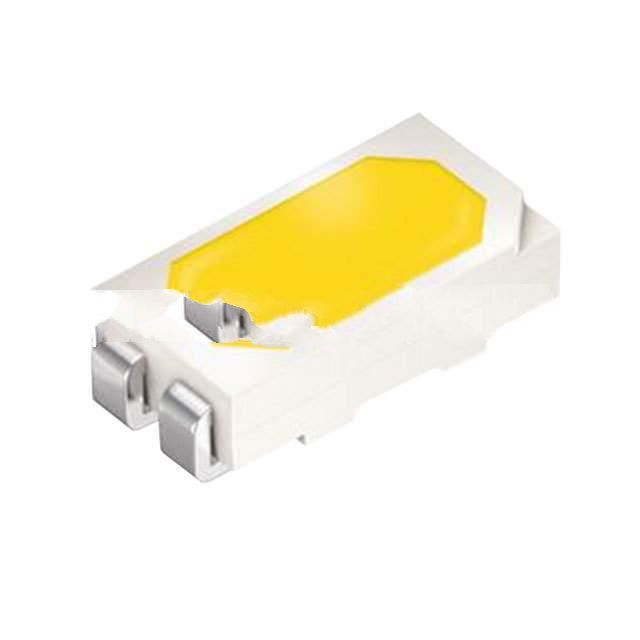
|
|
| Category | LED Lighting - White | LED Lighting - White |
| Manufacturer | OSRAM Opto Semiconductors Inc. | Samsung Electro-Mechanics |
| Description | LED DURIS E3 WARM WHT 3500K 2SMD | LED LM281BZ COOL WHT 6500K 2SMD |
| Package | 2-SMD, J-Lead | 1113 (2835 Metric) |
| Series | DURIS? E 3 | LM281BZ |
| Mounting Type | Surface Mount | Surface Mount |
| Package / Case | 2-SMD, J-Lead | 1113 (2835 Metric) |
| Supplier Device Package | SMD | 2835 |
| Size / Dimension | 0.118" L x 0.055" W (3.00mm x 1.40mm) | 0.110" L x 0.126" W (2.80mm x 3.20mm) |
| Current - Max | 30mA | 160mA |
| Current - Test | 20mA | 150mA |
| Color | White, Warm | White, Cool |
| Height - Seated (Max) | 0.051" (1.30mm) | 0.030" (0.75mm) |
| Voltage - Forward (Vf) (Typ) | 3.05V | 3.1V |
| Viewing Angle | 110° | 120° |
| Flux @ 25°C, Current - Test | 8 lm (7 lm ~ 9 lm) | 67 lm (65 lm ~ 69 lm) |
| Lumens/Watt @ Current - Test | 131 lm/W | 144 lm/W |
| CCT (K) | 3500K | 6500K |
| CRI (Color Rendering Index) | 80 | 80 |
-
1. What is the meaning of LED lighting?
LED lighting (Light-Emitting Diode Lighting) is a lighting technology that uses light-emitting diodes (LEDs) as light sources. LED lighting has the advantages of high efficiency and energy saving, long life, high brightness and environmental protection, so it is widely used in indoor and outdoor lighting.
The working principle of LED lighting
LED lighting is based on the principle of semiconductor light emission. When current passes through the LED chip, electrons and holes recombine in the semiconductor material, releasing energy in the form of light to form visible light. LED chips are usually composed of blue or purple light sources and corresponding phosphors. Through the luminescence conversion of phosphors, visible light of different colors can be produced.
Features of LED lighting
High efficiency and energy saving: LED chips can convert most of the electrical energy into visible light, and less energy into heat energy, so the energy consumption is low. Compared with traditional incandescent lamps, the energy efficiency of LED lighting is usually improved by more than 80%, effectively reducing the cost of electricity.
Long life: LED chips have high vibration resistance and vibration resistance, and are not easily affected by the external environment, so they have a long service life. Under normal circumstances, the life of LED lighting can reach tens of thousands of hours.
High brightness: LED lighting has high brightness and is suitable for various lighting needs.
Environmental protection: LED lighting does not contain harmful substances such as mercury and is environmentally friendly. -
2. What is the principle of LED lights?
The principle of LED lights is based on the PN junction characteristics of semiconductor materials. LED (Light Emitting Diode) is a semiconductor device that directly converts electrical energy into light energy. Its core structure is a PN junction composed of P-type semiconductors and N-type semiconductors. When an external forward voltage is applied to the PN junction of the LED, the electrons in the N region will cross the depletion layer into the P region, and the holes in the P region will also cross the depletion layer into the N region. This process is called carrier injection. The electrons and holes injected into the other region recombine near the PN junction, release energy, and emit it in the form of photons to form visible light or near-infrared light.
-
3. Is the LED positive or negative?
LED lights are divided into positive and negative poles. The positive and negative poles of LED lamps can be distinguished by the following methods:
Long pin: For plug-in LED lamps, the longer end of the pin is the positive pole, and the shorter end is the negative pole. In addition, when observing the inside of the LED lamp bead, the end with the smaller electrode is usually the positive pole, and the larger end is the negative pole.
SMD LED lamp beads: The positive and negative poles can be distinguished by the following methods:
Printed identifier: Check the printed identifier on the back of the SMD light-emitting diode board. Usually, one side of the "T" shape or inverted triangle symbol is the positive pole, and the other side is the negative pole.
Colored lines: Observe the printed lines of the SMD light-emitting diode board. The side with colored lines is usually the negative pole, and the other side is the positive pole.
Missing corner: Pay attention to the front panel of the SMD light-emitting diode. The missing corner is usually the positive pole and the other end is the negative pole.
Multimeter test: Use a multimeter to test. When the LED lamp bead is lit, the red test pen is connected to the positive pole and the black test pen is connected to the negative pole. -
4. What are the advantages of using LED?
The advantages of using LEDs mainly include the following aspects:
Energy saving and high efficiency: LED lamps are more energy-efficient than traditional lighting such as incandescent lamps and fluorescent lamps, and can usually save more than 50% of electricity consumption. LED lamps have higher conversion efficiency, which means lower power consumption at the same brightness.
Long life: The life of LED lamps far exceeds that of traditional lighting equipment, usually up to 20,000 to 100,000 hours, and some are even longer, reducing the frequency of replacement and maintenance costs.
Environmental protection: LEDs do not contain harmful substances such as mercury, have little impact on the environment after disposal, and are easy to recycle. In addition, the impact on the environment during the production and disposal of LED lamps is also small.
Excellent light quality: LEDs can provide purer colors and a narrower spectrum range, with rich color expression, suitable for places that require high-quality lighting.
Fast response: LEDs have an extremely short response time of about nanoseconds, which is suitable for application scenarios that require fast switching, such as traffic lights.
Adjustability: LEDs are easy to adjust light intensity, color and direction through electronic control, suitable for intelligent lighting systems, and meet personalized and dynamic lighting needs.
Safe voltage: LEDs operate at lower voltages, generally DC voltage, which makes them safer to use, especially for public places such as homes and schools.
Shock and vibration resistance: LED lamps do not have fragile parts such as glass filaments, are more resistant to shock and vibration, and are suitable for outdoor and harsh environments.
Strong directionality: LED light sources have strong directionality, which can more effectively direct light to where it is needed, reducing light pollution and waste.
Low temperature operation: LEDs generate less heat energy, reducing safety hazards caused by high temperatures, and also reducing the burden of air conditioning and refrigeration.
