
LM5107MAX/NOPB vs LM5060MM/NOPB
| Part Number |
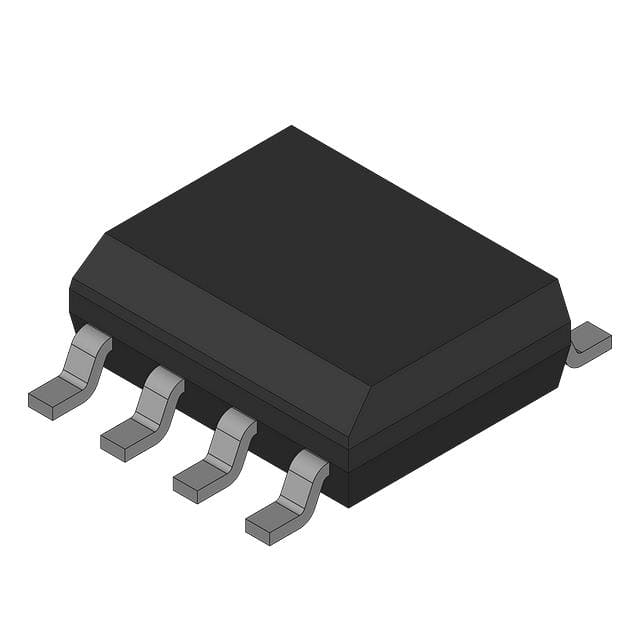
|

|
| Category | PMIC - Gate Drivers | PMIC - Gate Drivers |
| Manufacturer | National Semiconductor | Texas Instruments |
| Description | LM5107 100V / 1.4A PEAK HALF BRI | IC GATE DRVR HIGH-SIDE 10VSSOP |
| Package | Bulk | -Reel® |
| Series | - | - |
| Voltage - Supply | 8V ~ 14V | 5.5V ~ 65V |
| Operating Temperature | -40°C ~ 125°C (TJ) | -40°C ~ 125°C |
| Mounting Type | Surface Mount | Surface Mount |
| Package / Case | 8-SOIC (0.154\", 3.90mm Width) | 10-TFSOP, 10-MSOP (0.118\", 3.00mm Width) |
| Supplier Device Package | 8-SOIC | 10-VSSOP |
| Input Type | Non-Inverting | Non-Inverting |
| Channel Type | Independent | Single |
| Rise / Fall Time (Typ) | 15ns, 15ns | - |
| Driven Configuration | Half-Bridge | High-Side |
| Number of Drivers | 2 | 1 |
| Gate Type | N-Channel MOSFET | N-Channel MOSFET |
| Logic Voltage - VIL, VIH | 0.8V, 2.2V | 0.8V, 2V |
| Current - Peak Output (Source, Sink) | 1.3A, 1.4A | 24µA, 2.2mA |
| High Side Voltage - Max (Bootstrap) | 118 V | - |
-
1. What is an active gate driver?
An active gate driver is a circuit that is mainly used to enhance the gate signal of a field effect transistor (MOSFET) or an insulated gate bipolar transistor (IGBT) so that the controller can better control the operation of these semiconductor switches. It controls the gate of MOSFET or IGBT by converting the signal output by the controller into high-voltage, high-current pulses, thereby improving the performance, reliability and service life of these devices.
-
2. What is a motor gate driver?
A motor gate driver is a circuit that is mainly used to enhance the gate signal of a field effect transistor (MOSFET) or an insulated gate bipolar transistor (IGBT) so that the controller can better control the operation of these semiconductor switches. It converts the low-voltage signal output by the controller into a high-voltage, high-current pulse signal to ensure that the MOSFET or IGBT can switch states stably and quickly within its operating range.
-
3. What are the different types of gate drivers?
There are mainly the following types of gate drivers:
High-frequency high-voltage gate driver: This driver can drive two N-channel MOSFETs, supports a power supply voltage of up to 100V, has strong driving capabilities, is suitable for MOSFETs with high gate capacitance, and can reduce switching losses. It also has features such as undervoltage lockout and adaptive shoot-through protection.
HL-type gate driver: The HL-type driver drives two N-channel MOSFETs in a half-bridge configuration and supports a power supply voltage of up to 140V. It has independent control outputs and strong anti-interference ability, and is suitable for application scenarios that require independent control of two MOSFETs. The HL type driver also has functions such as UVLO, TTL/CMOS compatible input, adjustable turn-on/off delay and shoot-through protection.
Pulse transformer drive: This driver does not require a separate drive voltage, and applies a high voltage to the gate through a pulse transformer, which is suitable for half-bridge or full-bridge circuits. It uses a capacitor and pulse transformer in series to increase the switching speed, and quickly resets the pulse transformer through a Zener diode.
Optocoupler and floating power supply drive: This driver uses an optocoupler to isolate the microcontroller and power transistor, and requires a separate floating power supply. The optocoupler output requires a separate power supply, which is suitable for high-side drive of half-bridge or full-bridge.
Push-pull circuit: The push-pull circuit is suitable for situations where the drive current is insufficient. It provides sufficient drive current by alternating between two transistors, which is suitable for application scenarios that require high drive current.
Half-bridge/full-bridge high-end drive: This driver applies a high voltage to the gate, which is suitable for half-bridge or full-bridge circuits. Since the source voltage of the high-end MOSFET changes, it needs to be powered independently and cannot share a ground with the low-end MOSFET.
-
4. Why is a gate driver needed?
The main reasons for the need for gate drivers include signal amplification, electrical isolation, and protection mechanisms.
Signal Amplification
The main function of the gate driver is to convert the low-voltage signal of the controller into a high-voltage drive signal, thereby achieving effective control of the power device. This signal amplification function ensures that the power device can be stably turned on and off, improving the efficiency and reliability of the system.
Electrical Isolation
In many applications, electrical isolation between the control circuit and the power semiconductor is very important to prevent voltage feedback or ground loop problems. Gate drivers usually use optocouplers or other isolation methods to maintain this isolation, ensuring that the control circuit is not affected by the power circuit, thereby improving the stability and safety of the system.
Protection Mechanism
Gate drivers also integrate a variety of protection functions, such as overcurrent, overvoltage protection, and short-circuit protection. These protection mechanisms can effectively prevent power device damage and improve the reliability and safety of the system.
