
LMK01000ISQX/NOPB vs LMK01010ISQX/NOPB
| Part Number |

|
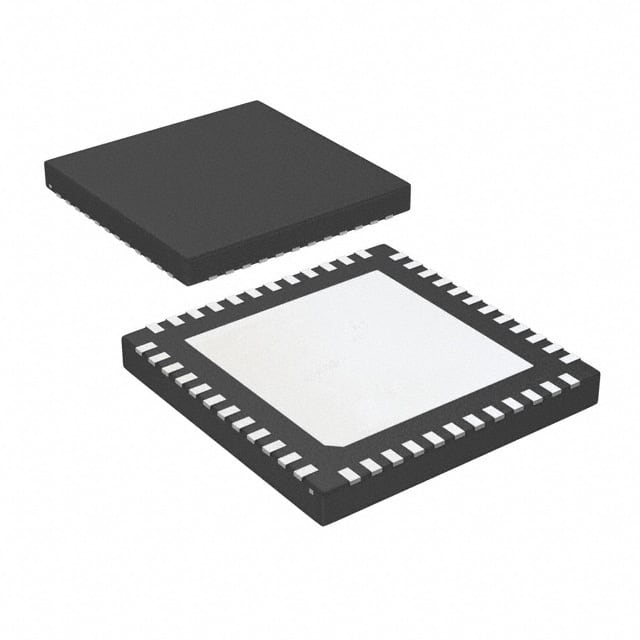
|
| Category | Clock/Timing - Clock Buffers, Drivers | Clock/Timing - Clock Buffers, Drivers |
| Manufacturer | Texas Instruments | Texas Instruments |
| Description | IC CLK BUFFER 2:8 1.6GHZ 48WQFN | IC CLK BUFFER 1:8 1.6GHZ 48WQFN |
| Package | Tape & Reel (TR) | Tape & Reel (TR) |
| Series | - | - |
| Type | Fanout Buffer (Distribution), Divider | Fanout Buffer (Distribution), Divider |
| Voltage - Supply | 3.15V ~ 3.45V | 3.15V ~ 3.45V |
| Operating Temperature | -40°C ~ 85°C | -40°C ~ 85°C |
| Mounting Type | Surface Mount | Surface Mount |
| Package / Case | 48-WFQFN Exposed Pad | 48-WFQFN Exposed Pad |
| Supplier Device Package | 48-WQFN (7x7) | 48-WQFN (7x7) |
| Output | LVDS, LVPECL | LVDS |
| Frequency - Max | 1.6 GHz | 1.6 GHz |
| Number of Circuits | 1 | 1 |
| Input | Clock | Clock |
| Ratio - Input:Output | 2:8 | 1:8 |
| Differential - Input:Output | Yes/Yes | Yes/Yes |
-
1. What is the difference between a clock buffer and a clock driver?
The main function of a clock buffer is to distribute clock signals, while a clock driver is used to enhance signal strength to drive higher loads. Buffer is usually used for branching and synchronizing multiple clock signals, while driver is used to increase signal transmission distance and load capacity.
-
2. What are the main applications of clock buffers?
Clock buffers are widely used in systems that require the distribution of clock signals to multiple devices, such as computer motherboards, servers, communication equipment, data centers, and industrial control systems, to ensure synchronized operation of all devices.
-
3. How can clock buffers reduce jitter?
High quality clock buffers are typically designed with low jitter characteristics to ensure phase consistency of output signals and reduce phase noise during transmission. This is crucial for high-precision clock allocation, such as in communication and data transmission applications.
-
4. Does the clock driver support differential signals?
Yes, many clock drivers support differential signaling, such as LVDS, CML, and HCSL, which can provide higher anti-interference capabilities, especially in high-speed signal transmission applications.
