
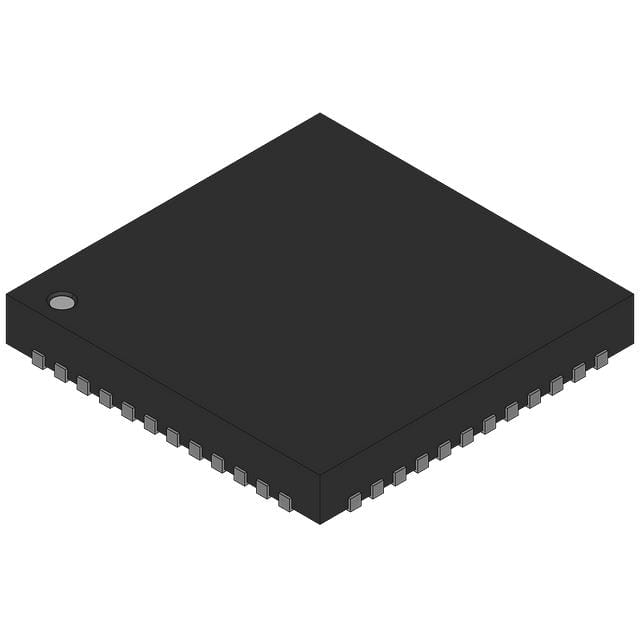
LMK04131SQE/NOPB vs 87339AMI-11LF
| Part Number |
|

|
| Category | Clock/Timing - Clock Generators, PLLs, Frequency Synthesizers | Clock/Timing - Clock Generators, PLLs, Frequency Synthesizers |
| Manufacturer | National Semiconductor | Renesas Electronics America Inc |
| Description | LMK04131 CLOCK JITTER CLEANER WI | IC CLK GEN 3.3V LVPECL 20-SOIC |
| Package | Bulk | Tube |
| Series | PLLatinum™ | - |
| Type | - | Clock Generator |
| Voltage - Supply | 3.15V ~ 3.45V | 3V ~ 3.6V |
| Operating Temperature | -40°C ~ 85°C | -40°C ~ 85°C |
| Mounting Type | Surface Mount | Surface Mount |
| Package / Case | 48-WFQFN Exposed Pad | 20-SOIC (0.295\", 7.50mm Width) |
| Supplier Device Package | 48-WQFN (7x7) | 20-SOIC |
| Output | LVCMOS, LVDS, 2VPECL, LVPECL | LVPECL |
| Frequency - Max | 1.08GHz | 1GHz |
| Number of Circuits | 1 | 1 |
| Input | LVCMOS, LVDS, LVPECL | HCSL, LVDS, LVHSTL, LVPECL, SSTL |
| PLL | Yes | No |
| Ratio - Input:Output | 2:6 | 2:4 |
| Differential - Input:Output | Yes/Yes | Yes/Yes |
| Divider/Multiplier | Yes/No | Yes/No |
-
1. How does Phase-locked loops(PLL) work?
PLL (phase locked loop) is a feedback control circuit that continuously adjusts the frequency and phase of the internal oscillation signal to synchronize with the input reference signal by comparing the phase difference between the input signal and the feedback signal. PLL is mainly composed of phase detector (PD), loop filter (LF), voltage controlled oscillator (VCO) and optional divider (Divider).
When PLL starts working, the frequency of input reference signal is always different from the inherent oscillation frequency of voltage controlled oscillator, resulting in constant phase difference. The error voltage output by the phase detector is converted into a control voltage through a loop filter and added to the voltage-controlled oscillator, so that its frequency is gradually adjusted to synchronize with the input reference signal and enter the "locked" state. If the frequency and phase of the input reference signal change, the PLL controls the frequency and phase of the voltage-controlled oscillator to track the changes of the input reference signal and re-enter the locked state. -
2. Which is better, direct digital synthesis or PLL?
Direct digital synthesis (DDS) and PLL each have their own advantages and disadvantages. Choosing which one is better depends on the specific application requirements. DDS performs well in frequency switching speed and high resolution, while PLL has more advantages in phase noise and spurious performance.
The advantages of DDS include:
High frequency switching speed: DDS works in the digital domain. Once the frequency control word is updated, the output frequency changes accordingly, and the frequency hopping rate is high.
High resolution: Due to the large width of the frequency control word (such as 48bit or higher), the frequency resolution is high.
Flexibility: DDS can generate any desired waveform and initial phase, suitable for applications requiring a wide range of scenarios.
PLL advantages include:
Low phase noise: PLL excels in low phase noise and low spurious performance, suitable for applications requiring high stable frequency.
Wide frequency range: The upper limit of the PLL output frequency depends on the upper limit of the VCO, which can support a wider frequency range.
-
3. What are frequency synthesizers used for?
The main purpose of frequency synthesizers is to provide specific frequency signals for radio and communication systems. It is an important component of modern electronic systems and is widely used in communication, radar, navigation and other equipment.
Frequency synthesizers generate a large number of discrete frequencies with the same stability and accuracy from one or more reference signal sources with high frequency stability and accuracy through linear operations in the frequency domain. Specifically, frequency synthesizers use techniques such as frequency multiplication, frequency division, and mixing to obtain discrete frequency signals with the same stability as the reference signal. -
4. What are frequency synthesizers used for?
Frequency synthesizers have a wide range of applications in many fields, mainly including the following aspects:
Communication systems: In communication systems, frequency synthesizers are used to generate carrier frequencies and modulation signals to ensure the normal operation of communication equipment and the stability of signal transmission. It can provide high-precision and stable frequency signals to meet the requirements of communication systems for frequency accuracy and stability.
Radar systems: Radar systems require accurate frequency synthesis to ensure functions such as beam pointing and target tracking. Frequency synthesizers play a key role in radar systems, providing precise frequency control to ensure the performance and accuracy of radar systems.
Radio equipment: Radio equipment requires frequency synthesizers to generate signals of different frequencies for modulation and demodulation, signal transmission and reception, etc., to ensure effective communication between devices. The high accuracy and stability of frequency synthesizers enable radio equipment to work efficiently.
Instrumentation and test equipment: Frequency synthesizers are used in test and measurement applications as standard signal sources. It can generate high-precision and stable frequency signals to meet the signal quality requirements of laboratory test and measurement equipment.
Electronic countermeasure equipment: In electronic countermeasures, frequency synthesizers can be used as jammers to interfere with enemy communications and radar systems by generating signals of multiple frequencies. Its high flexibility and rapid response make it important in electronic countermeasures.
Other applications: Frequency synthesizers are also widely used in remote control and telemetry communications, navigation, and radio and television. For example, in shortwave frequency hopping communications, frequency synthesizers can quickly switch frequencies and phases to meet the requirements of fast frequency hopping communications.
