
MAX1189AEUI+ vs AD7579KNZ
| Part Number |
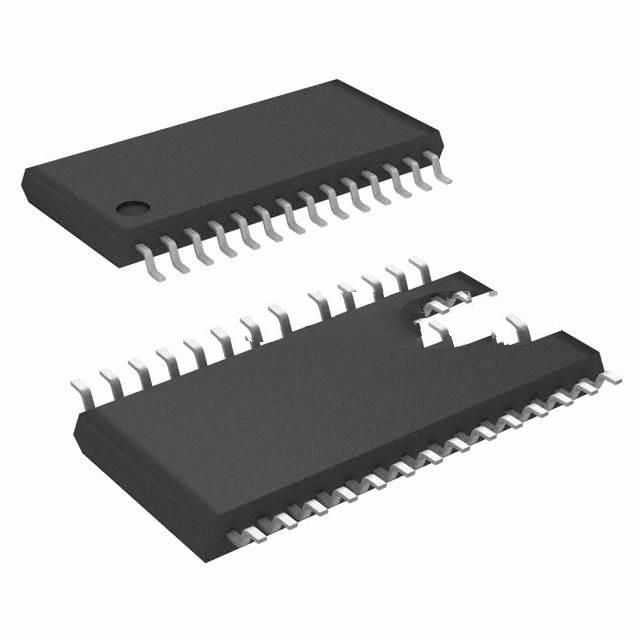
|

|
| Category | Data Acquisition - Analog to Digital Converters (ADC) | Data Acquisition - Analog to Digital Converters (ADC) |
| Manufacturer | Maxim Integrated | Analog Devices Inc. |
| Description | IC ADC 16BIT 135KSPS 28-TSSOP | IC ADC 10BIT SAR 24DIP |
| Package | 28-TSSOP (0.173", 4.40mm Width) | Bulk |
| Series | - | - |
| Operating Temperature | -40°C ~ 85°C | 0°C ~ 70°C |
| Package / Case | 28-TSSOP (0.173", 4.40mm Width) | 24-DIP (0.300\", 7.62mm) |
| Supplier Device Package | 28-TSSOP | 24-PDIP |
| Reference Type | External, Internal | External |
| Sampling Rate (Per Second) | 135k | 50k |
| Data Interface | Parallel | Parallel |
| Number of Bits | 16 | 10 |
| Voltage - Supply, Analog | 5V | 5V |
| Voltage - Supply, Digital | 2.7 V ~ 5.25 V | 5V |
| Number of Inputs | 1 | 2 |
| Input Type | Single Ended | Differential |
| Configuration | S/H-ADC | S/H-ADC |
| Ratio - S/H:ADC | 1:1 | 1:1 |
| Number of A/D Converters | 1 | 1 |
| Architecture | SAR | SAR |
| Features | - | - |
| Mounting Type | - | Through Hole |
-
1. What is ADC for data acquisition?
A data collector is an electronic device used to convert various data (such as barcodes, RFID tags, etc.) into a storable and editable format and transmit it to a computer or system in real time. Data collectors are usually operated using handheld devices (such as inventory counting machines or PDAs) and have functions such as real-time acquisition, automatic storage, instant display, instant feedback, automatic processing, and automatic transmission. They can be widely used in warehouse management, logistics transportation, retail, medical, military and other fields. The main functions of data collectors include data acquisition, real-time data processing, data storage and transmission.
ADC, or analog-to-digital converter, is an electronic device that can convert continuously changing analog signals into discrete digital signals. It is mainly used in data acquisition, signal processing, communication and other fields.
-
2. How many types of ADC are there?
The types of ADC (Analog-to-Digital Converter) mainly include:
1. Integral ADC: Its working principle is to convert the input voltage into time (pulse width signal) or frequency (pulse frequency), and then obtain the digital value by the timer/counter. The advantage of the integral ADC is that it can obtain high resolution with a simple circuit and has strong anti-interference ability, but the disadvantage is that the conversion rate is extremely low because the conversion accuracy depends on the integration time.
2. Successive approximation type (SAR ADC): The successive approximation ADC is one of the most common architectures. Its basic principle is to convert by gradually approximating the value of the analog input signal. The advantages of the successive approximation ADC are high speed and low power consumption. It is cheap at low resolution, but expensive at high precision.
3. Parallel comparison type/serial-parallel comparison type ADC: The parallel comparison type AD uses m -
3. How to convert analog to digital without ADC?
Analog to digital conversion without ADC can be achieved through PWM circuit. This method is suitable for those main control chips without built-in ADC, which needs to be solved by two GPIOs and an operational amplifier. The basic principle is to use an integral circuit to convert the PWM wave into a smooth DC voltage, and then continuously adjust the PWM duty cycle by comparing it with the voltage to be measured until the output of the comparator changes from 0 to 1, and record the current PWM duty cycle, thereby realizing the measurement of the analog voltage.
-
4. What is the difference between the input and output of an ADC?
The input of ADC (Analog-to-Digital Converter) is analog quantity and the output is digital quantity.
The main function of ADC is to convert continuous analog signal into discrete digital signal. In electronic systems, analog signal usually refers to continuously changing voltage or current, such as the signal obtained from microphone or sensor. The amplitude and frequency of these analog signals can change continuously, while digital signals are composed of a series of discrete values, usually expressed in binary form.
Input: The input of ADC receives analog signals, which can be in the form of continuously changing physical quantities such as voltage and current. The amplitude and frequency of analog signals can change continuously, such as the voltage range from 0V to 5V.
Output: The output of ADC is digital signal, which is composed of a series of discrete values, usually expressed in binary form. The advantage of digital signals is that they can be calculated and processed quic
