
MB10S vs DF10S-T
| Part Number |
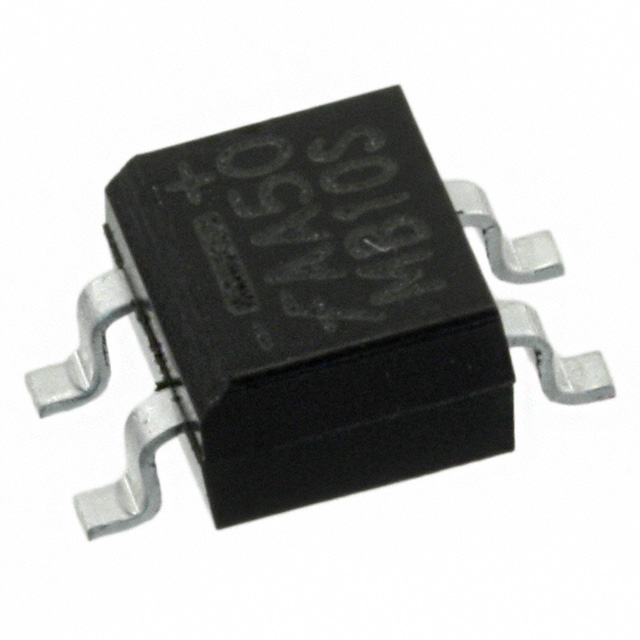
|
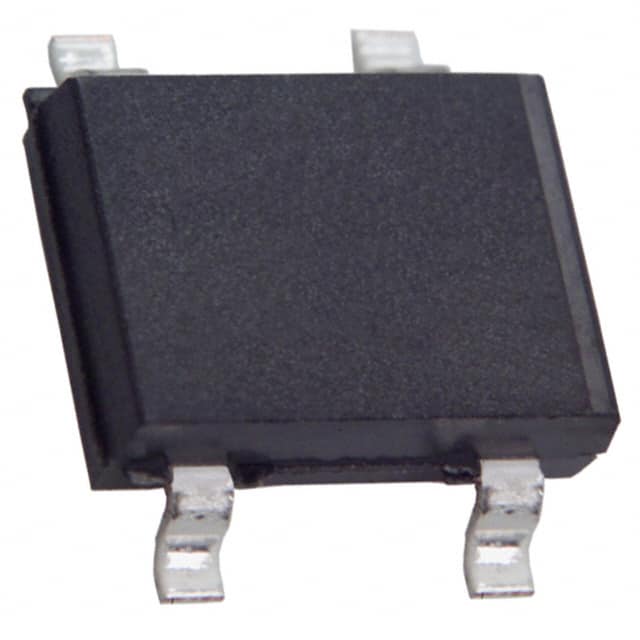
|
| Category | Diodes - Bridge Rectifiers | Diodes - Bridge Rectifiers |
| Manufacturer | ON Semiconductor | Diodes Incorporated |
| Description | BRIDGE RECT GLASS 1000V .5A MDS | BRIDGE RECT 1PHASE 1KV 1A DF-S |
| Package | Tape & Reel (TR) | -Reel® |
| Series | - | - |
| Operating Temperature | -55°C ~ 150°C (TJ) | -65°C ~ 150°C (TJ) |
| Mounting Type | Surface Mount | Surface Mount |
| Package / Case | 4-SMD, Gull Wing | 4-SMD, Gull Wing |
| Supplier Device Package | MD-S | DF-S |
| Technology | Standard | Standard |
| Diode Type | Single Phase | Single Phase |
| Voltage - Peak Reverse (Max) | 1 kV | 1 kV |
| Current - Average Rectified (Io) | 500 mA | 1 A |
| Voltage - Forward (Vf) (Max) @ If | 1.05 V @ 500 mA | 1.1 V @ 1 A |
| Current - Reverse Leakage @ Vr | 5 µA @ 1000 V | 10 µA @ 1000 V |
-
1. What is the working principle of bridge rectifier?
The bridge rectifier converts the input AC power into DC power through an arrangement of four diodes. Every half cycle, two diodes conduct, converting both positive and negative half waves of alternating current into direct current in the same direction.
-
2. What are the advantages of bridge rectifier compared to single diode rectifier?
Bridge rectifier is more efficient than single diode (half wave) rectifier because it can use two and a half cycles of AC power, not just one and a half cycles, thereby improving the output power efficiency and stability.
-
3. Does the bridge rectifier require heat dissipation?
Yes, high-power bridge rectifiers typically generate a large amount of heat and require cooling through radiators or cooling schemes to reduce temperature and prevent component damage due to overheating.
-
4. Can bridge rectifiers be used for high-frequency applications?
Traditional silicon bridge rectifiers have low efficiency in high-frequency applications and are prone to significant power losses. However, bridge rectifiers using Schottky diodes or fast recovery diodes can significantly improve high-frequency rectification performance.
