
OHD3-120M vs OHD3-85M
| Part Number |

|
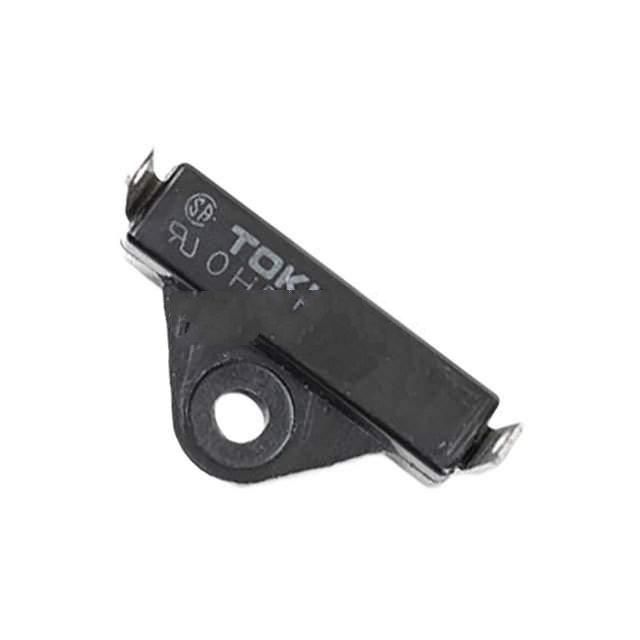
|
| Category | Temperature Sensors - Thermostats - Mechanical | Temperature Sensors - Thermostats - Mechanical |
| Manufacturer | KEMET | KEMET |
| Description | SENSTHERMOHD3 120C 6W MAKE | SENSTHERMOHD3 85C 6W MAKE |
| Package | Module | Module |
| Series | OHD? | OHD? |
| Mounting Type | Chassis Mount | Chassis Mount |
| Package / Case | Module | Module |
| Circuit | SPST-NO | SPST-NO |
| Termination Style | Solder Lug | Solder Lug |
| Switching Temperature | 248°F (120°C) | 185°F (85°C) |
| Current Rating - DC | 0.3A (100V) | 0.3A (100V) |
| Current Rating - AC | 0.3A (100V) | 0.3A (100V) |
-
1. What are the 4 types of temperature sensors?
There are four main types of temperature sensors:
Thermocouple sensor: A thermocouple is a temperature sensing element that forms a closed loop through two conductors of different materials. When there is a temperature gradient at both ends, a current will flow through the loop, generating a thermoelectric potential signal, thereby measuring the temperature. Thermocouples have a wide temperature measurement range, but there are problems such as low sensitivity, low stability, and slow response speed.
Thermistor sensor: The main component of thermistor sensor is thermistor. When there is thermal radiation around the thermosensitive material, it will absorb the radiant heat, causing the material resistance to change. Thermistors are usually made of polymer or ceramic materials and have a nonlinear temperature-resistance relationship, which requires correction to correctly interpret the data. Thermistors are suitable for highly sensitive and small temperature measurement occasions and are inexpensive.
Resistance temperature detector (RTD): RTD usually uses metals such as platinum, copper or nickel. The resistance of these metals changes with temperature, has a large temperature coefficient and a fast response speed. RTD has a wide temperature measurement range, can resist thermal fatigue, and is suitable for precision measurement.
Integrated Circuit (IC) Temperature Sensor: IC temperature sensor is made of silicon semiconductor integration process, with the characteristics of single function, small temperature measurement error, low price, fast response speed, long transmission distance, etc. IC sensor is suitable for long-distance temperature measurement and control, does not require nonlinear calibration, and has simple peripheral circuit.
-
2. What is the difference between thermostat and temperature sensor?
Thermostats and temperature sensors are significantly different in function and use.
Definition and function of thermostat
A thermostat is a temperature sensing device used to automatically open or close a circuit to keep the controlled component within a certain temperature range. It measures temperature changes through sensitive elements and controls heat and cold sources through converters to maintain the desired temperature. Thermostats usually have fixed or adjustable action temperatures and can directly or indirectly control one or more heat and cold sources.
Definition and function of temperature sensor
A temperature sensor is a device that measures the degree of hotness or coldness of an object and provides temperature measurement through electrical signals. Common types include thermocouples and resistance temperature detectors. Temperature sensors are divided into contact and non-contact types:
Contact temperature sensor: requires physical contact with the object being measured and monitors temperature changes through conduction. Suitable for detecting solids, liquids or gases.
Non-contact temperature sensors: use convection and radiation to monitor temperature changes and are suitable for detecting liquids and gases. These sensors can detect radiant energy transmitted from an object in the form of infrared radiation.
-
3. Is a thermostat a mechanical or electrical component?
Thermostats contain both mechanical and electrical components.
A thermostat is an electronic component that controls temperature. Its working principle is to control the start and stop of heating or cooling equipment by detecting temperature signals and comparing them with set values, thereby maintaining a stable temperature. The core components of a thermostat include temperature sensors and control circuits, which are both electrical components 1. In addition, thermostats may also contain mechanical components. For example, mechanical thermostats use bimetallic strips or temperature media (such as kerosene or glycerin) and the principle of thermal expansion and contraction to convert temperature changes into mechanical force to drive the thermostat control mechanism to operate.
There are many types of thermostats, including mechanical, electronic, touch and smart thermostats. Mechanical thermostats control temperature through mechanical means, which are common in home appliances, ovens and other occasions; electronic thermostats achieve temperature control through electronic components, which are common in laboratories, industrial production and other occasions; touch thermostats achieve temperature control through touch screens, which are common in home appliances such as air conditioners and electric water heaters; smart thermostats achieve temperature control through intelligent control algorithms, which can automatically adjust according to user habits and environmental changes, and are common in home decoration projects such as central air conditioning and floor heating. -
4. How does a thermostat sensor work?
The working principle of a thermostat sensor is to detect the ambient temperature and adjust the temperature accordingly to keep it constant. Thermostat sensors usually consist of two main parts: temperature detection circuit and temperature compensation for the detection circuit.
Working principle
Temperature detection: The core component inside the thermostat sensor is a resistor, whose resistance changes with the change of the measured ambient temperature. When the ambient temperature rises, the resistance of the resistor changes, and this change can be converted into an electrical signal through the circuit.
Signal processing: After the changing resistance value is processed by the circuit, a voltage signal related to temperature can be generated. This signal is amplified and processed, and finally outputs a current signal to control the temperature adjustment of the thermostat.
Types
There are two main types of thermostat sensors:
Thermal resistors: Thermistors are usually used to achieve temperature detection, and their resistance changes with temperature.
Thermocouples: They are composed of two metal wires of different materials, and obtain temperature information by measuring the potential difference between the two metals.
