
PC87591S-VPCI00 vs N80C186-25
| Part Number |
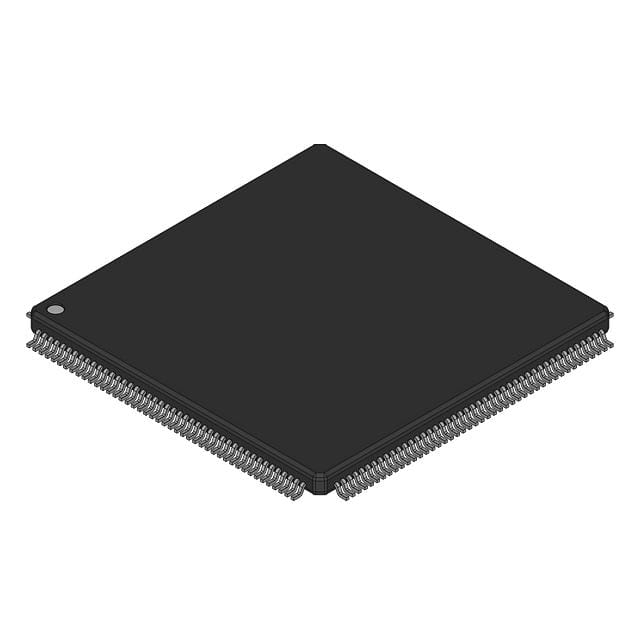
|
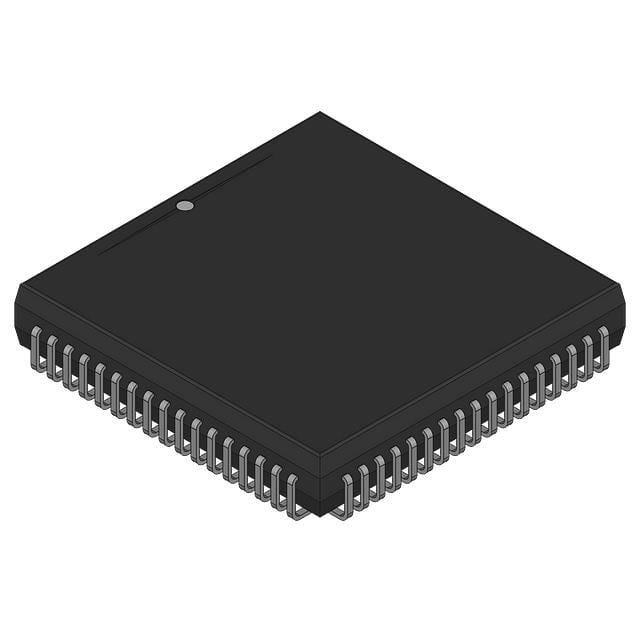
|
| Category | Embedded - Microprocessors | Embedded - Microprocessors |
| Manufacturer | National Semiconductor | Advanced Micro Devices |
| Description | RISC MPU, 16-BIT, 20MHZ PQFP176 | 80C186 - 16-BIT MICROPROCESSOR |
| Package | Bulk | Bulk |
| Series | - | i186 |
| Operating Temperature | - | 0°C ~ 70°C (TA) |
| Package / Case | - | - |
| Supplier Device Package | - | - |
| Speed | - | 25MHz |
| Voltage - I/O | - | 5.0V |
| Core Processor | - | 80C186 |
| Number of Cores/Bus Width | - | 1 Core, 16-Bit |
| RAM Controllers | - | DRAM |
| Graphics Acceleration | - | No |
| Display & Interface Controllers | - | - |
| Ethernet | - | - |
| USB | - | - |
| Security Features | - | - |
| Co-Processors/DSP | - | - |
| SATA | - | - |
-
1. What are examples of micro embedded systems?
Definition and core components of embedded systems.
Embedded systems are application-centric, computer-based, and customizable hardware and software. They are suitable for special-purpose computer systems that have strict requirements on functions, reliability, cost, size, and power consumption. They are generally composed of embedded microprocessors, peripheral hardware devices, embedded operating systems, and user applications, and are used to control, monitor, or manage other devices.
Application examples of embedded systems
Smartphones: Smartphones contain many embedded devices, such as processors, sensors, GPS, cameras, and touch screens, which work together to provide functions such as communication, entertainment, and navigation.
In-car entertainment systems: Embedded systems are also common in in-car entertainment systems, including GPS navigation, audio, and Bluetooth, providing conveniences such as music, navigation, and calls.
Video game consoles: Video game consoles control games through embedded devices, including processors, memory, and displays.
Household appliances: Such as televisions, washing machines, and refrigerators, use embedded systems to provide intelligent functions and efficient operation.
Medical devices: Such as pacemakers, blood glucose monitors, and ophthalmic implants, rely on embedded systems for precise control and monitoring.
Smart home system: embedded systems are used to control lighting, temperature, and security, etc., to improve the convenience and safety of home life.
Industrial automation equipment: such as robots, monitoring equipment, and automated manufacturing equipment, etc., rely on embedded systems to achieve efficient and reliable operation.
What are 5 examples of embedded computers?
Five examples of embedded computers include: digital cameras, routers, smart home products, smart watches, and car entertainment systems.
Digital cameras: The camera in a digital camera is used as an input device, the converter converts analog signals into digital signals, the MPU microprocessor is responsible for processing, calculating, and performing operations such as storage and display, and the memory is used to store photos.
Routers: The router's RAM is used to store routing tables and ARP caches, NVRAW is used to store and back up the router's startup configuration files, the microprocessor is responsible for routing calculations and selection, and various interfaces are used for input and output.
Smart home products: such as smart locks, sweeping robots, smart TVs, refrigerators, air conditioners, water heaters, etc. These devices are connected and remotely controlled through wireless networks, which improves the convenience of life.
Smart watches: Smart watches can monitor health status, provide GPS positioning services, and achieve specific health management and positioning functions through sophisticated hardware design and software programming.
Car entertainment system: The entertainment system in the car can play music and videos, and optimizes the functions and user experience of the in-vehicle equipment through embedded technology. -
2. Is Raspberry Pi an embedded system?
Raspberry Pi is an embedded system. Raspberry Pi is a single-board computer based on ARM architecture. It has rich input and output interfaces and powerful computing power. It can run Linux operating system and support multiple programming languages, such as Python, C++, etc. Due to its small size and rich functions, Raspberry Pi is widely used in various embedded systems and robotics projects.
Raspberry Pi was originally designed to stimulate basic computer science education in schools with low-cost hardware and free software, helping children learn programming and understand how computers work. It can be turned into a small computer with simple external devices such as USB keyboard, mouse and HDMI screen, which is used to learn programming and various applications such as routers, smart cars, smart homes and servers. -
3. What is the difference between a general-purpose processor and an embedded processor?
Similarities: The basic design principles are the same, and both are chips that provide computing power.
The differences are as follows:
A. Different references
1. General-purpose processor: refers to CPU chips for servers and desktop computing.
2. Embedded processor: It is the core of the embedded system and is a hardware unit that controls and assists the operation of the system.
B. Different characteristics
1. General-purpose processor: The workload is mainly non-numerical and irregular scalar applications (this load is also the workload characteristic of current transaction processing and Web service servers). The method to achieve high performance is mainly to develop instruction-level parallelism.
2. Embedded processor: It has a very powerful storage area protection function. This is because the software structure of the embedded system has been modularized. In order to avoid the cross-interaction of errors between software modules, it is necessary to design a powerful storage area protection function, which is also conducive to software diagnosis.
C. Different functions
1. General-purpose processor: The superscalar structure is used as the main means to improve the performance of the processor. This structure maintains compatibility with the RISC structure on the instruction interface, but is dynamically scheduled by hardware internally to achieve parallel execution of multiple operations.
2. Embedded processor: It has strong support for real-time multitasking, can complete multitasking and has a short interrupt response time, thereby reducing the execution time of internal code and real-time core to a minimum.
-
4. Is A chip an embedded system?
A chip is part of an embedded system. A chip usually refers to a microprocessor or controller used in a specific device or system. These devices can be smartphones, tablets, smart home devices, etc. The A chip in these devices is the core component of the embedded system, responsible for processing and executing specific tasks and control functions.
An embedded system is a computer system designed for a specific application, usually consisting of hardware and software. The hardware part includes processors, sensors, actuators, etc., while the software part includes operating systems, applications, etc. Embedded systems are usually small in size, compact in structure, and low in power consumption, and are widely used in industrial control, consumer electronics, automotive electronics, and other fields.
