
S-1200B49-A6T1U vs S-1200B46-A6T1U
| Part Number |
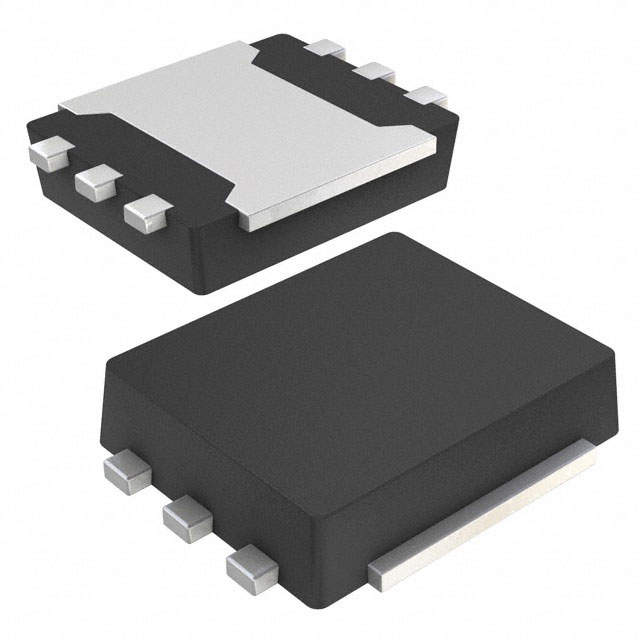
|
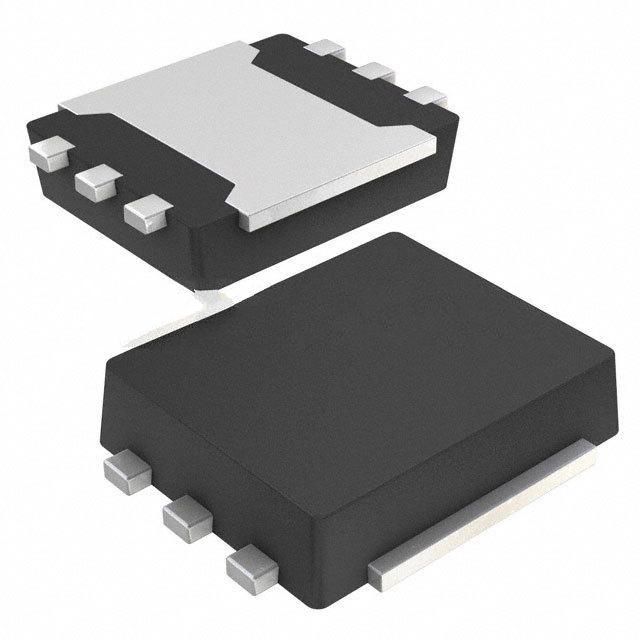
|
| Category | PMIC - Voltage Regulators - Linear | PMIC - Voltage Regulators - Linear |
| Manufacturer | ABLIC U.S.A. Inc. | ABLIC U.S.A. Inc. |
| Description | IC REG LINEAR 4.9V 150MA HSNT-6A | IC REG LINEAR 4.6V 150MA HSNT-6A |
| Package | Tape & Reel (TR) | Tape & Reel (TR) |
| Series | S-1200 | S-1200 |
| Operating Temperature | -40°C ~ 85°C (TA) | -40°C ~ 85°C (TA) |
| Mounting Type | Surface Mount | Surface Mount |
| Package / Case | 6-SMD, Flat Lead Exposed Pad | 6-SMD, Flat Lead Exposed Pad |
| Supplier Device Package | HSNT-6A | HSNT-6A |
| Output Type | Fixed | Fixed |
| Voltage - Output (Min/Fixed) | 4.9V | 4.6V |
| Voltage - Output (Max) | - | - |
| Current - Output | 150mA | 150mA |
| Output Configuration | Positive | Positive |
| Control Features | Enable | Enable |
| Voltage - Input (Max) | 10V | 10V |
| Number of Regulators | 1 | 1 |
| Voltage Dropout (Max) | 0.19V @ 100mA | 0.19V @ 100mA |
| Current - Quiescent (Iq) | 1 µA | 1 µA |
| Current - Supply (Max) | 40 µA | 40 µA |
| PSRR | 65dB (1kHz) | 65dB (1kHz) |
| Protection Features | Over Current | Over Current |
-
1. What is a linear regulator?
A linear regulator is an electronic device that is primarily used to maintain a specified output voltage stable when the input voltage or load conditions change. It is an important component in electronics that acts as a buffer to protect the components of the circuit from damage. A linear regulator works by using an active device (such as a BJT or MOSFET) controlled by a high-gain amplifier, using the variable conductivity of the active pass device to maintain the output voltage. This regulator acts as a voltage divider to produce a regulated output voltage, where a linear element (such as a resistive load) is used to regulate the output voltage. The transistor stays in its active region of operation during voltage regulation. To maintain a constant output voltage, the internal resistance can be varied, providing a variable resistance by using a transistor controlled by the amplifier feedback loop.
A linear regulator is also called a buck converter, where the output voltage is always -
2. What are the disadvantages of linear regulators?
The disadvantage of linear regulators is that they are not efficient and can only be used in voltage reduction applications. The efficiency of a linear regulator depends on the ratio of output voltage to input voltage: turbidity = Vo: Vi. For example, for ordinary linear regulators, when the input voltage is 5V and the output voltage is 2.5V, the efficiency is only 50%. For ordinary linear regulators, about 50% of the electrical energy is converted into "heat" and lost, which is also the main reason why ordinary linear regulators are prone to heat when working. For LDO, due to its low voltage difference, the efficiency is much higher. For example, when the input voltage is 3.3V and the output voltage is 2.5V, its efficiency can reach 76%. Therefore, in LCD color TVs, in order to improve the utilization rate of electrical energy, ordinary linear regulators are used less, while LDOs are used more.
-
3. Can a linear regulator be up?
Linear regulators cannot be boost.
The main function of a linear regulator is to stabilize the output voltage, protecting the electrical equipment from high or unstable voltage effects. It realizes a stable output voltage by adjusting the gap between the output voltage and the input voltage, but this process is limited to lowering the voltage, not including the voltage. The working principle of a linear regulator is to regulate the voltage by converting excess voltage into heat loss, thereby realizing the voltage regulation. This feature determines that it does not have the voltage function. -
4. What are the two main categories of linear and switching stabilizers?
The two main categories of linear and switching stabilizers are linear voltage voltage power and switching voltage power supply.
Linear voltage voltage power has achieved the advantages of transformer, rectification, filtering, and voltage voltage. It has the advantages of good stability, fast transient response speed, high reliability, and high output voltage accuracy. However, its transformation efficiency is low, especially when the output voltage difference is large, if the output current is also large, there will be obvious fever and hot phenomenon, and may even burn the regulator. The linear voltage voltage power supply includes two types: fixed output voltage and adjustable output voltage. According to the selection of the output current and the difference in the input output voltage difference, the design of the linear regulator needs to pay attention to the heat dissipation problem and the choice of bypass capacitors.
The switching voltage voltage power supply, also known as
