
S-1200B49-A6T1U vs S-1200B51-A6T1U
| Part Number |
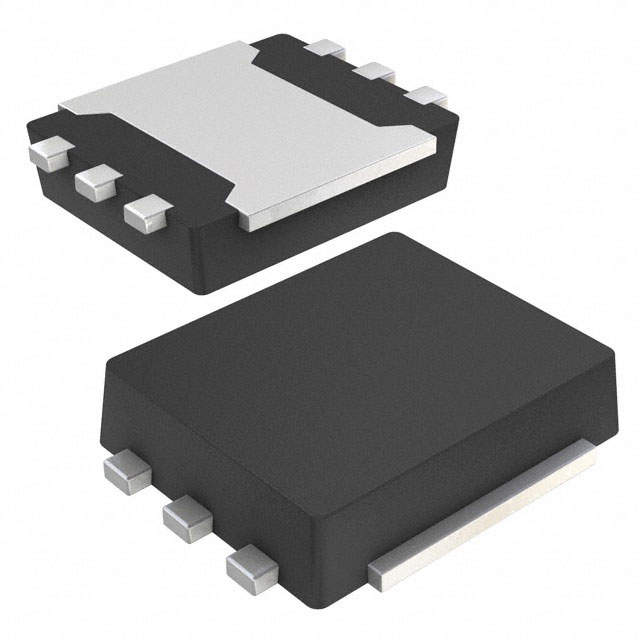
|
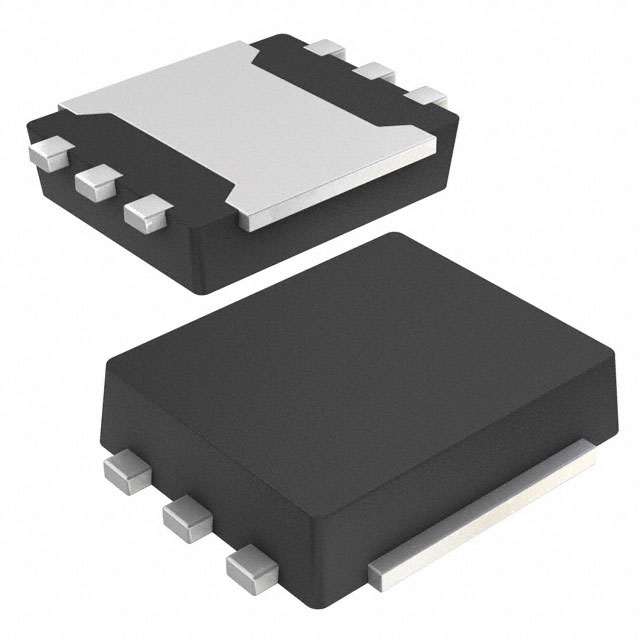
|
| Category | PMIC - Voltage Regulators - Linear | PMIC - Voltage Regulators - Linear |
| Manufacturer | ABLIC U.S.A. Inc. | ABLIC U.S.A. Inc. |
| Description | IC REG LINEAR 4.9V 150MA HSNT-6A | IC REG LINEAR 5.1V 150MA HSNT-6A |
| Package | Tape & Reel (TR) | Tape & Reel (TR) |
| Series | S-1200 | S-1200 |
| Operating Temperature | -40°C ~ 85°C (TA) | -40°C ~ 85°C (TA) |
| Mounting Type | Surface Mount | Surface Mount |
| Package / Case | 6-SMD, Flat Lead Exposed Pad | 6-SMD, Flat Lead Exposed Pad |
| Supplier Device Package | HSNT-6A | HSNT-6A |
| Output Type | Fixed | Fixed |
| Voltage - Output (Min/Fixed) | 4.9V | 5.1V |
| Voltage - Output (Max) | - | - |
| Current - Output | 150mA | 150mA |
| Output Configuration | Positive | Positive |
| Control Features | Enable | Enable |
| Voltage - Input (Max) | 10V | 10V |
| Number of Regulators | 1 | 1 |
| Voltage Dropout (Max) | 0.19V @ 100mA | 0.19V @ 100mA |
| Current - Quiescent (Iq) | 1 µA | 1 µA |
| Current - Supply (Max) | 40 µA | 40 µA |
| PSRR | 65dB (1kHz) | 65dB (1kHz) |
| Protection Features | Over Current | Over Current |
-
1. What is a linear regulator?
A linear regulator is an electronic device that is primarily used to maintain a specified output voltage stable when the input voltage or load conditions change. It is an important component in electronics that acts as a buffer to protect the components of the circuit from damage. A linear regulator works by using an active device (such as a BJT or MOSFET) controlled by a high-gain amplifier, using the variable conductivity of the active pass device to maintain the output voltage. This regulator acts as a voltage divider to produce a regulated output voltage, where a linear element (such as a resistive load) is used to regulate the output voltage. The transistor stays in its active region of operation during voltage regulation. To maintain a constant output voltage, the internal resistance can be varied, providing a variable resistance by using a transistor controlled by the amplifier feedback loop.
A linear regulator is also called a buck converter, where the output voltage is always -
2. What is the difference between linear regulators and switching regulators?
There are significant differences between linear regulators and switching regulators in terms of working principles, efficiency, stability, cost and application range.
Working principle:
Linear regulators achieve the function of stabilizing the output at a set value by adjusting the voltage difference between the output voltage and the input voltage. It achieves stable output voltage by controlling the conductivity state of the power transistor.
The switching regulator converts the input voltage into a pulse signal transmission and smoothes the output through a filter by quickly switching between the input and output ends to achieve the function of stabilizing the output at the set value. The switching regulator uses PWM (pulse width modulation) control to control the output voltage by adjusting the time duty ratio of the high and low levels within a cycle.
Efficiency:
The efficiency of the linear regulator is relatively low, usually between 60% and 70%. When the voltage differenc -
3. Do linear regulators need capacitors?
Linear regulators usually require capacitors.
The working principle and design requirements of linear regulators determine that they usually require capacitors to ensure stable operation. These capacitors are mainly used to filter and stabilize the output voltage, help reduce output ripple and noise, and thus improve the stability and reliability of the power supply.
Specifically:
1. Input and output capacitors: Linear regulators usually require one or more input capacitors and one output capacitor. These capacitors help smooth the input and output voltages, reduce voltage fluctuations, and thus provide a stable output voltage.
2. Power supply rejection capability: The power supply rejection capability of a linear regulator is an important indicator, which is related to whether it can effectively suppress unwanted signals and avoid interference with the output voltage. If the power supply rejection capability is poor, unnecessary signals may be left behind, affecting the purity of -
4. What are the alternatives to linear regulators?
Alternatives to linear regulators include Semiconductor HT7144S, K7805-2000R3, TPS70933DBVR, CLR6212, XC6220B331MR-G, LR7550-M, SGM2054XTD10G/TR, ME6213C33M5G, RS3236-3.3YF5, KL2036-2.2V, etc. These alternatives cover different package forms (such as SOT-23, SOP8, etc.) and output voltage and current specifications to meet the needs of different applications. For example, the HT7144S is a three-terminal linear regulator, while the TPS70933DBVR is an LDO (low dropout linear regulator) with lower output voltage and current specifications. CLR6212 and XC6220B331MR-G provide higher output current capabilities and are suitable for applications that require larger current outputs. LR7550-M and SGM2054XTD10G/TR provide specific voltage and current specifications to meet the needs of specific fields. ME6213C33M5G and RS3236-3.3YF5 are regulators with specific packaging forms, suitable for space-constrained application scenarios. KL2036-2.2V is a linear regulator with a lower output voltage, su
