
S-1200B49-A6T1U vs S-1200B52-A6T1U
| Part Number |
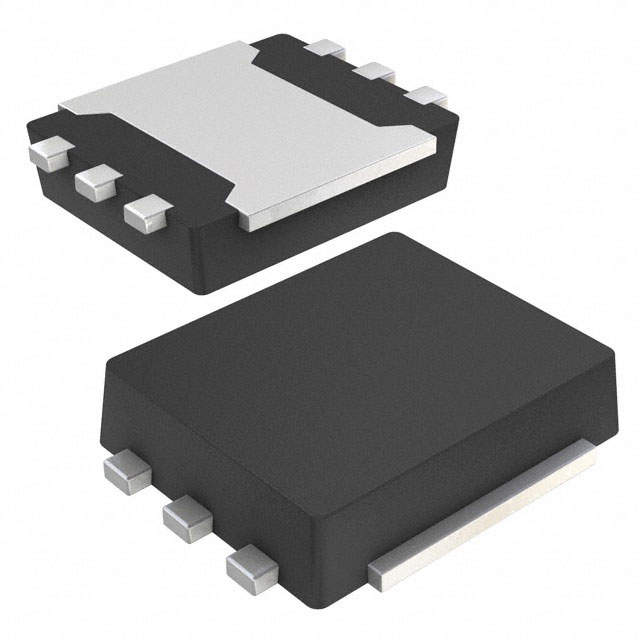
|

|
| Category | PMIC - Voltage Regulators - Linear | PMIC - Voltage Regulators - Linear |
| Manufacturer | ABLIC U.S.A. Inc. | ABLIC U.S.A. Inc. |
| Description | IC REG LINEAR 4.9V 150MA HSNT-6A | IC REG LINEAR 5.2V 150MA HSNT-6A |
| Package | Tape & Reel (TR) | Tape & Reel (TR) |
| Series | S-1200 | S-1200 |
| Operating Temperature | -40°C ~ 85°C (TA) | -40°C ~ 85°C (TA) |
| Mounting Type | Surface Mount | Surface Mount |
| Package / Case | 6-SMD, Flat Lead Exposed Pad | 6-SMD, Flat Lead Exposed Pad |
| Supplier Device Package | HSNT-6A | HSNT-6A |
| Output Type | Fixed | Fixed |
| Voltage - Output (Min/Fixed) | 4.9V | 5.2V |
| Voltage - Output (Max) | - | - |
| Current - Output | 150mA | 150mA |
| Output Configuration | Positive | Positive |
| Control Features | Enable | Enable |
| Voltage - Input (Max) | 10V | 10V |
| Number of Regulators | 1 | 1 |
| Voltage Dropout (Max) | 0.19V @ 100mA | 0.19V @ 100mA |
| Current - Quiescent (Iq) | 1 µA | 1 µA |
| Current - Supply (Max) | 40 µA | 40 µA |
| PSRR | 65dB (1kHz) | 65dB (1kHz) |
| Protection Features | Over Current | Over Current |
-
1. What are the characteristics of linear regulators?
Linear regulators have the characteristics of low cost, small package, few peripheral devices and low noise. There are many types of linear regulator packages, which are very suitable for use in LCD color TVs. For fixed voltage output applications, only 2-3 small capacitors are needed to form the entire solution. Ultra-low output voltage noise is the biggest advantage of linear regulators. The output voltage ripple is less than 35V (RMS), and it has an extremely high signal-to-noise control ratio, which is very suitable for powering small signal processing circuits that are sensitive to noise.
-
2. What problems will linear regulators bring to the circuit?
The problems that linear regulators bring to the circuit mainly include low efficiency and a lot of heat.
Linear The main working principle of the voltage regulator is to control the output voltage of the transistor through a current amplifier to keep the output voltage stable. This working mode causes the linear regulator to control the regulating tube through a differential voltage when adjusting the output voltage. The control tube needs to absorb part of the input voltage, which makes the efficiency of the linear regulator relatively low. In practical applications, this means that the linear regulator will convert the difference between the input voltage and the output voltage into heat energy, causing serious heating of the device, especially when the input and output voltage difference is large, this power loss will further increase, causing the device to heat up. -
3. Which is better, switching power supply or linear regulator?
Switching power supply and linear regulator each have their advantages and disadvantages, and choosing which one is better depends on the specific application requirements.
The main advantages of switching power supply include:
High efficiency: The conversion efficiency of switching power supply can reach 90%~95%, which is much higher than the 30% or so of linear regulator.
Small size and light weight: Due to the high efficiency and high-efficiency transformer of switching power supply, large heat sink can be omitted, and high-frequency transformer replaces power frequency transformer, greatly reducing volume and weight.
Wide voltage regulation range: The output voltage of switching power supply can compensate for the change of input voltage by adjusting the duty cycle to ensure stable output voltage.
Various circuit forms: Designers can design switching power supplies that meet the needs according to different application scenarios.
However, switching power supplies also have so -
4. What are the three types of voltage regulator?
The three types of voltage regulators include the contact voltage regulator, the transistor regulator and the integrated circuit regulator.
Contact voltage regulator: This is the type of voltage regulator used earlier. Its working principle is based on the vibration of the contact, but there is mechanical inertia and electromagnetic inertia, resulting in low voltage adjustment accuracy. Large, poor reliability, and short life, so it has been eliminated.
Crystal tube regulator: With the development of semiconductor technology, the transistor regulator becomes the mainstream. It uses a triode for voltage adjustment. Compared with the contact -type voltage regulator, the advantages of the transistor regulator is that the response speed, high efficiency, small volume, light weight, and not easily affected by external magnetic fields are widely used.
Integrated circuit regulator: Integrated circuit regulator is a new type of voltage regulator developed in recent years. It integrates mult
