
S-1200B49-A6T1U vs S-1200B54-A6T1U
| Part Number |
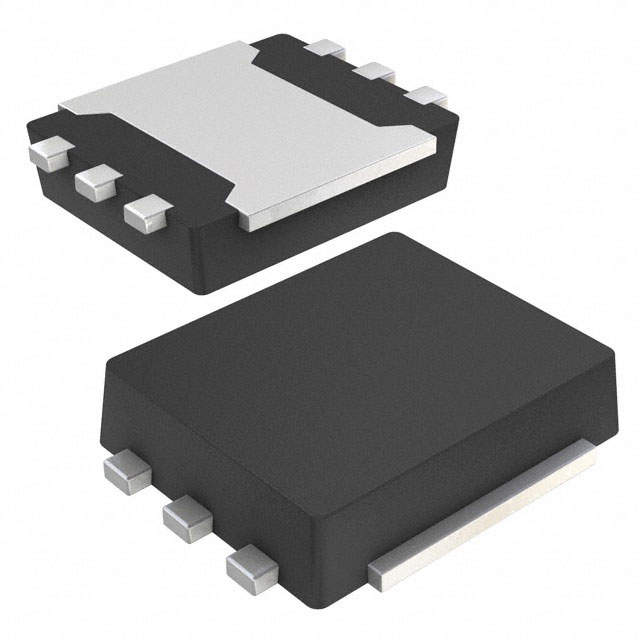
|
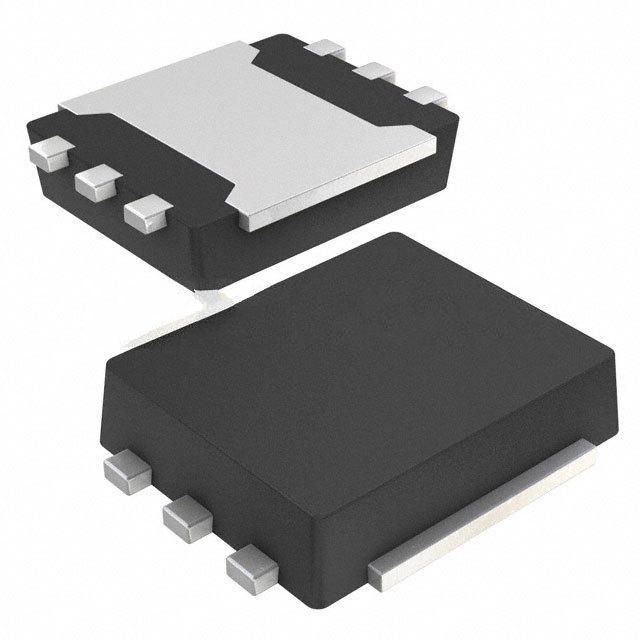
|
| Category | PMIC - Voltage Regulators - Linear | PMIC - Voltage Regulators - Linear |
| Manufacturer | ABLIC U.S.A. Inc. | ABLIC U.S.A. Inc. |
| Description | IC REG LINEAR 4.9V 150MA HSNT-6A | IC REG LINEAR 5.4V 150MA HSNT-6A |
| Package | Tape & Reel (TR) | Tape & Reel (TR) |
| Series | S-1200 | S-1200 |
| Operating Temperature | -40°C ~ 85°C (TA) | -40°C ~ 85°C (TA) |
| Mounting Type | Surface Mount | Surface Mount |
| Package / Case | 6-SMD, Flat Lead Exposed Pad | 6-SMD, Flat Lead Exposed Pad |
| Supplier Device Package | HSNT-6A | HSNT-6A |
| Output Type | Fixed | Fixed |
| Voltage - Output (Min/Fixed) | 4.9V | 5.4V |
| Voltage - Output (Max) | - | - |
| Current - Output | 150mA | 150mA |
| Output Configuration | Positive | Positive |
| Control Features | Enable | Enable |
| Voltage - Input (Max) | 10V | 10V |
| Number of Regulators | 1 | 1 |
| Voltage Dropout (Max) | 0.19V @ 100mA | 0.19V @ 100mA |
| Current - Quiescent (Iq) | 1 µA | 1 µA |
| Current - Supply (Max) | 40 µA | 40 µA |
| PSRR | 65dB (1kHz) | 65dB (1kHz) |
| Protection Features | Over Current | Over Current |
-
1. What are the disadvantages of linear regulators?
The disadvantage of linear regulators is that they are not efficient and can only be used in voltage reduction applications. The efficiency of a linear regulator depends on the ratio of output voltage to input voltage: turbidity = Vo: Vi. For example, for ordinary linear regulators, when the input voltage is 5V and the output voltage is 2.5V, the efficiency is only 50%. For ordinary linear regulators, about 50% of the electrical energy is converted into "heat" and lost, which is also the main reason why ordinary linear regulators are prone to heat when working. For LDO, due to its low voltage difference, the efficiency is much higher. For example, when the input voltage is 3.3V and the output voltage is 2.5V, its efficiency can reach 76%. Therefore, in LCD color TVs, in order to improve the utilization rate of electrical energy, ordinary linear regulators are used less, while LDOs are used more.
-
2. Which is better, switching power supply or linear regulator?
Switching power supply and linear regulator each have their advantages and disadvantages, and choosing which one is better depends on the specific application requirements.
The main advantages of switching power supply include:
High efficiency: The conversion efficiency of switching power supply can reach 90%~95%, which is much higher than the 30% or so of linear regulator.
Small size and light weight: Due to the high efficiency and high-efficiency transformer of switching power supply, large heat sink can be omitted, and high-frequency transformer replaces power frequency transformer, greatly reducing volume and weight.
Wide voltage regulation range: The output voltage of switching power supply can compensate for the change of input voltage by adjusting the duty cycle to ensure stable output voltage.
Various circuit forms: Designers can design switching power supplies that meet the needs according to different application scenarios.
However, switching power supplies also have so -
3. What are the alternatives to linear regulators?
Alternatives to linear regulators include Semiconductor HT7144S, K7805-2000R3, TPS70933DBVR, CLR6212, XC6220B331MR-G, LR7550-M, SGM2054XTD10G/TR, ME6213C33M5G, RS3236-3.3YF5, KL2036-2.2V, etc. These alternatives cover different package forms (such as SOT-23, SOP8, etc.) and output voltage and current specifications to meet the needs of different applications. For example, the HT7144S is a three-terminal linear regulator, while the TPS70933DBVR is an LDO (low dropout linear regulator) with lower output voltage and current specifications. CLR6212 and XC6220B331MR-G provide higher output current capabilities and are suitable for applications that require larger current outputs. LR7550-M and SGM2054XTD10G/TR provide specific voltage and current specifications to meet the needs of specific fields. ME6213C33M5G and RS3236-3.3YF5 are regulators with specific packaging forms, suitable for space-constrained application scenarios. KL2036-2.2V is a linear regulator with a lower output voltage, su
-
4. What are the three types of voltage regulator?
The three types of voltage regulators include the contact voltage regulator, the transistor regulator and the integrated circuit regulator.
Contact voltage regulator: This is the type of voltage regulator used earlier. Its working principle is based on the vibration of the contact, but there is mechanical inertia and electromagnetic inertia, resulting in low voltage adjustment accuracy. Large, poor reliability, and short life, so it has been eliminated.
Crystal tube regulator: With the development of semiconductor technology, the transistor regulator becomes the mainstream. It uses a triode for voltage adjustment. Compared with the contact -type voltage regulator, the advantages of the transistor regulator is that the response speed, high efficiency, small volume, light weight, and not easily affected by external magnetic fields are widely used.
Integrated circuit regulator: Integrated circuit regulator is a new type of voltage regulator developed in recent years. It integrates mult
