
S-13R1B19-A4T2U3 vs S-13R1B14-A4T2U3
| Part Number |

|
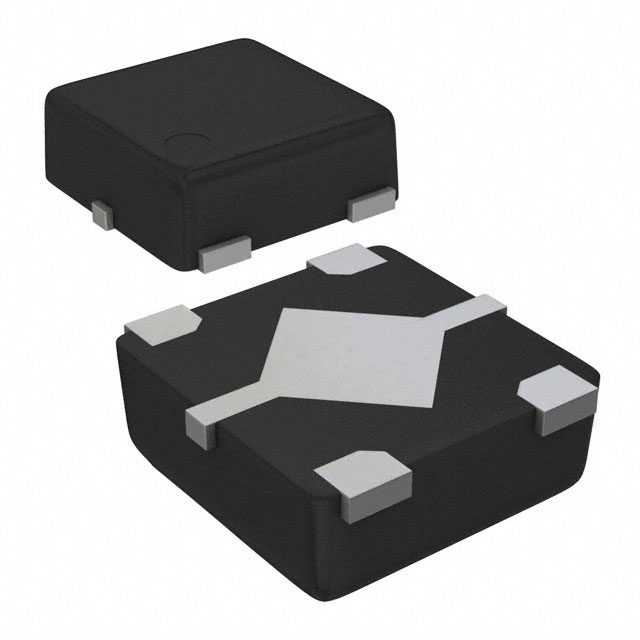
|
| Category | PMIC - Voltage Regulators - Linear | PMIC - Voltage Regulators - Linear |
| Manufacturer | ABLIC U.S.A. Inc. | ABLIC U.S.A. Inc. |
| Description | IC REG LINEAR 1.9V 150MA HSNT4-B | IC REG LINEAR 1.4V 150MA HSNT4-B |
| Package | Tape & Reel (TR) | Tape & Reel (TR) |
| Series | S-13R1 | S-13R1 |
| Operating Temperature | -40°C ~ 85°C (TA) | -40°C ~ 85°C (TA) |
| Mounting Type | Surface Mount | Surface Mount |
| Package / Case | 4-SMD, Flat Lead Exposed Pad | 4-SMD, Flat Lead Exposed Pad |
| Supplier Device Package | HSNT-4-B | HSNT-4-B |
| Output Type | Fixed | Fixed |
| Voltage - Output (Min/Fixed) | 1.9V | 1.4V |
| Voltage - Output (Max) | - | - |
| Current - Output | 150mA | 150mA |
| Output Configuration | Positive | Positive |
| Control Features | Enable | Enable |
| Voltage - Input (Max) | 5.5V | 5.5V |
| Number of Regulators | 1 | 1 |
| Voltage Dropout (Max) | 0.28V @ 100mA | 0.68V @ 100mA |
| Current - Quiescent (Iq) | 1 µA | 1 µA |
| Current - Supply (Max) | 9 µA | 9 µA |
| PSRR | 70dB (1kHz) | 70dB (1kHz) |
| Protection Features | Overcurrent, Reverse Current, Thermal Shutdown | Overcurrent, Reverse Current, Thermal Shutdown |
-
1. When should a linear regulator be used instead of a switching regulator?
In low-power and low-frequency application scenarios, a linear regulator should be used instead of a switching regulator.
Linear regulator Suitable for low-power and low-frequency applications, with simple circuit structure, low noise and good stability. They control the output voltage of the transistor through a current amplifier to keep the output voltage stable. This working mode makes linear regulators perform well in low-power and low-frequency applications, although they are less efficient and generate more heat, and their application range is limited. In contrast, switching regulators use high-frequency pulse modulation technology to convert input voltage into a stable output voltage. They have the advantages of high efficiency, small size and fast response, and are suitable for high-power and high-frequency applications. Therefore, when the application requirements are not the main considerations for circuit complexity and cost, but have high requirements for the stability and -
2. Which is better, switching power supply or linear regulator?
Switching power supply and linear regulator each have their advantages and disadvantages, and choosing which one is better depends on the specific application requirements.
The main advantages of switching power supply include:
High efficiency: The conversion efficiency of switching power supply can reach 90%~95%, which is much higher than the 30% or so of linear regulator.
Small size and light weight: Due to the high efficiency and high-efficiency transformer of switching power supply, large heat sink can be omitted, and high-frequency transformer replaces power frequency transformer, greatly reducing volume and weight.
Wide voltage regulation range: The output voltage of switching power supply can compensate for the change of input voltage by adjusting the duty cycle to ensure stable output voltage.
Various circuit forms: Designers can design switching power supplies that meet the needs according to different application scenarios.
However, switching power supplies also have so -
3. How to choose a linear regulator?
1. Switching regulator: A switching regulator uses an output stage that repeatedly switches between "on" and "off" states to generate an output voltage together with an energy storage component. Its adjustment is achieved by adjusting the switching timing based on the feedback sample of the output voltage. In a fixed-frequency regulator, the switching timing is adjusted by adjusting the pulse width of the switching voltage, which is called PWM control.
2. Parameter regulator: LDO is a linear regulator. Linear regulators use transistors or FETs operating in their linear region to subtract excess voltage from the applied input voltage to produce a regulated output voltage. This transistor allows saturation, so the regulator can have a very low dropout voltage, usually around 200mV.
3. Regulators for laser cutting machines: According to the use requirements of high-power laser cutting machines and the current power supply situation in my country, regulators that meet -
4. Can a linear regulator be up?
Linear regulators cannot be boost.
The main function of a linear regulator is to stabilize the output voltage, protecting the electrical equipment from high or unstable voltage effects. It realizes a stable output voltage by adjusting the gap between the output voltage and the input voltage, but this process is limited to lowering the voltage, not including the voltage. The working principle of a linear regulator is to regulate the voltage by converting excess voltage into heat loss, thereby realizing the voltage regulation. This feature determines that it does not have the voltage function.
