
SI5335D-B03675-GM vs LMX2531LQE1226E/NOPB
| Part Number |
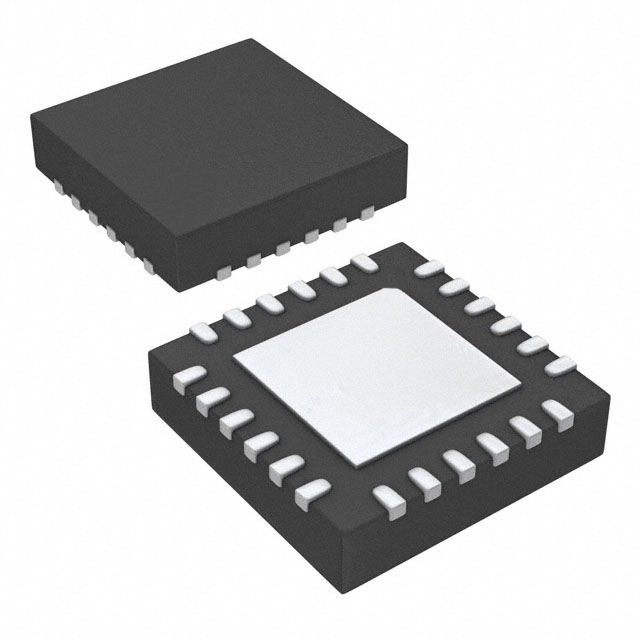
|
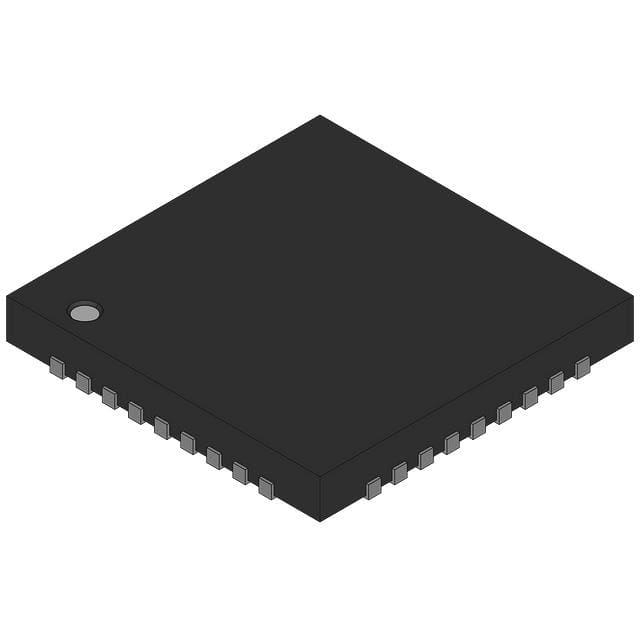
|
| Category | Clock/Timing - Clock Generators, PLLs, Frequency Synthesizers | Clock/Timing - Clock Generators, PLLs, Frequency Synthesizers |
| Manufacturer | Skyworks Solutions Inc. | National Semiconductor |
| Description | IC 4OUT ANY FREQ <200MHZ 24QFN | LMX2531 HIGH PERFORMANCE FREQUEN |
| Package | Tray | Bulk |
| Series | MultiSynth™ | - |
| Type | - | Frequency Synthesizer (RF) |
| Voltage - Supply | - | 2.8V ~ 3.2V |
| Operating Temperature | - | -40°C ~ 85°C |
| Mounting Type | Surface Mount | Surface Mount |
| Package / Case | 24-VFQFN Exposed Pad | 36-WFQFN Exposed Pad |
| Supplier Device Package | 24-QFN (4x4) | 36-WQFN (6x6) |
| Output | - | CMOS |
| Frequency - Max | - | 1.268GHz |
| Number of Circuits | - | 1 |
| Input | - | Clock |
| PLL | - | Yes |
| Ratio - Input:Output | - | 2:2 |
| Differential - Input:Output | - | No/No |
| Divider/Multiplier | - | Yes/No |
-
1. What is a PLL frequency synthesizer?
A PLL frequency synthesizer is a device that generates multiple output frequencies using phase-locked loop technology. Its core function is to generate different multiples of frequencies from a single reference frequency. This method is widely used in radio frequency (RF) communication systems, especially in generating local oscillator (LO) signals for up-conversion and down-conversion of RF signals.
The working principle of a PLL frequency synthesizer is based on phase-locked loop technology, which includes key components such as phase/frequency detector (PFD), loop filter, and voltage-controlled oscillator (VCO). -
2. What is the difference between a PLL and a synthesizer?
The main difference between a PLL (phase-locked loop) and a synthesizer lies in their functions and application scenarios. PLL is mainly used to achieve phase locking of the output signal with the input signal, while a synthesizer is used to generate output signals of multiple frequencies.
PLL (Phase Locked Loop) is a circuit used to lock the phase. It consists of three main parts: a phase detector (PD), a low-pass filter (LPF), and a voltage-controlled crystal oscillator (VCO).
A synthesizer is a device used to generate output signals of multiple frequencies. It realizes the frequency synthesis function by adding a frequency divider on the basis of PLL. Synthesizers can be divided into integer frequency synthesizers and fractional frequency synthesizers. -
3. How does PLL increase frequency?
PLL (phase-locked loop) is usually used to increase or decrease the frequency of a signal. Increasing the frequency usually involves increasing the value of the feedback divider, while decreasing the frequency involves increasing or adjusting the gain followed by a divider.
-
4. What are the three types of frequency synthesizers?
There are three main types of frequency synthesizers: direct analog frequency synthesis, indirect frequency synthesis, and direct digital frequency synthesis.
Direct analog frequency synthesis: This method uses one or more different crystal oscillators as reference signal sources to directly generate many discrete frequency output signals through frequency multiplication, frequency division, mixing, etc. The advantages of direct analog frequency synthesis are high long-term and short-term frequency stability and fast frequency conversion speed, but it is difficult to debug and difficult to suppress spurious signals.
Indirect frequency synthesis: also known as phase-locked loop frequency synthesis technology (PLL), using one or several reference frequency sources, through harmonic generator mixing and frequency division, etc. to generate a large number of harmonics or combined frequencies, and then use a phase-locked loop to lock the frequency of the voltage-controlled oscillator to a certain harmonic or combined frequency. The advantages of indirect frequency synthesis are low cost and the ability to synthesize any frequency, but slow response, mainly used in civilian equipment.
Direct digital frequency synthesis: This method performs frequency synthesis based on the concept of phase, using digital sampling and storage technology, with the advantages of precise phase and frequency resolution, fast conversion time, etc. The key components of direct digital frequency synthesis include digital-to-analog converters, phase accumulators, and memories, etc., which store the required waveform version in digital format and create signals.
