
SI5340D-D-GM vs LTC6948IUFD-4#TRPBF
| Part Number |
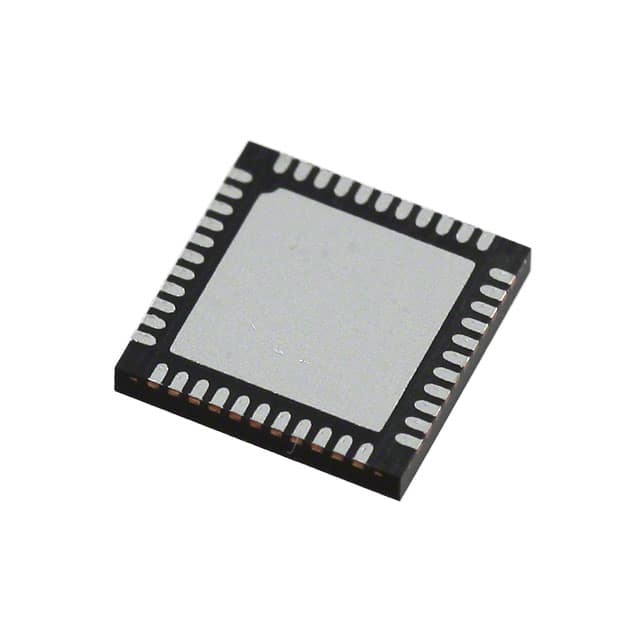
|
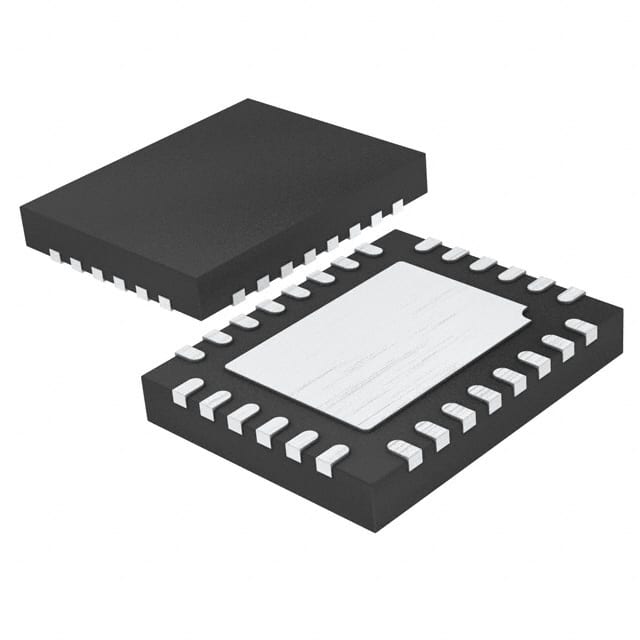
|
| Category | Clock/Timing - Clock Generators, PLLs, Frequency Synthesizers | Clock/Timing - Clock Generators, PLLs, Frequency Synthesizers |
| Manufacturer | Skyworks Solutions Inc. | Analog Devices Inc. |
| Description | IC JITTER ATTENUATOR/MULTIPLEXER | IC FRACTIONAL-N PLL W/VCO 28QFN |
| Package | Tape & Reel (TR) | Tape & Reel (TR) |
| Series | - | - |
| Type | - | Clock/Frequency Synthesizer (RF/IF), Fractional N |
| Voltage - Supply | 1.71V ~ 3.47V | 3.15V ~ 5.25V |
| Operating Temperature | -40°C ~ 85°C | -40°C ~ 105°C |
| Mounting Type | Surface Mount | Surface Mount |
| Package / Case | 44-VFQFN Exposed Pad | 28-WFQFN Exposed Pad |
| Supplier Device Package | 44-QFN (7x7) | 28-QFN (4x5) |
| Output | CML, HCSL, LVCMOS, LVDS, LVPECL | Clock |
| Frequency - Max | 350MHz | 6.39GHz |
| Number of Circuits | 1 | 1 |
| Input | LVCMOS, LVDS, LVPECL, Crystal | Clock |
| PLL | Yes | Yes |
| Ratio - Input:Output | 4:4 | 1:1 |
| Differential - Input:Output | Yes/Yes | Yes/Yes |
| Divider/Multiplier | Yes/No | Yes/No |
-
1. Which is better, direct digital synthesis or PLL?
Direct digital synthesis (DDS) and PLL each have their own advantages and disadvantages. Choosing which one is better depends on the specific application requirements. DDS performs well in frequency switching speed and high resolution, while PLL has more advantages in phase noise and spurious performance.
The advantages of DDS include:
High frequency switching speed: DDS works in the digital domain. Once the frequency control word is updated, the output frequency changes accordingly, and the frequency hopping rate is high.
High resolution: Due to the large width of the frequency control word (such as 48bit or higher), the frequency resolution is high.
Flexibility: DDS can generate any desired waveform and initial phase, suitable for applications requiring a wide range of scenarios.
PLL advantages include:
Low phase noise: PLL excels in low phase noise and low spurious performance, suitable for applications requiring high stable frequency.
Wide frequency range: The upper limit of the PLL output frequency depends on the upper limit of the VCO, which can support a wider frequency range.
-
2. What are frequency synthesizers used for?
The main purpose of frequency synthesizers is to provide specific frequency signals for radio and communication systems. It is an important component of modern electronic systems and is widely used in communication, radar, navigation and other equipment.
Frequency synthesizers generate a large number of discrete frequencies with the same stability and accuracy from one or more reference signal sources with high frequency stability and accuracy through linear operations in the frequency domain. Specifically, frequency synthesizers use techniques such as frequency multiplication, frequency division, and mixing to obtain discrete frequency signals with the same stability as the reference signal. -
3. How does PLL increase frequency?
PLL (phase-locked loop) is usually used to increase or decrease the frequency of a signal. Increasing the frequency usually involves increasing the value of the feedback divider, while decreasing the frequency involves increasing or adjusting the gain followed by a divider.
-
4. What is the difference between PLL and oscillator?
The main difference between PLL and oscillator lies in their functions and features. PLL has the ability of phase locking and frequency tracking, which can provide higher frequency stability, especially in the presence of an external reference signal. Oscillators usually generate fixed-frequency signals and do not have these functions of PLL.
Specifically, oscillators are devices used to generate periodic signals. Common types include RC oscillators, LC oscillators, and crystal oscillators. RC oscillators have a simple structure and low cost, but poor frequency stability and accuracy; LC oscillators have good frequency stability, but are large in size and high in cost; crystal oscillators have extremely high frequency stability, but are expensive.
PLL is a feedback control circuit that can compare the output of the oscillator with a reference signal, generate a control voltage based on the phase difference, and thus adjust the frequency and phase of the oscillator to synchronize it with the reference signal. PLL can generate output signals with higher or lower frequencies than the reference signal, and is usually more complex to design and implement than oscillators, with higher power consumption and cost.
Whether to choose an oscillator or PLL depends on the specific application requirements. If a fixed frequency signal is required and cost and complexity are a concern, an oscillator is the appropriate choice. If precise frequency control and low phase noise are required and a stable reference signal is available in the system, a PLL is a better choice.
