
SN74AHC244N vs SN74LVCH245ARGYR
| Part Number |
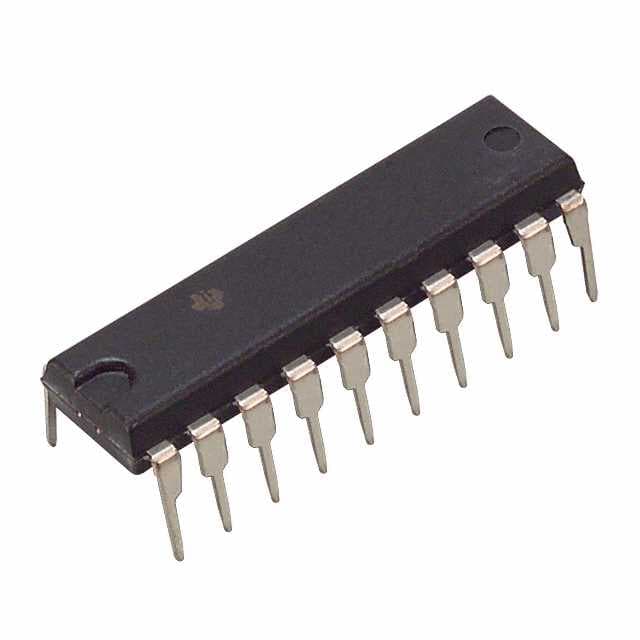
|
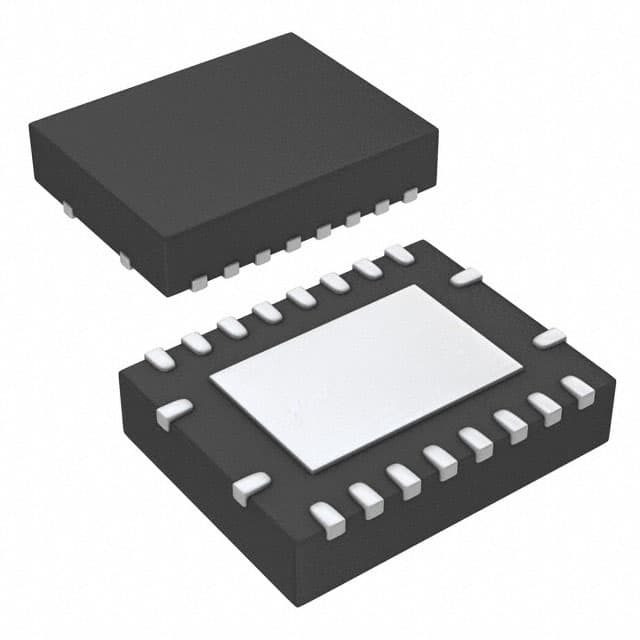
|
| Category | Logic - Buffers, Drivers, Receivers, Transceivers | Logic - Buffers, Drivers, Receivers, Transceivers |
| Manufacturer | Texas Instruments | Texas Instruments |
| Description | IC BUF NON-INVERT 5.5V 20DIP | IC TXRX NON-INVERT 3.6V 20VQFN |
| Package | -Reel® | Bulk |
| Series | 74AHC | 74LVCH |
| Voltage - Supply | 2V ~ 5.5V | 1.65V ~ 3.6V |
| Operating Temperature | -40°C ~ 125°C (TA) | -40°C ~ 125°C (TA) |
| Mounting Type | Through Hole | Surface Mount |
| Package / Case | 20-DIP (0.300\", 7.62mm) | 20-VFQFN Exposed Pad |
| Supplier Device Package | 20-PDIP | 20-VQFN (3.5x4.5) |
| Output Type | 3-State | 3-State |
| Input Type | - | - |
| Number of Elements | 2 | 1 |
| Current - Output High, Low | 8mA, 8mA | 24mA, 24mA |
| Logic Type | Buffer, Non-Inverting | Transceiver, Non-Inverting |
| Number of Bits per Element | 4 | 8 |
-
1. What is a logic Integrated Circuits((IC)?
Logic IC (Logic Integrated Circuit) is an integrated circuit, an electronic component that integrates multiple logic gates (such as AND gates, OR gates, NOT gates, etc.). They are able to perform Boolean logic operations and are used to implement various logic functions, and are the basis of digital circuit design.
Logic ICs are mainly composed of logic gates, registers, counters and other components, which are connected together by wires to form complex logic circuits. Logic ICs can be divided into two types: combinational logic circuits and sequential logic circuits.
Logic ICs are widely used in computers, communication equipment, consumer electronics and other fields, responsible for processing digital signals, converting input signals into output signals, and thus realizing specific logic functions. -
2. What is a logic driver?
A logic driver is a driver that is used to implement operations such as reading, writing, and controlling logic devices. It is a computer science and technology term announced by the National Science and Technology Terminology Review Committee in 2018.
Logic drivers play an important role in computer systems. It determines the value of the output signal by the state of the input signal to realize specific logic functions. Logic drivers are widely used in computers, communication systems, digital electronic equipment and automation control. -
3. What is the difference between a driver and a transceiver?
The main difference between a driver and a transceiver is that they have different roles and functions in the system. The driver is mainly responsible for amplifying the signal to drive the load, while the transceiver is responsible for sending and receiving the signal, including converting the digital signal into a format suitable for transmission.
The role of the driver is to convert the control signal into the driving signal required by the load and provide enough current or power to drive the load.
The transceiver is responsible for sending and receiving data in bidirectional communication. It includes a buffer and a direction control circuit for receiving data from the data bus and sending data to the data bus. The transceiver converts the digital signal into an appropriate waveform at the electrical level and improves the signal integrity. -
4. What is the difference between a transmitter and a receiver?
1. Definition of transmitter and receiver
A transmitter is a device used to convert electrical signals into wireless signals and transmit them to a receiver, while a receiver is a device that receives wireless signals and converts them into electrical signals for output.
2. Differences between transmitters and receivers
A. Different functions
The main function of a transmitter is to convert electrical signals into wireless signals and transmit them to a distant place, while the main function of a receiver is to convert received wireless signals into electrical signals for output.
B. Different structures
A transmitter is usually composed of an oscillator, a power amplifier, and an antenna, while a receiver is usually composed of an antenna, a low-noise amplifier, an intermediate frequency amplifier, and a demodulator.
C. Different parameters
Both transmitters and receivers have specific parameter ranges, such as frequency, power, antenna gain, etc. The parameters of the transmitter are mainly related to the output signal, while the parameters of the receiver are mainly related to the quality of the received signal.
3. Application of transmitters and receivers in wireless communication
Transmitters and receivers play a very important role in wireless communication. Wireless communication usually transmits information through electromagnetic waves transmitted through the air. In this process, the transmitter is used to convert information into wireless signals and transmit them, while the receiver is used to receive wireless signals and return the information to the receiving end.
In short, both transmitters and receivers are indispensable devices in wireless communication. Although their functions and structures are different, they both play an important role in wireless communication.
