
SP1015-04WTG vs RCLAMP1821Z.TNT
| Part Number |

|
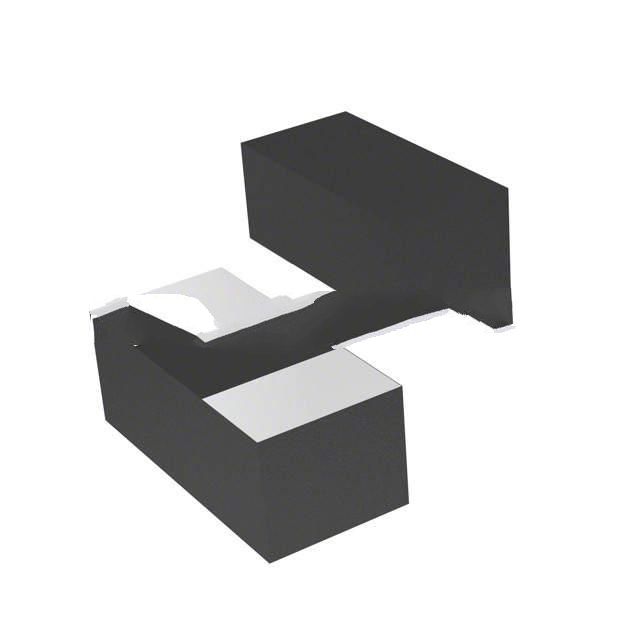
|
| Category | TVS - Diodes | TVS - Diodes |
| Manufacturer | Littelfuse Inc. | Semtech Corporation |
| Description | TVS DIODE 5VWM 12VC FLIPCHIP | TVS DIODE 18VWM 34VC |
| Package | 4-XFDFN Exposed Pad | 2-XFDFN |
| Series | SP1015, SPA? | RailClamp? |
| Type | Zener | Zener |
| Operating Temperature | -40°C ~ 125°C (TJ) | -55°C ~ 125°C (TJ) |
| Mounting Type | Surface Mount | Surface Mount |
| Package / Case | 4-XFDFN Exposed Pad | 0201 (0603 Metric) |
| Supplier Device Package | 4-FlipChip (0.95 x 0.55) | SLP0603P2X3B |
| Applications | General Purpose | General Purpose |
| Voltage - Reverse Standoff (Typ) | 5V (Max) | 18V (Max) |
| Voltage - Breakdown (Min) | 5.5V | 20V |
| Voltage - Clamping (Max) @ Ipp | 12V | 34V |
| Current - Peak Pulse (10/1000µs) | 2A (8/20µs) | 2.5A (8/20µs) |
| Power Line Protection | No | No |
| Bidirectional Channels | 4 | 1 |
| Capacitance @ Frequency | 5pF @ 1MHz | 0.63pF @ 1MHz |
| Power - Peak Pulse | - | 85W |
-
1. What does a TVS diode do?
The main function of TVS diodes (Transient Voltage Suppression Diodes) is to protect electronic equipment from voltage spikes and surge voltages. When the two poles of the TVS diode are impacted by reverse transient high energy, it can change the high impedance between the two poles into low impedance within 10^-12 seconds, while absorbing surge power up to several kilowatts, causing the gap between the two poles to The voltage is clamped to a safe value, thereby effectively protecting precision components in electronic circuits.
The specific working principle of TVS diodes is as follows:
Absorb surge power: TVS diodes can, under reverse application conditions, when subjected to a high-energy large pulse, their working impedance immediately drops to a lower conduction state, allowing large current to pass while clamping the voltage at predetermined level. Its response time is only 10^-12 seconds.
Protection circuit: TVS diodes are used in parallel with the protected circuit. When the circuit is working normally, the TVS diode is in a high impedance state and does not affect the circuit; when there is a surge voltage impact, the TVS diode conducts quickly, absorbs the surge energy, and protects the subsequent circuit.
-
2. TVS is the abbreviation of diode. What does it mean?
TVS is the abbreviation of Transient Voltage Suppressor, also known as Transient Voltage Suppression Diode.
How TVS diodes work
TVS diodes work using the avalanche breakdown effect. When the TVS diode receives a reverse voltage, the depletion layer near its PN junction will increase, causing the electric field intensity to increase, which in turn triggers the avalanche effect and causes the reverse current to increase sharply. Unlike ordinary diodes, TVS diodes can recover after avalanche breakdown and continue to work normally. -
3. What is the difference between TVS and ESD diodes?
The main difference between TVS diodes and ESD diodes is their working principle, application scenarios and characteristics.
Working principle and application scenarios
TVS diodes (Transient Voltage Suppressors): TVS diodes are mainly used to suppress transient voltages and prevent components in the circuit from being damaged by surge voltages. When the two poles of the TVS diode are impacted by reverse transient high energy, it can change the high impedance to low impedance in a very short time, absorb the surge power, and protect the precision components in the circuit1. TVS diodes are suitable for protection against various surge pulses, such as lightning strikes, large-capacity load switching, etc.
ESD diode (Electro-Static discharge): ESD diode is mainly used to prevent static electricity and prevent damage to electronic equipment caused by electrostatic discharge. ESD diodes have low capacitance values, typically between 1 and 3.5 picofarad (PF), to accommodate the rapid changes in electrostatic discharge. ESD diodes are suitable for board-level protection, especially in high-speed USB and I/O interfaces, which have higher requirements for electrostatic discharge.
-
4. How fast are TVS diodes?
TVS diodes are very fast and can respond within 10^-12 seconds (i.e. 1 nanosecond). When the two poles of the TVS diode are impacted by reverse transient high energy, it can change the high impedance between its two poles into low impedance in a very short time, while absorbing surge power up to several kilowatts, reducing the voltage between the two poles. It is clamped to a predetermined safe value, thereby effectively protecting precision components in electronic circuits from damage by various surge pulses.
This fast response characteristic of TVS diodes allows them to play an important role in various electronic systems, especially where precision electronic components need to be protected from transient voltage impacts. For example, in the fields of computer systems, communication equipment, automotive electronics, household appliances, etc., TVS diodes are widely used to protect circuits from electrostatic discharge, surge voltage, and electromagnetic interference.
