
TLC2574IDW vs MAX1287ETA+T
| Part Number |
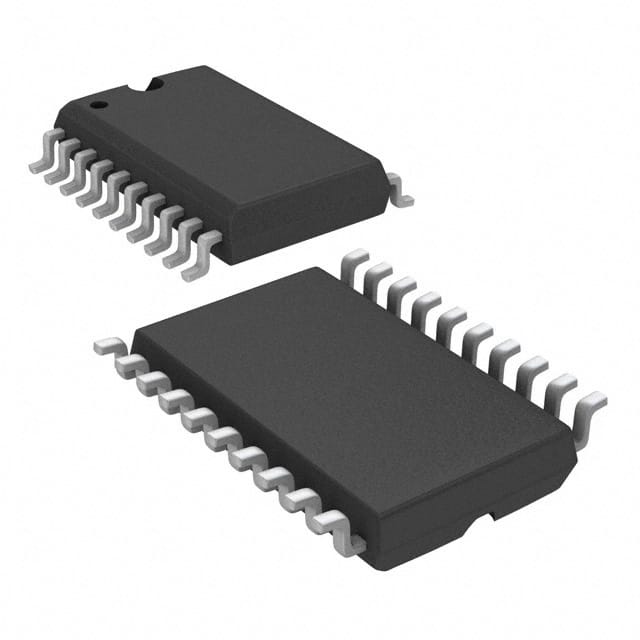
|

|
| Category | Data Acquisition - Analog to Digital Converters (ADC) | Data Acquisition - Analog to Digital Converters (ADC) |
| Manufacturer | Texas Instruments | Maxim Integrated |
| Description | IC ADC 12BIT SAR 20SOIC | IC ADC 12BIT SAR 8TDFN |
| Package | Bulk | Cut Tape (CT) |
| Series | - | - |
| Features | - | - |
| Operating Temperature | -40°C ~ 85°C | -40°C ~ 85°C |
| Mounting Type | Surface Mount | Surface Mount |
| Package / Case | 20-SOIC (0.295\", 7.50mm Width) | 8-WDFN Exposed Pad |
| Supplier Device Package | 20-SOIC | 8-TDFN (3x3) |
| Reference Type | External | External |
| Sampling Rate (Per Second) | 200k | 150k |
| Data Interface | SPI | SPI |
| Number of Bits | 12 | 12 |
| Voltage - Supply, Analog | 5V | 2.7V ~ 3.6V |
| Voltage - Supply, Digital | 2.7V ~ 5.5V | 2.7V ~ 3.6V |
| Number of Inputs | 2, 4 | 2 |
| Input Type | Pseudo-Differential, Single Ended | Single Ended |
| Configuration | MUX-S/H-ADC | S/H-ADC |
| Ratio - S/H:ADC | 1:1 | 1:1 |
| Number of A/D Converters | 1 | 1 |
| Architecture | SAR | SAR |
-
1. How does ADC convert analog to digital?
The technology that converts analog sound signals into digital signals is called analog-to-digital conversion technology (Analog to Digital Converter, referred to as ADC). The function of ADC is to convert continuously changing analog signals into discrete digital signals. The process of analog-to-digital conversion can be completed by steps such as sampling, holding, quantization, and encoding.
-
2. What is the main purpose of ADC?
The main purpose of ADC is to convert the input analog signal into a digital signal.
ADC, or analog-to-digital converter, is mainly used to convert continuously changing analog signals into discrete digital signals. The implementation process of ADC usually includes four steps: sampling, holding, quantization, and encoding.
-
3. Why do we need analog-to-digital converters?
The reasons why we need analog-to-digital converters mainly include the following:
Digital system processing: Many computers and electronic devices are digital systems, which are more suitable for processing digital signals. Analog signals are difficult to process in digital systems, and after analog-to-digital conversion, the signals can be represented, stored and processed in digital form.
Noise immunity: Digital signals are more noise-resistant than analog signals. Digital signals can be protected and restored by means such as error correction codes, while analog signals are easily interfered by noise.
Accuracy: Digital signals are more accurate because they can be represented with higher resolution. Analog signals have accuracy limitations, and analog-to-digital conversion can improve the resolution of the signal.
Application scenarios: Analog-to-digital converters are widely used in many fields, including automatic control systems, audio and video processing, sensor interfaces -
4. What is the principle of analog-to-digital converters?
The working principle of the analog-to-digital converter (ADC) is to convert analog signals into digital signals through four processes: sampling, holding, quantization, and encoding.
The main components of the analog-to-digital converter include samplers and quantizers, which work together to convert continuous analog signals into discrete digital signals. This process requires a reference analog quantity as a standard, and the maximum convertible signal size is usually used as the reference standard. The basic principles of the analog-to-digital converter can be summarized as follows:
Sampling: The analog-to-digital converter first samples the input analog signal through a sampling circuit, that is, discretizes the analog signal on the time axis.
Holding: The sampled signal is held by the holding circuit for the next quantization and encoding process.
Quantization: The quantization process is to divide the amplitude of the sampled and held analog signal into a finite number of le
