
UDA1352TS/N3,112 vs AD7401YRW
| Part Number |

|
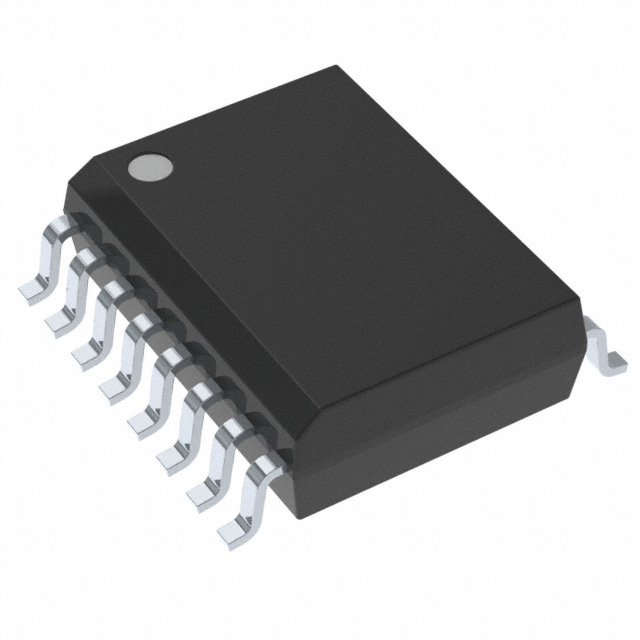
|
| Category | Data Acquisition - ADCs/DACs - Special Purpose | Data Acquisition - ADCs/DACs - Special Purpose |
| Manufacturer | NXP USA Inc. | Analog Devices Inc. |
| Description | IC DAC/AUDIO 20BIT 48K 28SSOP | IC ISOLATED MODULE 16BIT 16SOIC |
| Package | Tube | Tray |
| Series | - | - |
| Type | DAC, Audio | Isolated Module |
| Voltage - Supply | 2.7V ~ 3.6V | 3V ~ 5.5V, 4.5V ~ 5.25V |
| Operating Temperature | -40°C ~ 85°C | -40°C ~ 105°C |
| Mounting Type | Surface Mount | Surface Mount |
| Package / Case | 28-SSOP (0.209\", 5.30mm Width) | 16-SOIC (0.295\", 7.50mm Width) |
| Supplier Device Package | 28-SSOP | 16-SOIC |
| Number of Channels | 3 | 1 |
| Resolution (Bits) | 20 b | 16 b |
| Sampling Rate (Per Second) | 48k | - |
| Data Interface | I²C | Serial |
| Voltage Supply Source | Analog and Jinftrytal | Dual Supply |
-
1. What are the differences between special-purpose ADCs and DACs and conventional converters?
Special purpose ADCs/DACs are optimized in terms of speed, accuracy, power consumption, or anti-interference, and are suitable for applications that require very high performance or specific functionality, while conventional converters are generally used in general scenarios.
-
2. Which applications require special purpose ADCs and DACs?
Special purpose ADCs/DACs are commonly used in medical devices (such as electrocardiograms), automotive electronics (such as sensor signal processing), industrial automation, audio processing, high-precision measuring instruments, and other fields that require high signal processing.
-
3. How to choose ADC/DAC suitable for specific applications?
When selecting, consideration should be given to the resolution, sampling rate, signal-to-noise ratio, power consumption, number of input/output channels, linearity, operating temperature range, and whether it meets the standards or certification requirements of the target application.
-
4. How does the sampling rate of ADCs affect data acquisition performance?
The sampling rate determines how many times an ADC can read a signal per second. A higher sampling rate is suitable for high-speed signals or precise dynamic signal processing, while a lower sampling rate is suitable for collecting steady-state or slowly changing signals.
