
VC1210K401R017 vs V05E14P
| Part Number |
|
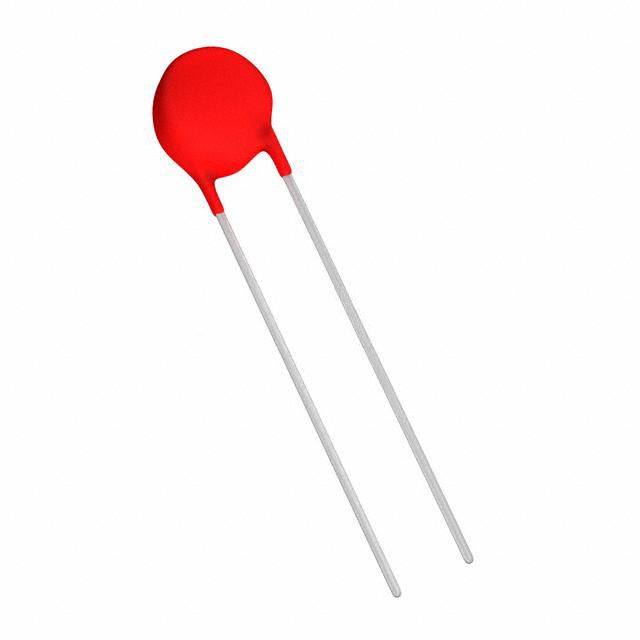
|
| Category | TVS - Varistors, MOVs | TVS - Varistors, MOVs |
| Manufacturer | KEMET | Littelfuse Inc. |
| Description | VARISTOR 27V 400A 1210 | VARISTOR 22V 500A DISC 5MM |
| Package | 1210 (3225 Metric) | Disc 5mm |
| Series | Automotive, AEC-Q200, VC | LV UltraMOV? |
| Mounting Type | Surface Mount | Through Hole |
| Package / Case | 1210 (3225 Metric) | Disc 5mm |
| Number of Circuits | 1 | 1 |
| Varistor Voltage (Typ) | 27V | 22V |
| Current - Surge | 400A | 500A |
| Maximum DC Volts | 22V | 18V |
| Varistor Voltage (Min) | 24.3V | 19.8V |
| Varistor Voltage (Max) | 29.7V | 24.2V |
| Maximum AC Volts | 17V | 14V |
| Energy | 1.8J | 2.5J |
| Operating Temperature | - | -40°C ~ 85°C (TA) |
| Capacitance @ Frequency | - | 1100pF @ 1MHz |
-
1. What is the difference between TVS and varistors?
The main differences between TVS and varistors are their working principles, performance parameters, application scenarios, and prices.
Working Principle
TVS (Transient Voltage Suppressor): TVS forms a PN structure on a silicon-based material and uses the breakdown characteristics of the PN junction to achieve protection. When an overvoltage occurs in the circuit, the resistance value of the TVS changes rapidly, thereby protecting other components in the circuit.
Varistor: Varistors use the nonlinear resistance characteristics of materials such as zinc oxide to achieve overvoltage protection. When an overvoltage occurs in the circuit, the resistance value of the varistor also changes, thereby protecting the circuit.
Performance Parameters
Overvoltage resistance: TVS is usually more resistant to overvoltage than varistors and can withstand higher voltages and currents.
Response time: TVS usually has a shorter response time than varistors and can respond to overvoltage events in a shorter time.
Lifespan: TVS usually has a longer lifespan than varistors because the PN junction of TVS can self-recover after breakdown, while varistors usually break down after a breakdown.
-
2. What is the difference between varistors and MOVs?
There are some differences between varistors and MOVs (Metal Oxide Varistors) in terms of definition, characteristics, and applications.
Definition and Characteristics
Varistor (VDR/MOV): A varistor is a voltage-sensitive resistor whose resistance value changes with voltage. When an excessively high voltage appears in a circuit, the internal resistance of the varistor drops sharply and turns on quickly, protecting electronic components from surges. MOVs are usually made of zinc oxide and have the characteristics of large current flow, slow response speed, and large parasitic capacitance.
MOV: Specifically refers to metal oxide varistor, which is a type of varistor and is widely used in electronic circuits. Its characteristics include large current flow, slow response speed, and large parasitic capacitance.
-
3. What is the use of MOV varistor?
MOV varistor (Metal-Oxide Varistor, referred to as MOV) is mainly used for overvoltage protection, especially in the fields of power electronics, communication electronics and industrial control.
Main use
Overvoltage protection: MOV varistors play the role of overvoltage protection in the circuit. They can quickly reduce their resistance value when voltage spikes or surges occur, thereby consuming surge energy and protecting other components in the circuit from damage.
Electrostatic protection: MOV varistors are often used for electrostatic protection, especially at the power input end, which can effectively prevent static electricity from damaging the circuit.
Lightning protection: By suppressing the surge voltage caused by lightning strikes, the equipment is protected from lightning strikes. -
4. What is the difference between TVS diodes and varistors?
The main differences between TVS diodes and varistors are in working principles, response time, current carrying capacity, nonlinear characteristics, capacitance effects, reliability and life, and application scenarios.
Working principle:
TVS diode (ransient voltage suppressor) is a high-efficiency protection device in the form of a diode. When both ends are subjected to instantaneous high-energy impact, the TVS diode can quickly change the impedance value from high to low, absorb large current, and clamp the voltage to a predetermined value.
Varistors use their nonlinear characteristics to sharply reduce resistance when the voltage exceeds a certain threshold, thereby absorbing surge current.
Response time:
The response time of TVS diodes is very fast, usually at the sub-nanosecond level (ps level).
The response time of varistors is relatively slow, usually at the nanosecond level (ns level).
Current carrying capacity:
Varistor can withstand larger surge currents. The larger the volume, the greater the surge current it can withstand, which can reach tens of kA to hundreds of kA.
The current carrying capacity of TVS diodes is relatively small.
Nonlinear characteristics:
The nonlinear characteristics of TVS diodes are similar to those of voltage-stabilizing diodes. The leakage current is very small before breakdown, and it has standard voltage-stabilizing characteristics after breakdown.
The nonlinear characteristics of varistors are poor, with a higher limiting voltage at high currents and a larger leakage current at low voltages.
Capacitive effect:
The capacitance of TVS diodes and varistors is large, but TVS diodes also have low-capacitance products, which are suitable for the protection of high-speed signal lines.
Reliability and life:
TVS diodes have high reliability, are not easy to deteriorate, and have a long service life.
Varistors have poor reliability, are prone to aging, and have a short service life.
