
XC9536-5VQG44C vs XC9536XL-10PCG44I
| Part Number |

|
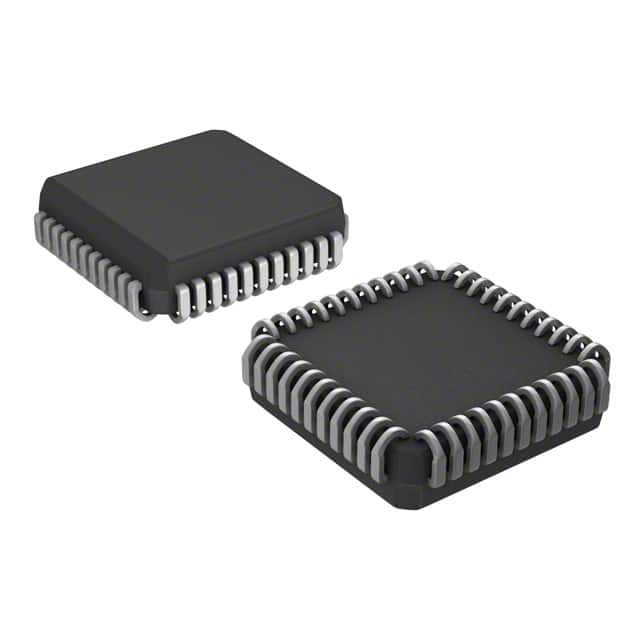
|
| Category | Embedded - CPLDs (Complex Programmable Logic Devices) | Embedded - CPLDs (Complex Programmable Logic Devices) |
| Manufacturer | Xilinx Inc. | Xilinx Inc. |
| Description | IC CPLD 36MC 5NS 44VQFP | IC CPLD 36MC 10NS 44PLCC |
| Package | Tray | Tray |
| Series | XC9500 | XC9500XL |
| Operating Temperature | 0°C ~ 70°C (TA) | -40°C ~ 85°C (TA) |
| Mounting Type | Surface Mount | Surface Mount |
| Package / Case | 44-TQFP | 44-LCC (J-Lead) |
| Supplier Device Package | 44-VQFP (10x10) | 44-PLCC (16.59x16.59) |
| Programmable Type | In System Programmable (min 10K program/erase cycles) | In System Programmable (min 10K program/erase cycles) |
| Delay Time tpd(1) Max | 5 ns | 10 ns |
| Voltage Supply - Internal | 4.75V ~ 5.25V | 3V ~ 3.6V |
| Number of Logic Elements/Blocks | 2 | 2 |
| Number of Macrocells | 36 | 36 |
| Number of I/O | 34 | 34 |
| Number of Gates | 800 | 800 |
-
1. What are the main applications of CPLDs?
CPLDs are commonly used to implement controllers, interface circuits, logic state machines, timing control, circuit signal conditioning, and other tasks, and are used in communication equipment, industrial automation, embedded systems, and consumer electronics.
-
2. How do CPLDs integrate with microcontrollers?
CPLDs are often used as auxiliary devices to microcontrollers to handle complex logic control tasks. a CPLD can reduce the burden on the microcontroller, allowing it to focus on core processing while the CPLD handles logic control, signal conditioning, and more.
-
3. Do CPLDs have high power consumption?
Compared to FPGAs, CPLDs typically have lower power consumption and are suitable for battery-powered or applications that require low power consumption. However, the exact power consumption still depends on the CPLD model used and the logic complexity in the application.
-
4. How does a CPLD's memory work?
CPLDs typically use non-volatile memory (such as Flash or EEPROM) to store configuration data, so the device maintains the programmed logic even after a power failure. This allows the CPLD to quickly boot up and return to a previously configured state.